Smiseth Sejersted Sets the Bar Early
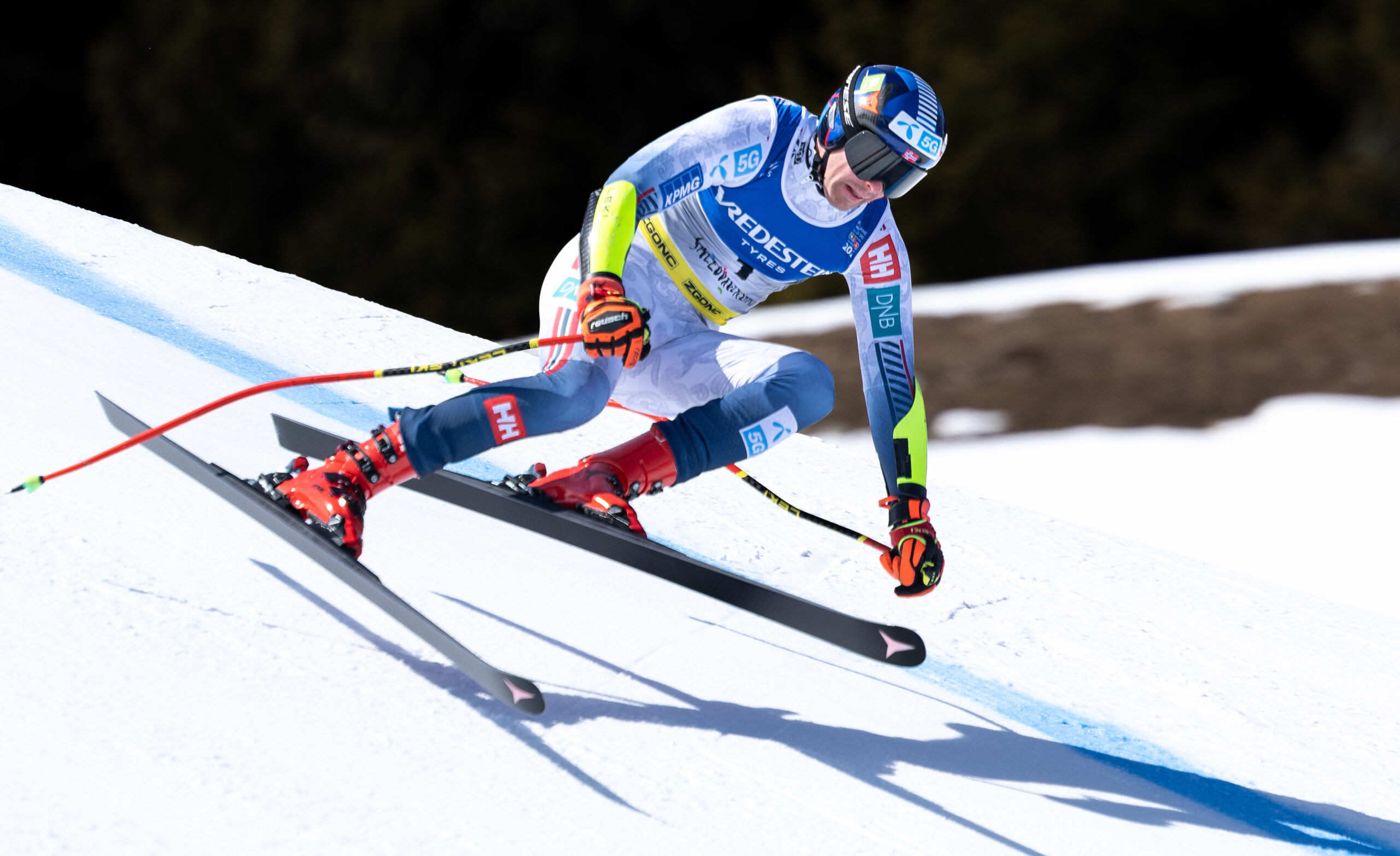
Norwegian Adrian Smiseth Sejersted was the first to charge down the course, and he made his intentions clear. He attacked each section with confidence and aggression, setting a blistering time of 1:25.73. His run immediately put pressure on the rest of the field.
Swiss skier Alexis Monney was the first to push the pace in response. He carried speed through each sector, but his aggressive approach cost him. Leaning too far inside on a crucial turn, he went down and did not finish.
Then came the first of the home-country heroes. Stefan Babinsky exploded out of the start, and the Austrian crowd responded. The energy surged as he attacked the course, threatening Smiseth Sejersted’s time. Every split ignited roars from the stands, but he lost fractions in the final stretch. At the line, he fell just 0.15 seconds short, sliding temporarily into second place. The crowd exhaled, knowing two more Austrians were still to come.
Odermatt Delivers a Masterclass
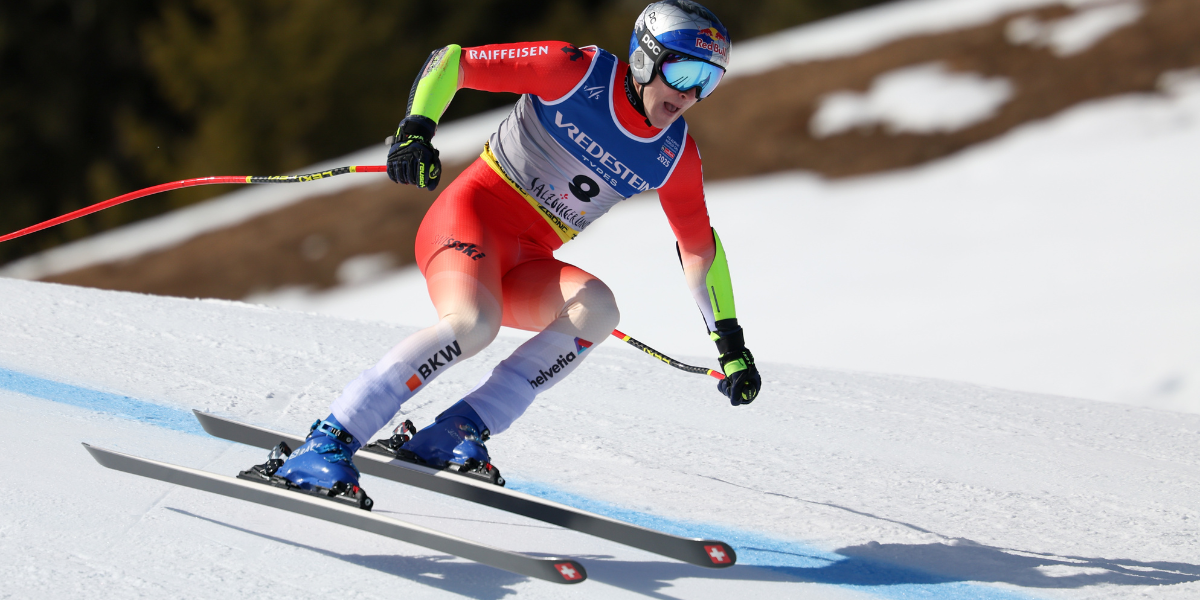
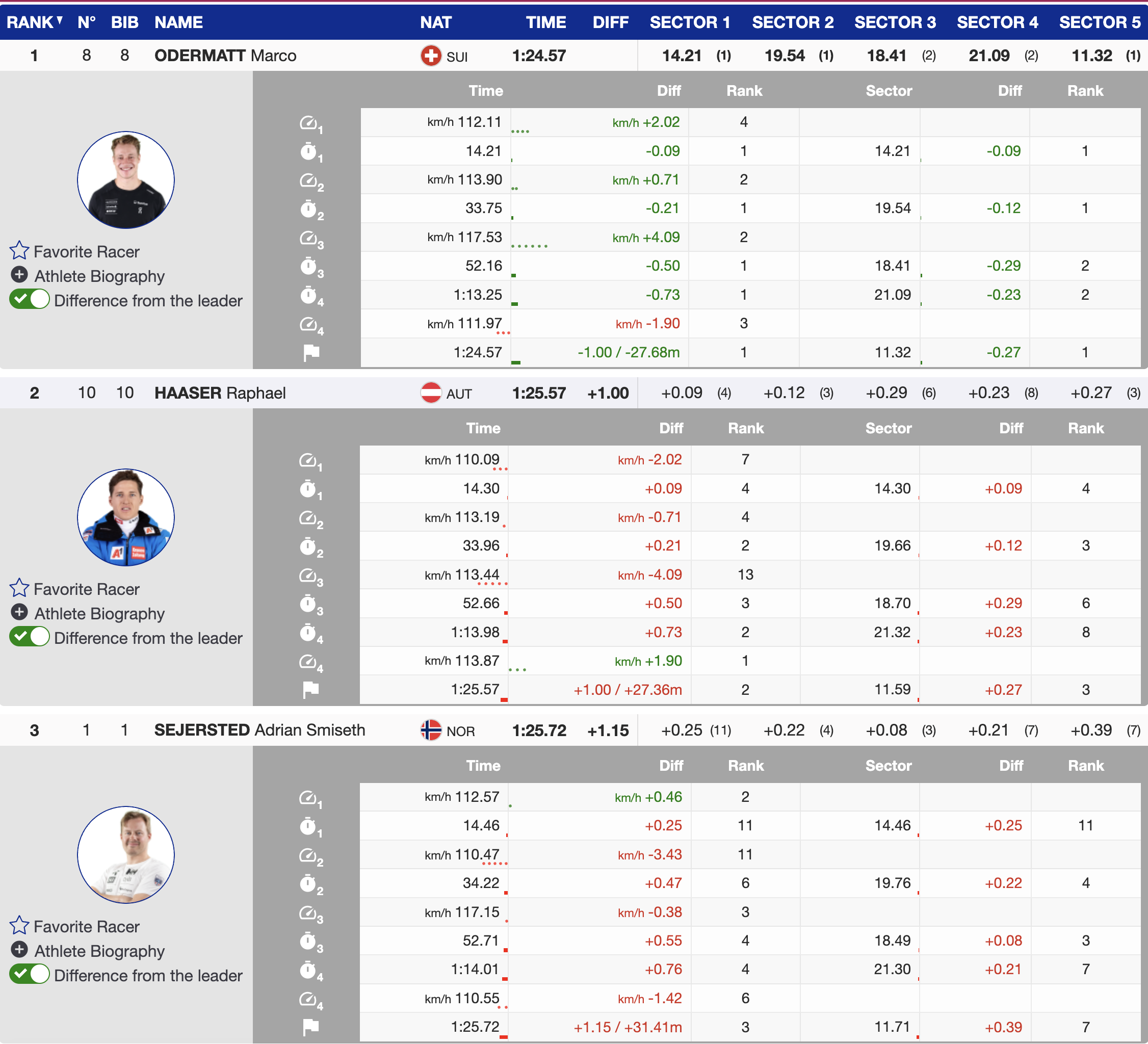
Next came the best super-G skier in the world, Swiss megastar Marco Odermatt. Known for his athletic brilliance and tactical instincts, he attacked the course with fearless speed. He was aggressive from top to bottom, pushing the limits on every turn. When he crossed the line, even the Austrian fans had to respect what they had just witnessed. He obliterated the field, taking a massive 1.15-second lead. As he dropped into the leader’s chair for the first time in a World Championship super-G, his reaction said it all—even he was impressed.
Austria’s top racer, Vincent Kriechmayr, followed with the full force of the home crowd behind him. The bib 9 starter had been sidelined since Wengen, skipping Kitzbühel to recover from injury, but he launched out of the gate with intensity. The fans roared as he charged down the course, but his time wasn’t enough to challenge Odermatt.
Then came Raphael Haaser, and the energy in the stadium spiked again. He threw himself at the hill, keeping the home crowd on edge. As he powered through the final section, he managed to slot into second, exactly 1.00 seconds behind the leader. The Austrian fans erupted—one of their own was in the hunt. But with many top racers still to come, the podium was far from decided.
Odermatt’s Lead Remains Untouched
With Odermatt in first, Haaser in second, and Smiseth Sejersted in third, the world’s best super-G skiers took their shots. One after another, they attacked the course, searching for speed. But no one could match Odermatt’s pace.
By the time the first 15 racers had crossed the line, the top of the leaderboard remained unchanged. Some of the season’s strongest skiers finished more than two seconds behind the Swiss star. His performance wasn’t just dominant—it was untouchable.
Odermatt Claims First Super-G World Championship in Dominant Fashion
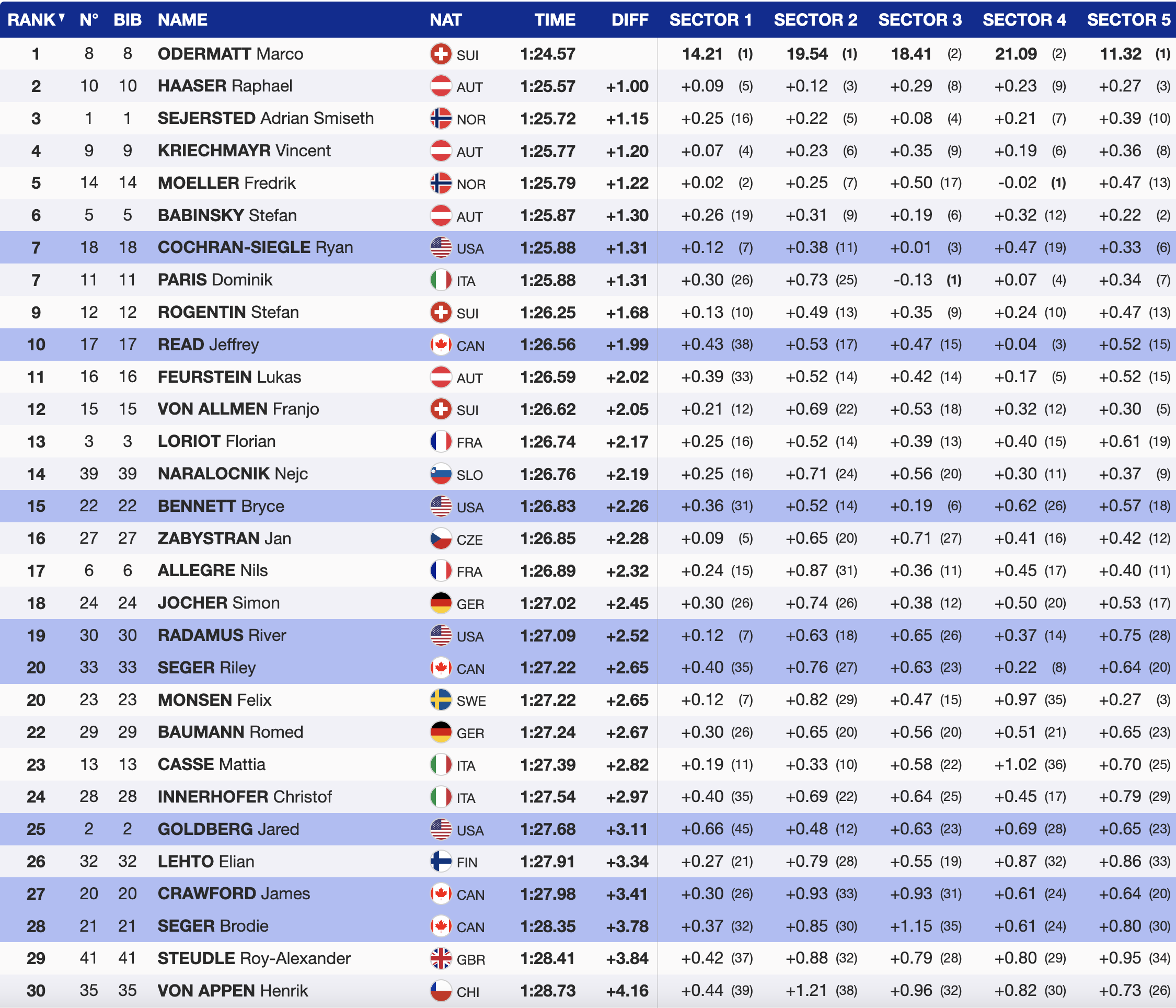
As the race wore on, it became clear—the best were already in the finish. The podium was set. Marco Odermatt didn’t just win his first World Championship super-G title; he dominated. His massive lead proved untouchable, cementing his place as the best in the world.
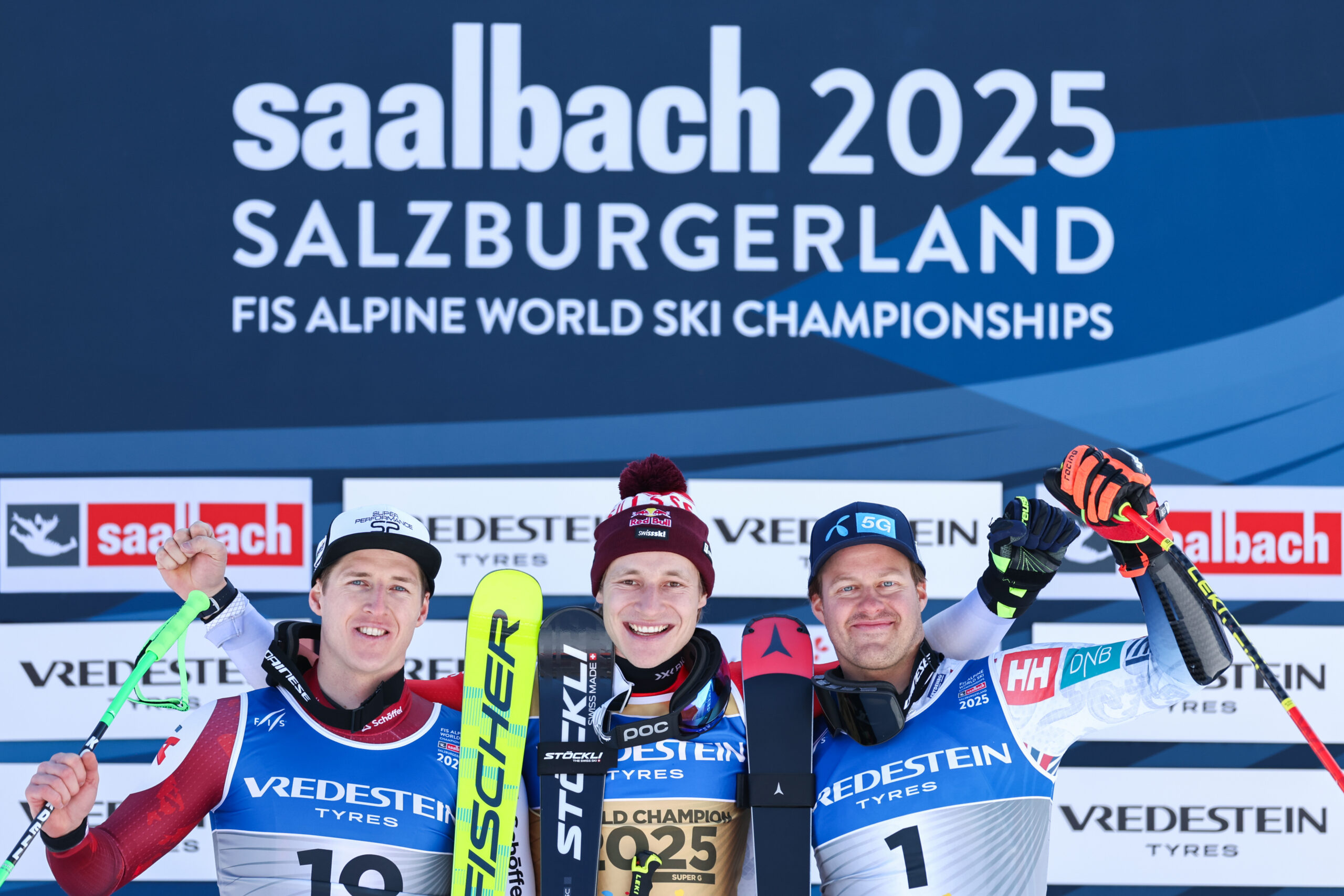
The Austrian crowd roared as Raphael Haaser secured second, delivering a silver medal on home snow. Norway claimed its second super-G bronze in as many days, with Smiseth Sejersted earning his first World Championship medal.
Click on images to enlarge
Smiseth Sejersted Relishes First World Championship Medal
“I’m very, very, very happy,” Adrian Smiseth Sejersted said, grinning after securing bronze. “That’s the short version.”
Starting with bib 1 meant a long, tense wait as the world’s best tried to knock him off the podium. “It was awesome to lay down that kind of run right out of the gate, but then I had to sit and watch so many guys try to beat me,” he said. “There was no chance to catch the gold medal, so when I knew I had the bronze, I was super happy.”
He credited some key information for helping him push the pace. “It’s always tough going first, but I got to see Mathias Mayer’s (TV) form, so I had a little bit of insight,” he said. “Then I just had to go full gas. It wasn’t perfectly clean, especially before the jump, but it was good enough for a medal. That’s all that matters.”
For Haaser, it marked his second career World Championship podium after taking silver in the Alpine Combined in 2023. For Odermatt, it was another chapter in an already historic career. The Swiss star had won both the downhill and giant slalom at the 2023 World Championships, but this was his first time standing atop the super-G podium. Today, he left no doubt.
Austrian Depth Shines on Home Snow
To the delight of the Austrian fans, their team placed three racers in the top 10. Haaser’s silver-medal performance led the way, but his teammates backed him up with strong results. Vincent Kriechmayr, still regaining form after injury, battled to secure fourth place. Stefan Babinsky, who had briefly held second early in the race, finished sixth.
While Austria missed out on gold, their depth was undeniable, giving the home crowd plenty to cheer about.
Haaser Thrives Under Home Crowd Pressure
“Winning a World Championship medal in my home country was a big goal this season,” Raphael Haaser said. “Competing here and walking away with a medal is just amazing.”
The Austrian crowd erupted as Haaser secured silver, delivering on his dream performance on home snow. He credited the early part of his run for setting up his result. “The top section is very technical, and I think I skied pretty well up there,” he said. “That was the foundation for my result today.”
Racing in Saalbach is always a challenge, and Haaser knew it coming in. “It’s never easy down here,” he said. “We knew from past competitions that this hill would test us, and today was no different.”
With his second career World Championship medal now in hand, Haaser once again proved that he thrives when the stakes are high.
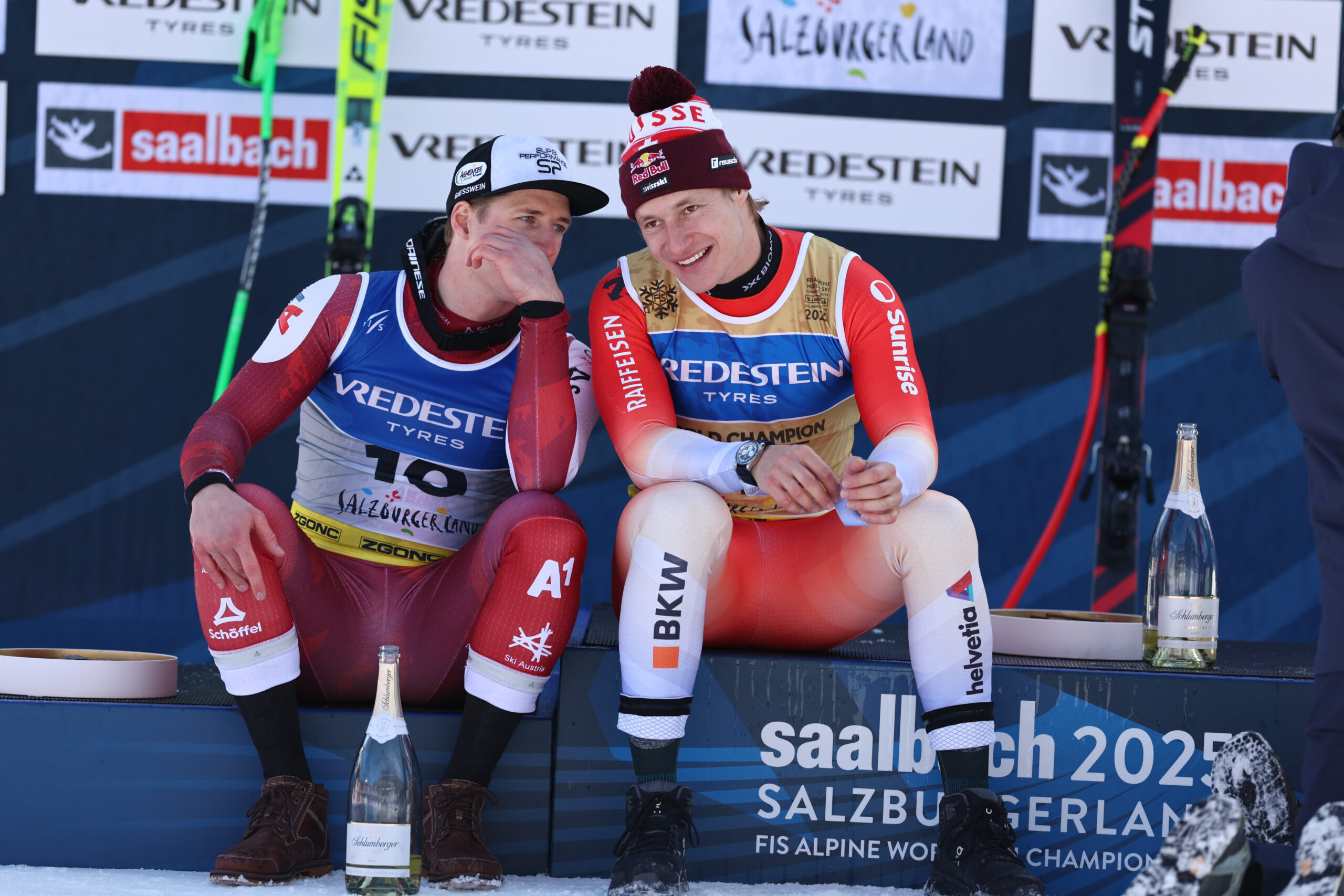
Odermatt Completes the Triple
“It’s crazy to be a world champion in all three of my disciplines,” Marco Odermatt said, gold medal draped around his neck. “It was a perfect day.”
The Swiss star came into Saalbach with confidence. “I had a good feeling from the very first day here,” he said. “The snow fits me well, and I’ve known for years that this hill suits my skiing. Today, I had a perfect run.”
Winning super-G gold carried a different emotion than his first World Championship title in downhill two years ago. “That downhill win wasn’t out of nowhere, but I wasn’t the big favorite,” Odermatt explained. “My training runs hadn’t gone well, so when I won, it was a massive relief. Today was different. I had one of the best feelings I’ve ever had on the slope. When I crossed the line, I already knew it would be hard to beat. It made sitting in the leader’s chair a lot easier.”
With one gold already secured, Odermatt is ready for whatever comes next. “When you start a World Championships with a gold medal, it’s already a success,” he said. “No matter what happens next, this is a good World Championships. I’m very happy with this one today, and we’ll see what comes next.”

North Americans Fall Short but Show Promise
Cochran-Siegle Leads the Charge
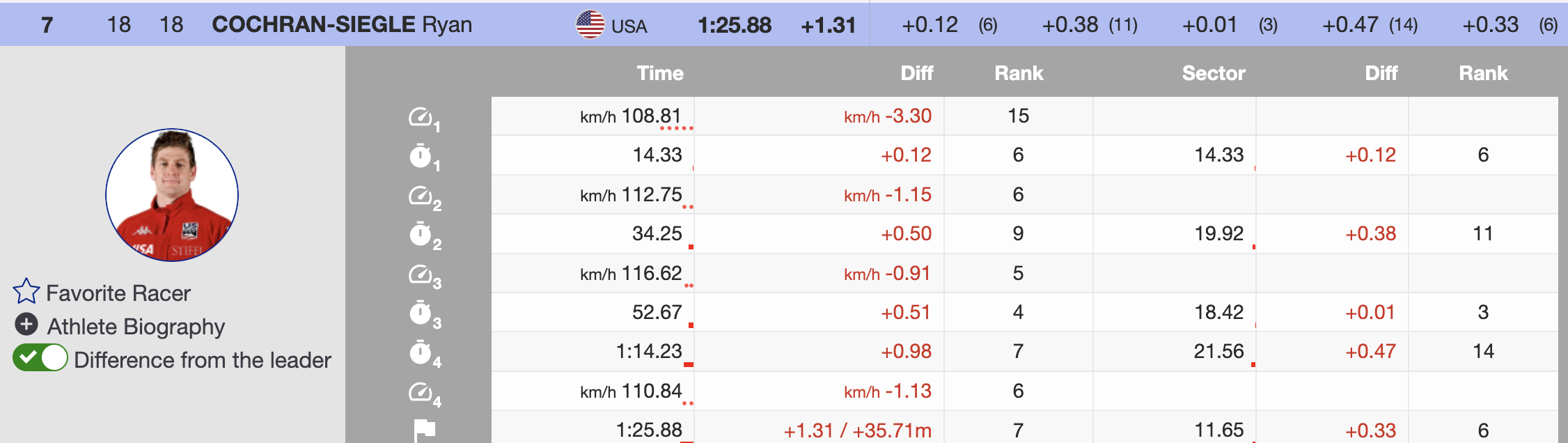
Ryan Cochran-Siegle, the reigning Olympic super-G silver medalist, carried the best hopes for the Stifel U.S. Ski Team. Fast in downhill training, he looked ready to challenge. But starting with bib 18, he couldn’t generate the speed needed to threaten the podium. He skied a clean run but finished 1.31 seconds behind Odermatt, tying for seventh. With his result, the U.S. team’s medal hopes were nearly gone.
“It’s definitely tough knowing there was an opportunity out there,” Cochran-Siegle said after the race. “I put everything into my skiing, and while there were a couple of turns that got away from me, that’s super-G—you have to take risks. I’m happy with my approach, even if I wish I could get those moments back. At the end of the day, you have to move on. In a way, that was my best super-G performance of the year, so that’s something to take away. Even with mistakes, I’m still skiing competitively against the best, and I need to trust that as I head into the downhill.”
One aspect of his skiing stood out. “I really liked how I was building the top of the turn. I felt confident engaging the new ski and using it to drive a clean arc,” he said. “This hill is one where you can arc top to bottom, which is really fun. The snow was also very reactive in a good way—firm but predictable. I enjoyed the power generation and letting it ride a little.”
Bennett Delivers a Career-Best
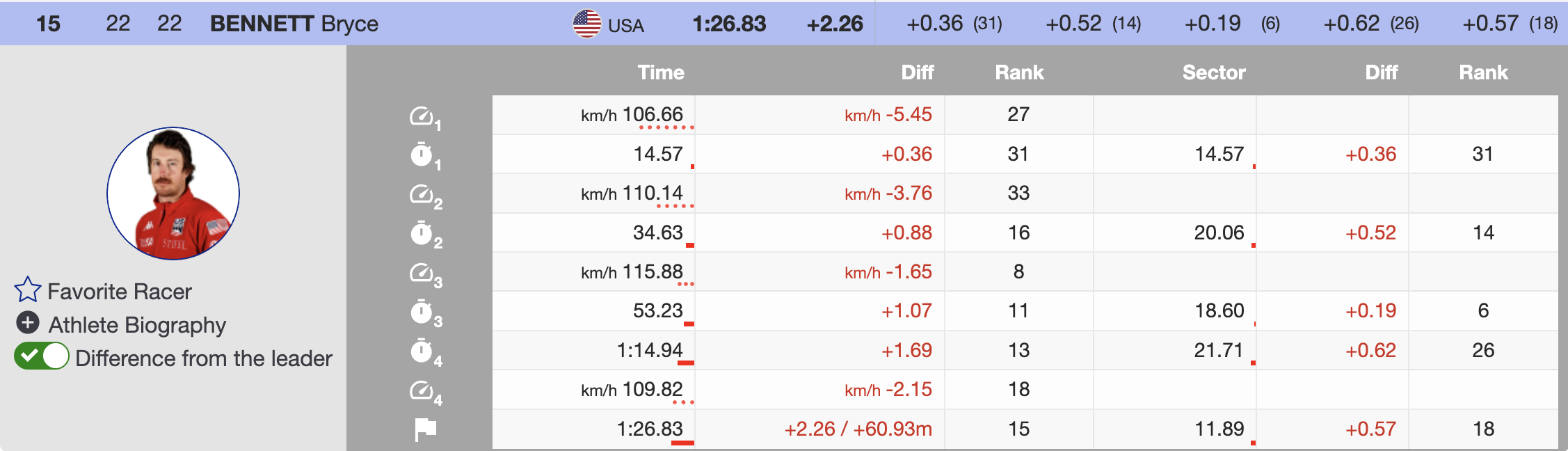
Bryce Bennett turned in one of his strongest super-G performances at the highest level, running aggressively and looking comfortable on the technical course. He ultimately finished 15th, 2.26 seconds back. The downhill specialist continues to show improvement in super-G, making this a step forward in his progression.
Read Bounces Back for Canada
For Canada, defending champion James “Jack” Crawford never found his rhythm. He struggled from the start and never generated the speed he needed. When he crossed the line, he was last among finishers at the time, his disappointment obvious.
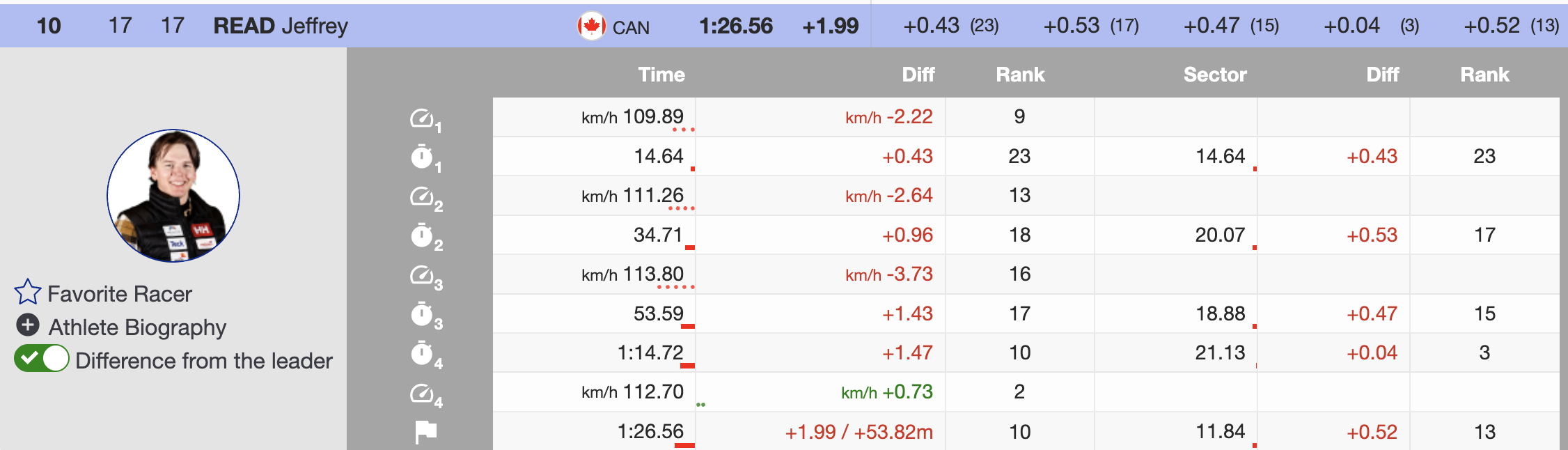
His teammate Jeffrey Read, however, provided a bright spot. After a difficult season compared to last year, he returned to form with a solid performance, finishing 1.99 seconds back in 10th to become the second-fastest North American.
“I have mixed feelings,” Read said after finishing 10th. “It’s a good result, especially considering my season so far, but I feel like I left a little out there. This track had a lot of tricky rolls, fast sections, and a fine line you had to nail. We saw how well Odermatt executed—if you slipped off that line even slightly, mistakes just compounded.”
Still, he found positives in his run. “I was really fast through the midsection. Coming into the last dark corner, I was right there, neck and neck with Odermatt, and that’s what put me in the race,” Read said. “But I struggled with the flow up top. Out of the gate, there’s a steep pitch, and I didn’t quite get into it right away, so that cost me.”
He described the course as deceptively difficult. “It’s not the most insanely challenging—it’s no Bormio—but it has plenty of sections that can catch you. Lots of blind rolls, off-camber turns, and tricky gates that keep even the best guys on edge,” Read explained. “It’s the kind of track where you have to be full gas from top to bottom, and the snow demands that you charge. I just need to build on the good feelings from the strong sections and take that into the next races.”
Top 15 Earn WCSL Points
While none of the North Americans reached the podium, Cochran-Siegle tied for seventh, Read finished 10th, and Bennett placed 15th, all securing valuable World Cup Start List (WCSL) points. While World Cup points are not awarded at the World Championships, finishing in the top 15 helps skiers maintain or improve their WCSL ranking. These rankings influence future start positions and help nations retain competitive spots in World Cup events.
A Championship Performance
Odermatt’s dominant victory in the Super-G cements his place as the best in the world. Haaser’s silver gave Austria a podium on home soil, while Smiseth Sejersted celebrated his first World Championship medal. With more racing ahead, the battle for gold is far from over—will anyone challenge Odermatt’s reign?
Top 30 results
Click on images to enlarge
Analysis of the podium skiers and top 15 North Americans
About the Author: Peter Lange