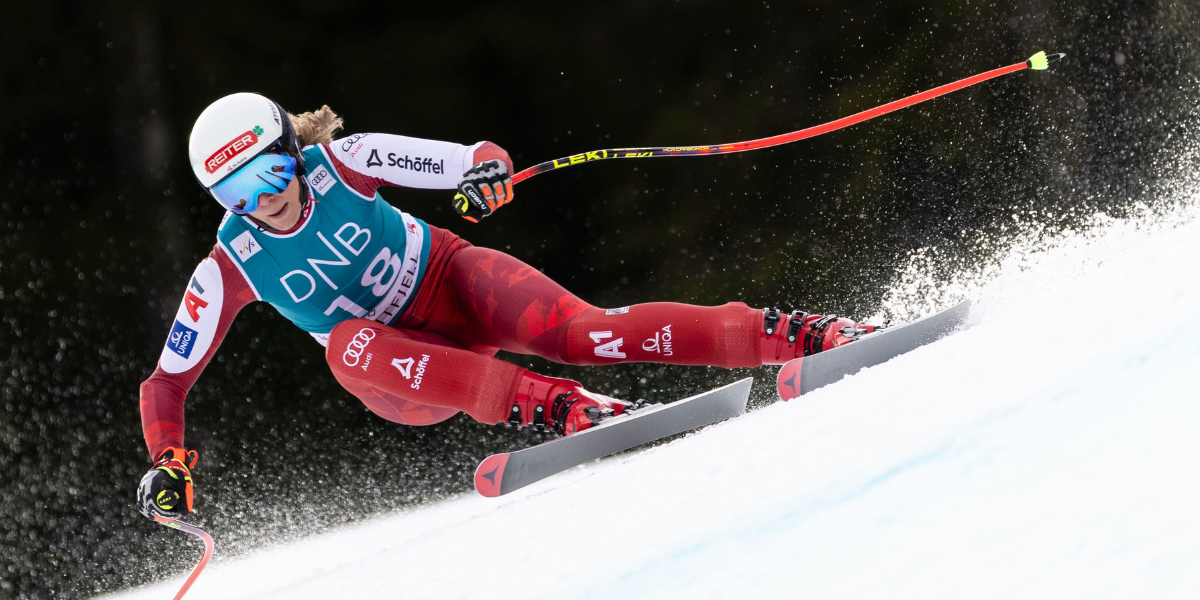
Reto Schmidiger celebrating in Steamboat Springs. – Photo: zvg
Feature courtesy of skinews.ch
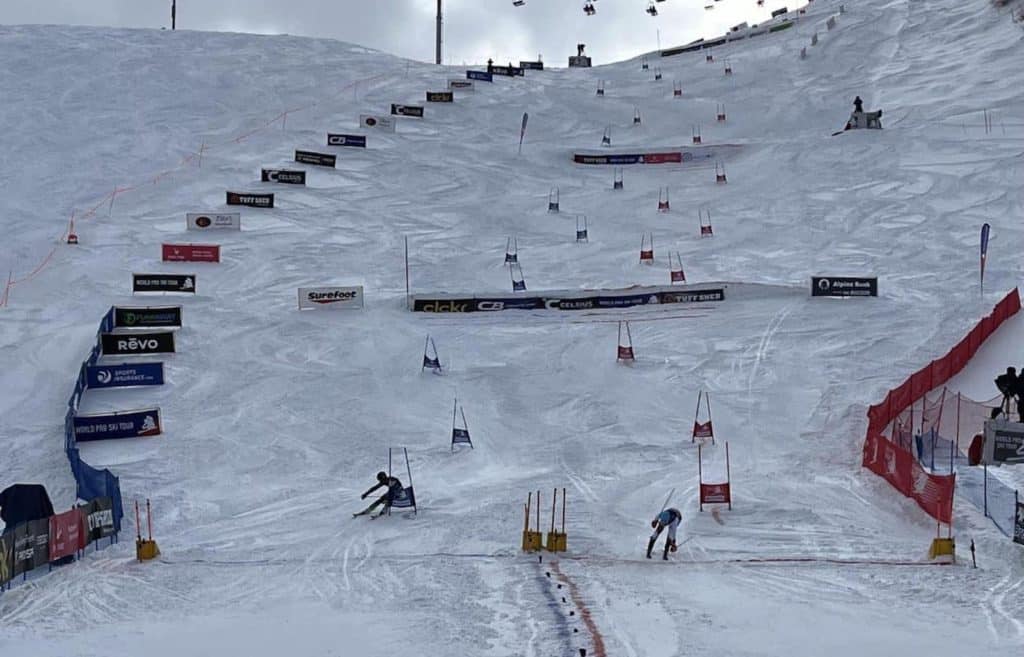
While the FIS has been struggling with parallel races for years and now almost completely dispenses with such competitions, the parallel scene is trying to establish itself in the sports world in North America. Skinews.ch has reported several times that the races of the World Pro Ski Tour (WPST), which was brought back to life in 2017 (2021 for women), have several differences from the FIS parallel races. The tracks of the WPST races tend to be rougher, and therefor, more relentless. The artificial jumps are higher, the two courses are closer together, the start launch devices are different (they resemble saloon swing doors) and the gate panels are lower.
Three-time Junior World Champion and former World Cup athlete, Reto Schmidiger, has always been a self-confessed fan of parallel races. As part of the World Cup finals, the now 30-year-old from Hergiswil helped the Swiss team win the team event in 2014, 2015 and 2016. Recently, in Steamboat Springs’ Howelsen Hill, Schmidiger also competed in World Pro Ski Tour races for the first time. And with great success. In the first race he was third, one day later he picked up the winner’s check for $10,000. Schmidiger certainly knows the differences between the parallel formats of the FIS and the WPST from his own experience.
– Photo: zvg
“It was a really good trip to Steamboat Springs,” said Schmidiger, who traveled to Colorado immediately after the Burke Mountain NorAms. “I can really use the prize money (a total of $13,000) since I have to finance my season myself. “The WPST races are athletically demanding. What the Americans do with many sporting events, they also do here: a show is organized around the sporting competition. In principle, that’s a good thing.” With regard to slope preparation, on the other hand, Schmidiger sees room for improvement at the WPST, which is not on a bed of roses financially. “There are very few helpers. On the first day of racing, the surface was really bad after the heavy snowfall and there were hardly any or practically no slides on the mountain. This made the task difficult, in addition to poor visibility due to snowfall and overcast skies. That’s probably why nobody risked the last part of the competition. In the second race, we athletes then took over slipping before the race.”
Schmidiger also sees clear differences to FIS parallel events as far as course setting is concerned. “In the WPST, the cross-block or double-block technique is not desired. The organizers want the athletes to ski around the gates and not through them. This is also the right way for me personally and makes the parallel event exciting and much more dynamic. Playing with your strength and technical skiing are given more weight.” The jumps, too, of which there were three in Steamboat Springs, add to the spectacle of the World Pro Ski Tour events. “All in all, the WPST events are very interesting from a sporting point of view. The athletes are more ‘forced’ to show what they’re really capable of on these courses.”
“I am convinced of the potential of the WPST,” says Schmidiger. If the last few obstacles are corrected, then this tour definitely has a future. However, the WPST still has room for improvement when it comes to optimizing the events. “Especially with regard to the number of helpers, one more step would have to be taken. Once, the start gate opened inwards instead of outwards, i.e. towards me. Once it was too late. Of course, this shouldn’t happen when prize money is being contested at a professional event.” It is also important that the race dates are better coordinated with the events of the FIS, says Schmidiger. “If the organizer brings top riders from the World Cup to the start, then the competitions become more interesting and exciting. Also for any presence on TV.”
About the Author: SR Staff Report