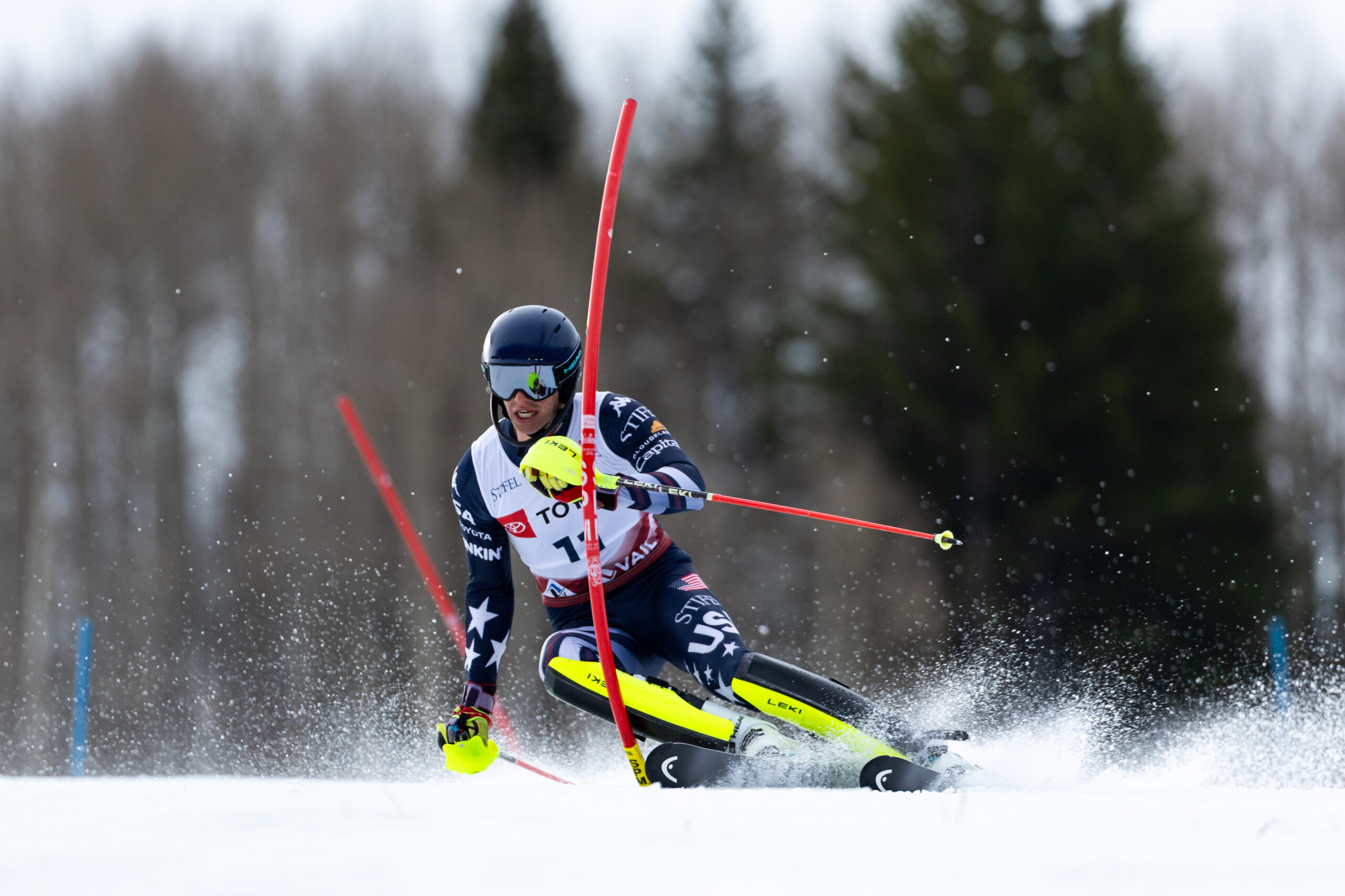
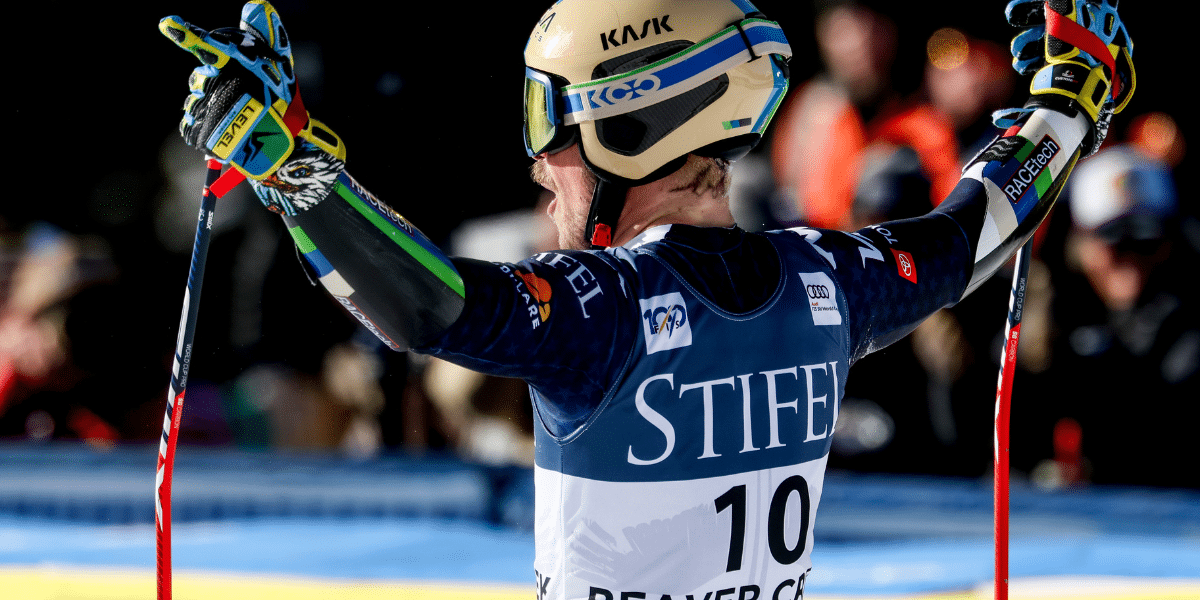
River Radamus Beaver Creek giant slalom/GEPA pictures
River Radamus Finds Home, Hunger, and Perspective in Colorado’s World Cup Stretch
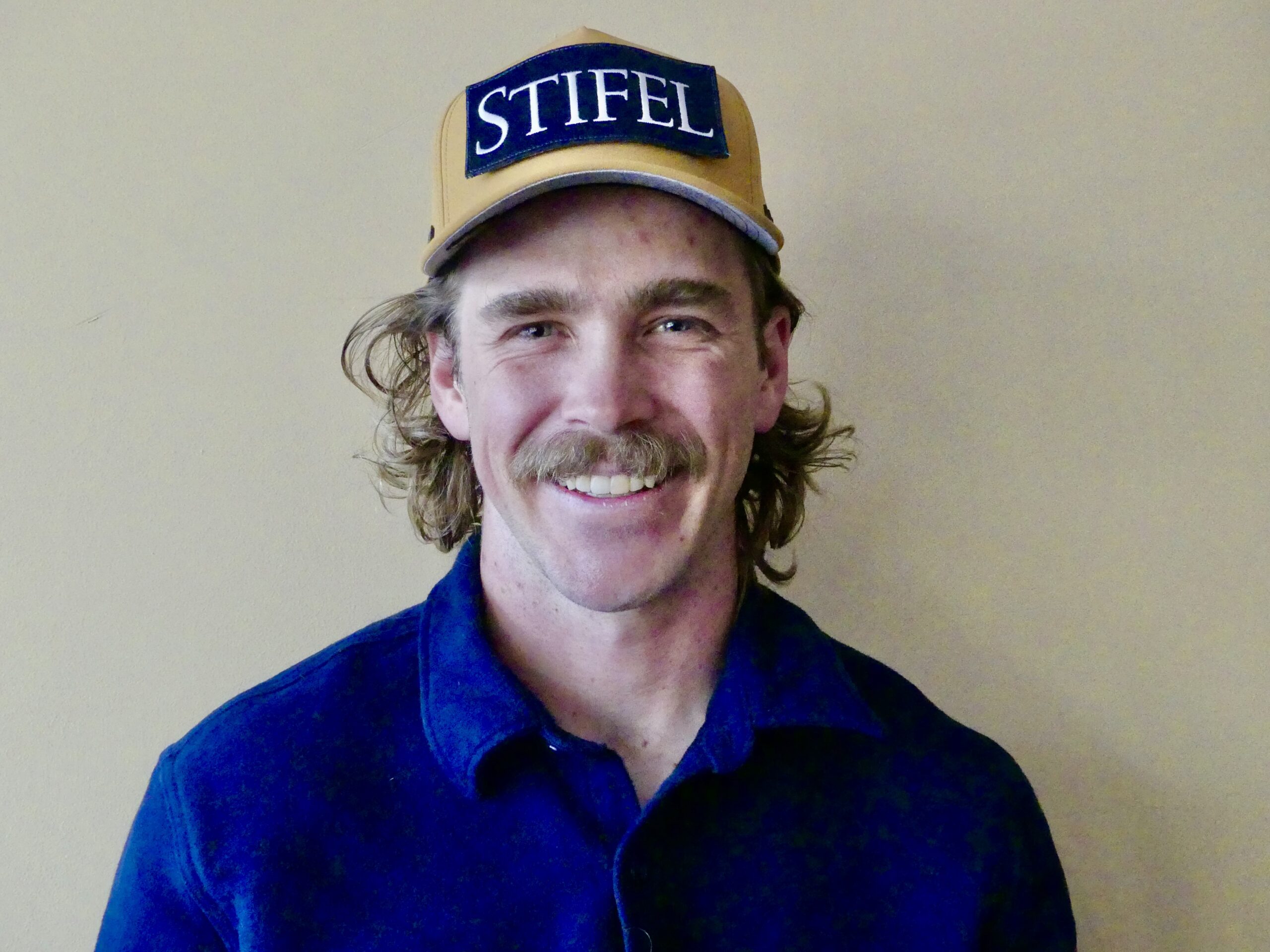
River Radamus walked into the Stifel U.S. Ski Team media day at Copper Mountain wearing a brand-new cap, the Stifel logo front and center, carrying the relaxed confidence of someone who feels genuinely at home. And why wouldn’t he? The next two weeks bring four World Cups to Colorado—not just his home state, but the mountains where he grew up, the slopes that helped shape his identity long before he became the top U.S. men’s giant slalom skier of his generation.
For Radamus, this stretch isn’t simply convenient. It’s personal.
“It feels natural,” he says. “Like a duck in water.”
Colorado snow is the foundation of his skiing identity—dry, grippy, predictable in its unpredictability. It’s the snow he learned on, raced on, trusted and mastered. “I’ve grown up skiing on it my whole life,” he says. “I know how to be playful on it. It just feels completely natural.”
But this stretch of racing means something deeper than comfort. It’s emotional. It’s generational.
When River was a young kid in the Vail Valley, he went to Birds of Prey to watch World Cup legends—Bode Miller, Daron Rahlves, Andrew Weibrecht, Ted Ligety. “That was my first exposure to World Cup ski racing,” he says. “From then on, I knew that’s what I wanted to be.”
Now he stands on the same mountains as a leader of the Stifel U.S. Ski Team. He shakes his head like he still can’t believe it.
“I never would’ve dreamed I’d get this far,” he says. “To wake up today and have this be my life—I count myself as incredibly lucky.”
Two Races, Two Hills, Two Completely Different Battles
With two GS races and two super-Gs split between Copper and Beaver Creek, Radamus sees the next two weeks as an unusual but valuable test.
Copper will reward the gliders—the athletes who float through speed, connect long turns, and stay quiet on their skis. Beaver Creek will demand something else entirely: raw strength, refined GS skills, and the courage to carry speed off the upper pitches into the long, unforgiving flats.
“It’s going to be a real dichotomy,” he says. “You have to be a very good glider and a very good technician. Not many people will be successful at both.”
The snow at both venues is so good—so consistent and so “hero”—that race margins may shrink. That raises the stakes.
“The snow tightens the margins,” he says. “Everybody’s going to be able to execute. You have to risk more.”
And then there’s the altitude. Even for someone who grew up here, it hits hard.
“You come over Golden Eagle and your arms are numb and you still have half the course to go,” he says. “Your legs are screaming halfway down, but you have to shut them up and keep committing.”
Efficiency, he says, might be the distinguishing factor.
“Clean skiing will win races here.”
Super-G Joy, Home Advantage, and a Sprint Season Turned Into a Marathon
Radamus has scored World Cup points in three disciplines—slalom, giant slalom, and super-G—over the past two seasons. That versatility is rare and a point of pride.
Super-G in particular holds a special connection for him.
And when he says this stretch of racing turns a sprint sport into a “pseudo-endurance sport,” he’s talking about the sheer number of races packed into a short window at high altitude.
“It’s going to be a busy couple of weeks,” he says. “There will be some attrition, but I’m going to relish every opportunity to race on home soil and give the local crowd something to cheer for.”
Olympic Fire, Fourth-Place Motivation, and a New Approach to Bormio
Beijing 2022 still lives in him—both as pride and as a scar.
He finished fourth in giant slalom, fourth in the Mixed Team Parallel, and fifteenth in super-G — an impressive first Olympics by any measure. Yet he still missed a GS medal by mere tenths of a second.
Instead of letting that moment torment him, it sharpened him. Radamus talks openly about athletic mortality.
“At very most, maybe I get two more Olympics,” he says. “I don’t want any regrets. Beijing motivated me to become more elite in every way.”
His approach to Bormio is simple: absolute preparation, total honesty, and embracing the moment.
“When I get in the start gate in Bormio, I want to feel I’ve worked the hardest to be there. Whatever happens after that, I’ll be proud of the effort.”
Self-Criticism, Courage, and the American Way of Doing Things Differently
River Radamus is relentlessly self-critical, but never in a destructive way. He sees self-evaluation as responsibility.
“When I’m in the start gate, it’s just me and the course,” he says. “I have to own every part of the journey—my nutrition, my conditioning, my programming.”
That ownership sometimes means changing plans, pushing volume, or experimenting with new approaches—even after success.
“I’m not going to beat the people I’m trying to beat by doing the same things they’re doing. I have to do it my own way. Americans are known for being creative. That’s where you find margins your competitors don’t have.”
The Coaches Behind Him—and the Gratitude That Grounds Him
Radamus has worked with many coaches on the Stifel U.S. Ski Team, and he views that variety as a strength.
“You learn something from everyone,” he says. “Skiing is such a mental thing. Something a coach says offhandedly can click and make you take a huge leap.”
But what stands out to him most isn’t what they taught—it’s what they sacrificed.
“To coach on the World Cup, especially as an American, you’re away from your family so much. Seeing what they give makes me want to give at least that much to my own dreams.”
Parents Who Opened Doors Without Pressure
Both of River’s parents are respected ski coaches, but their approach was gentle—almost invisible.
“They wanted me to love ski racing on my own terms,” he says. “They opened the doors and let me walk through.”
One of his strongest memories is after-school skiing at Arrowhead.
“My mom would pick me up from elementary school, bring me to Arrowhead, and we’d ski until the lift closed. It wasn’t a chore—it was freedom.”
Race days were the same. He’d run his first run, then spend every minute before the second free skiing. Sometimes he missed the awards ceremony because he was still out exploring the mountain.
“That was the undertone: Results aren’t what matter. It’s about loving the game.”
Storm Klomhaus, Perspective, and the Joy That Survives Disappointment
Toward the end of the conversation, River talked about someone central to his life: Storm Klomhaus, his longtime girlfriend and soulmate.
Storm has survived more adversity than most careers ever see—over ten knee surgeries, a brain aneurysm, and long stretches away from the sport they both love.
Being beside her return to snow changed him.
“It reminds me not to take any of this for granted,” he says. “Injuries and setbacks are inevitable. Every day I get to do this is a privilege.”
When they ski together, he sees the sport through her eyes—pure joy, rekindled every time she clicks in.
“She just exudes joy,” he says. “Being part of her return has been cool for me. It lights the spark.”
Still in Love With Skiing
For all the self-criticism, all the drive, and all the intensity, what stands out about River Radamus is how deeply he still loves skiing.
“I still love it every single day,” he says. “I never lose sight of that. It’s the blessing of a lifetime.”
Now, as he prepares to race where he once stood as a kid watching his heroes, Radamus feels ready.
River is ready to perform.
He’s here to inspire.
He’s willing to rise to the moment.
He is all in.
About the Author: Peter Lange