Utah’s Winter Sports School graduates first class under new public charter status
When the 2014 graduation takes place this Friday, Nov. 21, for the Winter Sports School (WSS) in Park City, Utah, it will mark the 21st year of the school’s existence. But it will also be the start of something new. This year’s class will be the first to graduate under a new platform, as the school was granted Utah State Charter status in June 2013, allowing for free tuition (minus a few fees) as a public school to Utah residents.
The WSS has made headlines over the years — for its non-traditional school schedule, running throughout the summer (April through November), and for producing some of the nation’s best winter sports athletes. Last year alone saw the school leave the Sochi Olympics with six medals, which would rank WSS 17th as a nation, ahead of the likes of Finland and Great Britain. But now the school is getting press for its new status as a charter, providing an affordable option to Utah students and families who would not have been able to attend otherwise.
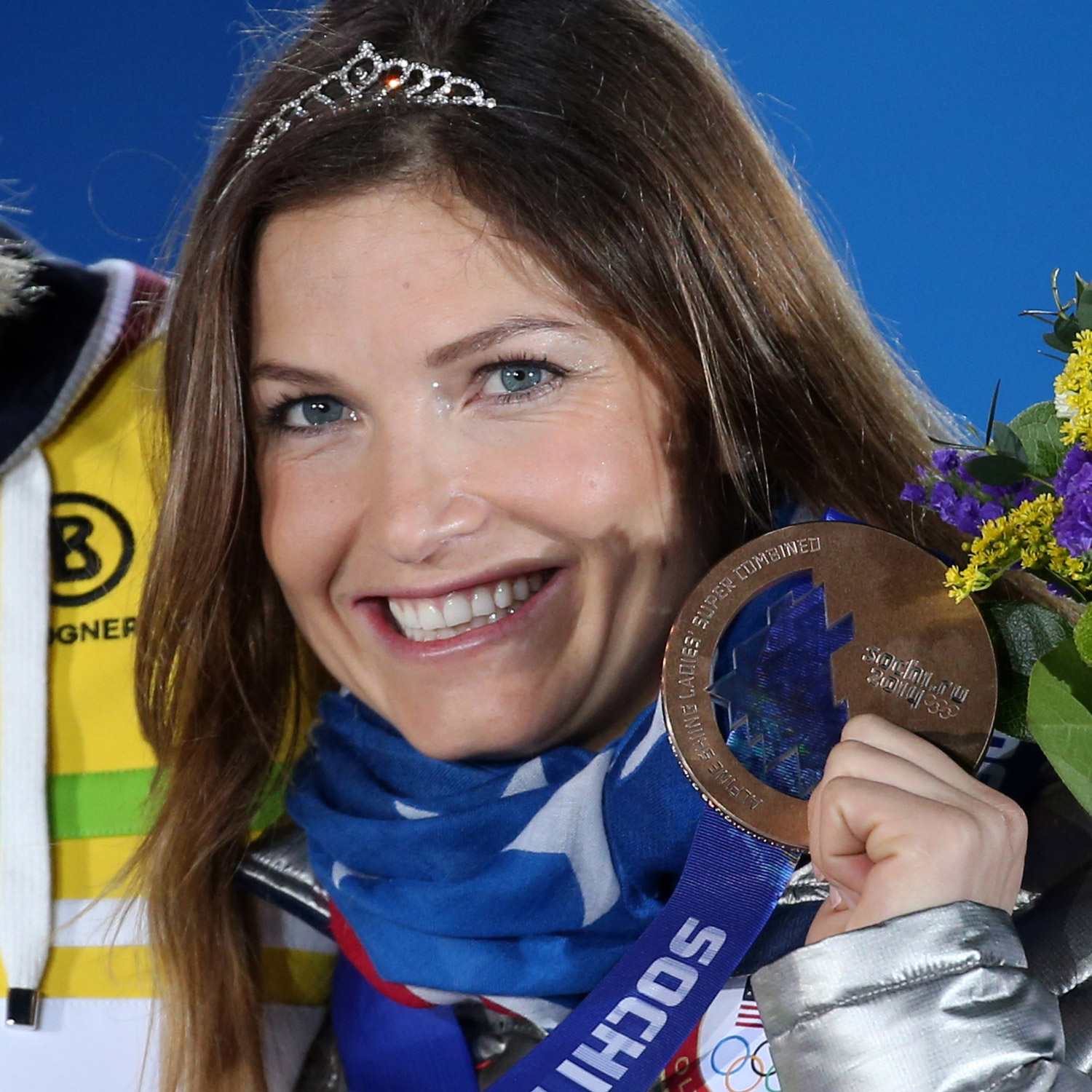 Julia Mancuso celebrates her medal in Sochi, one of six by WSS alumni. GEPA
“Before it was a charter, attending the Winter Sports School was not an option for me,” says senior Hava Rohloff of her first (and only) year at the school. “Having this level of support has been amazing.”
Head of School Dave Kauffman joined the WSS in 2008 under then Head of School Rob Clayton. He took over the post in 2013 and has played an integral part in the transition from an expensive private school — in three small double-wide trailers overlooking the Utah Olympic Park (UOP) — to the affordable charter that resides in a new, freshly finished building that it became this year. Along with the public status for Utah residents, the school also maintains that out-of-state students are still able to attend. The tuition also saw a decrease, dropping from $17,400 for all students to $13,250 for non-Utah residents, who make up only 12 of the 112 students currently enrolled in the school.
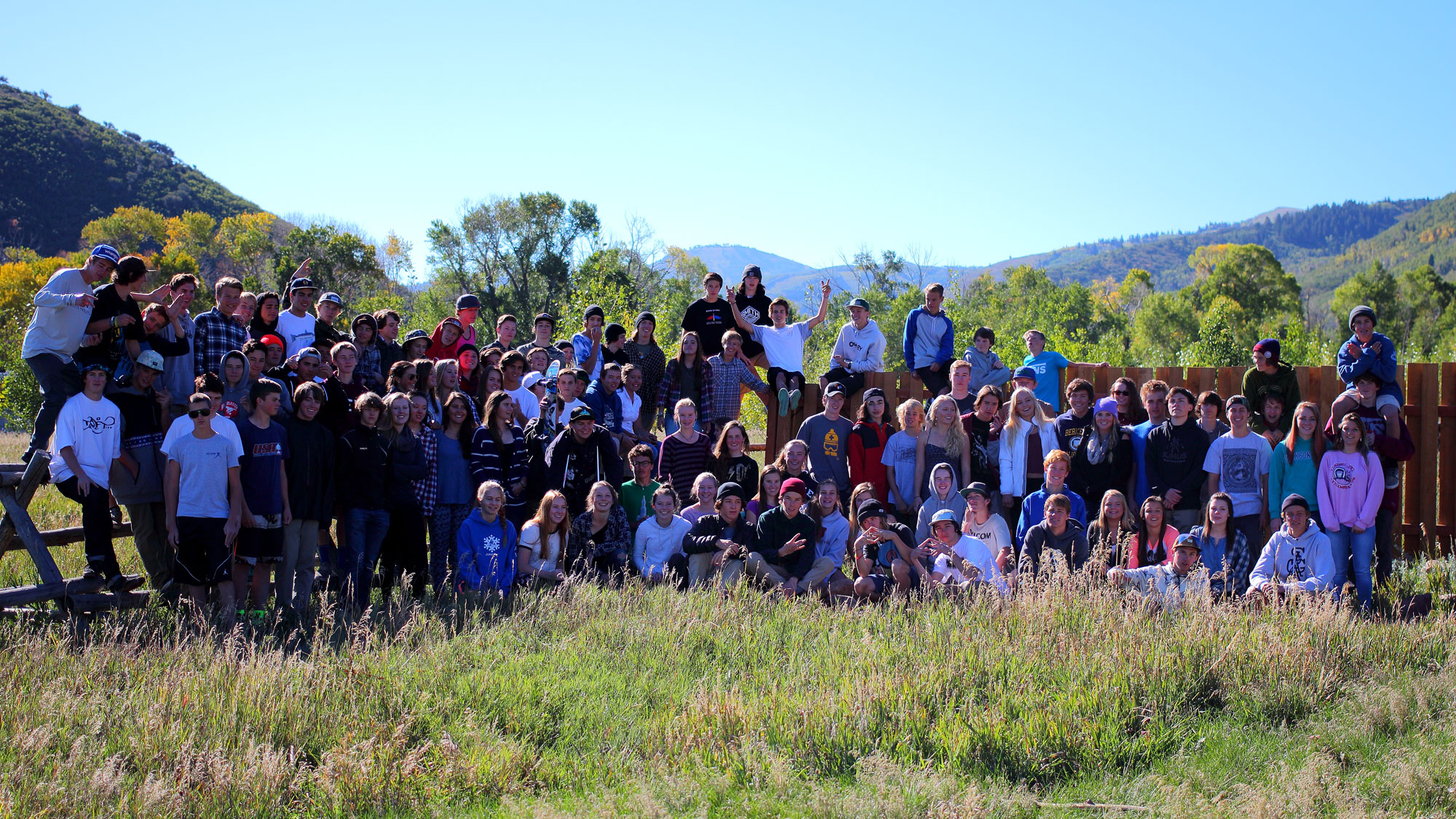
WSS students attend class throughout the summer so they can race in the winter.
“The purpose was to solve the affordability problem — aside from the handful of very affluent families, there are still a lot who want to pursue sports,” says Kauffman on the expense of ski racing, adding that the tuition was unmanageable for many families. “As a result our enrollment bounced around a lot.”
Cost has been a recurring theme in the snowsports world lately, with athletes seeking ways to fundraise or save in order to stay involved. The WSS offers a solution with its free in-state tuition and non-traditional school schedule that allows students to focus on studying when they’re in school, and on their sport during the winter.
“Public school and ski racing felt like a train wreck,” says Rohloff with a laugh. “The transition from Park City High School to the WSS was smooth because it’s helpful to be surrounded by people who share the same passions and goals. Plus, the teacher/student ratio is smaller, so the individual attention is very supportive.”
The school’s past success can be seen in the number of medals and awards from the likes of alumni Ted Ligety, Julia Mancuso, Andrew Weibrecht, Joss Christensen, Sarah Hendrickson, Steve Holcomb, Alex Schlopy and Bryan Fletcher. But recent years saw a decrease in the number of students, particularly on the alpine side, who were graduating to the national team. The cost could not be overlooked as an underlying factor.
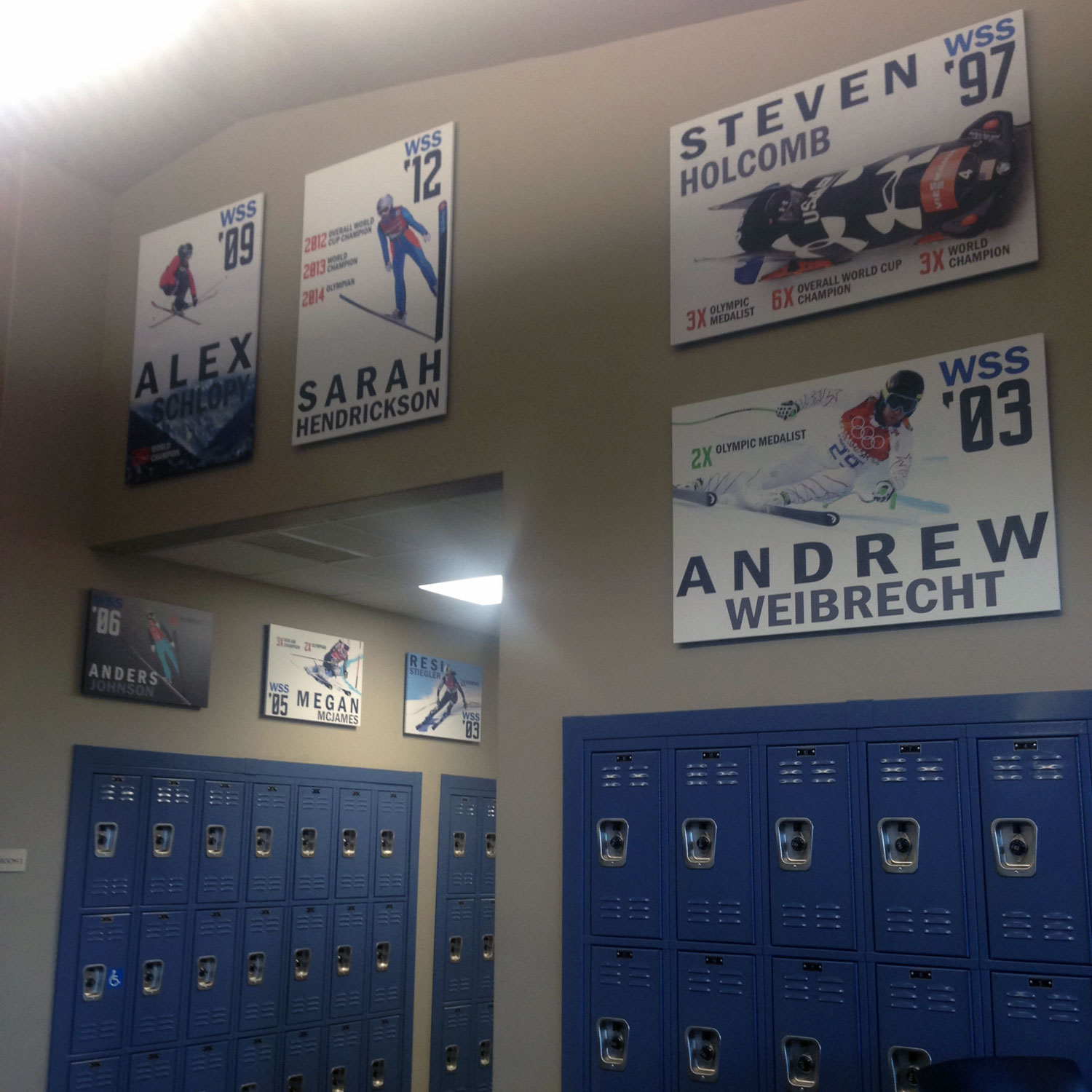 Posters of Olympics and World Championship medalists line the lobby. Photo: Jessica Kelley
“We know from our relationship with the Youth Winter Sports Alliance, here in Park City, how many serious winter sport athletes there are, and we know what our enrollment numbers were, and we realized there was a huge gap,” says Kauffman. “What else could it be driven by? We knew tuition was a huge limiting factor. That’s what we were trying to do — solve the affordability gap.”
The WSS began in 1994 as a feeder program for the Park City Ski Team and got a huge boost after the success of the Salt Lake 2002 Olympic Winter Games.
“I think the only winter sport discipline that has never been represented here is curling — to my knowledge,” says Kauffman. “Park City and the surrounding areas have the venues. We have one of two operating bobsled tracks in the country; we have a long-track speed skating oval. It’s all here, and we can service all these athletes because their coaches and venues are located here.”
Located in the heart of Park City, the WSS made a necessary change when it moved out of three double-wide trailers — a running joke among the students — at the Utah Olympic Park and into a 6,075-square-foot building across from the Canyons. Less than five miles from Park City Mountain Resort and Deer Valley, the new building has not only the lockers and hallways of a “real” school but also posters of WSS graduates who’ve earned Olympic and national medals.
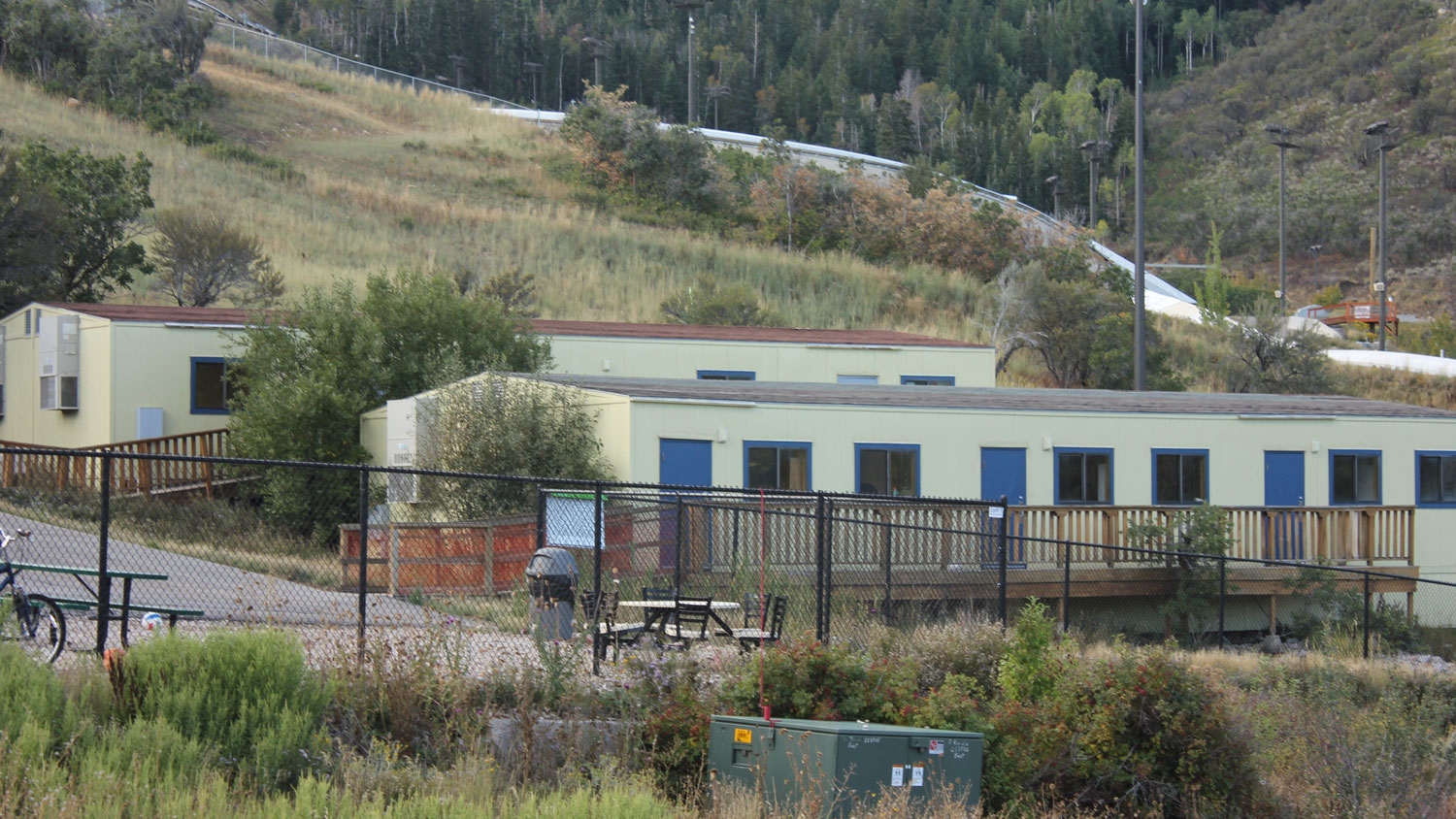 Before: The old classroom trailers at the UOP. Photo courtesy of WSS.
 After: The new building located in the heart of Park City. Photo: Jessica Kelley.
Graduating senior Amy Hoyt is one of a handful of students who have been at the WSS for the past three years. “My first impression when I saw the new building was ‘Is this really ours?’” she says. “It was much nicer than the trailers; I didn’t want to go to school there because it was so nice. I didn’t want it to get messed up.” She has seen other changes firsthand, too, including the free tuition.
“Becoming a charter opens it up to all kids who compete in winter sports, not just kids who can afford it,” says Hoyt. “It gives more athletes opportunity to do their best and achieve their goals.”
Another big change was the rise in enrollment numbers. During 2013, the last year WSS operated as a private school, there were 42 students. This year that number nearly tripled to 112. The old trailers were incapable of handling more than 65 students, so WSS leaned on some generous donors and financial finagling to pull off funding for the new building.
“It basically came together from some very important gifts and creative financing,” says Kauffman of the new building. “Moving forward, we will need to fundraise to grow and expand.”
Naturally, more athletes are hoping to take advantage of the new public school. But while the new building is significantly larger, it can fit only a maximum of 120 students, around 30 per class. Last year WSS had a waiting list of around 50; this year, after only two enrollment periods, with five more still to come, the list is already close to 40.
Kauffman hopes to expand the building to 20,000 square feet to meet the growing demand, but adds that there’s a limited number of athletes in the U.S. who can fit the mold of going to school in the summer and focusing solely on their sport in the winter.
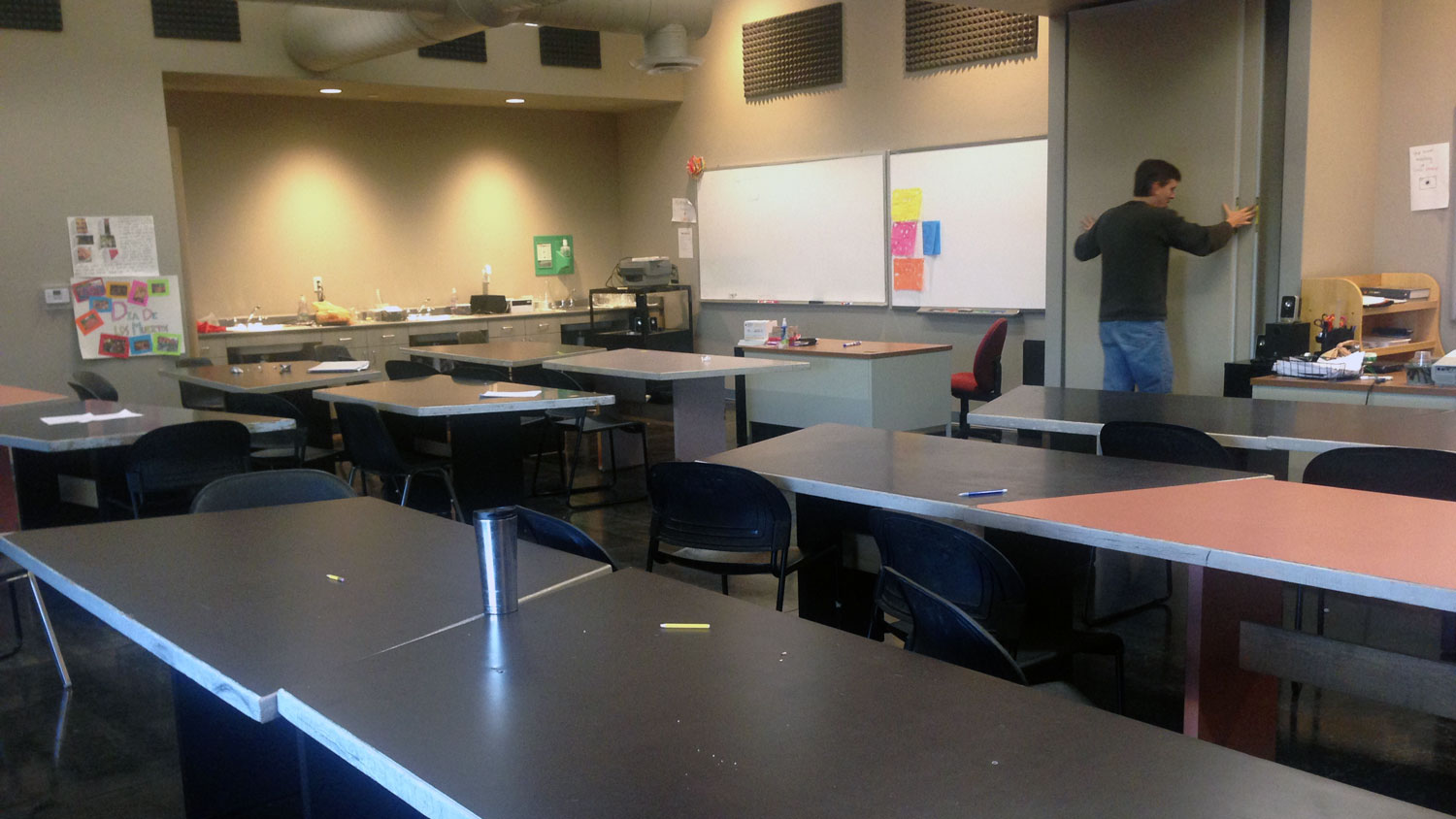 The new building at WSS has five classrooms. Jessica Kelley.
“I don’t think there are more than 200 to 250 students, whether it is Utah or out of state,” says Kauffman. “It takes a certain type of student to submit themselves to a full year where they never get to unplug and do nothing.”
Still, WSS has allowed Olympic and World Championship medalists such as Julia Mancuso, Andrew Weibrecht, and Sarah Hendrickson — all of whom were on their national teams as teens — to compete internationally in the winter and study in the summer. For them, it could arguably have been their only option to finish school on time because of their rigorous travel schedules. Mancuso raced in her first World Cup race at the age of 15, and Hendrickson was a World Cup ski jumping globe winner at 17 and world champion at 18.
“She won her overall World Cup title between her junior and senior years with us,” says Kauffman of Hendrickson and her non-traditional school route at WSS. “It’s reasonable to say that something would have had to suffer. Either her grades would have slipped — she was an excellent student — or she would have had to forgo some competitions.”

Sarah Hendrickson celebrates her World Championships gold in 2013. GEPA
“The Winter Sports School provides an opportunity to focus completely on academics when needed,” says Rohloff. “And finishing school in November allows me to put 100 percent of my focus into my sport. I feel relief and excitement at the same time.”
About the Author: Jessica Kelley