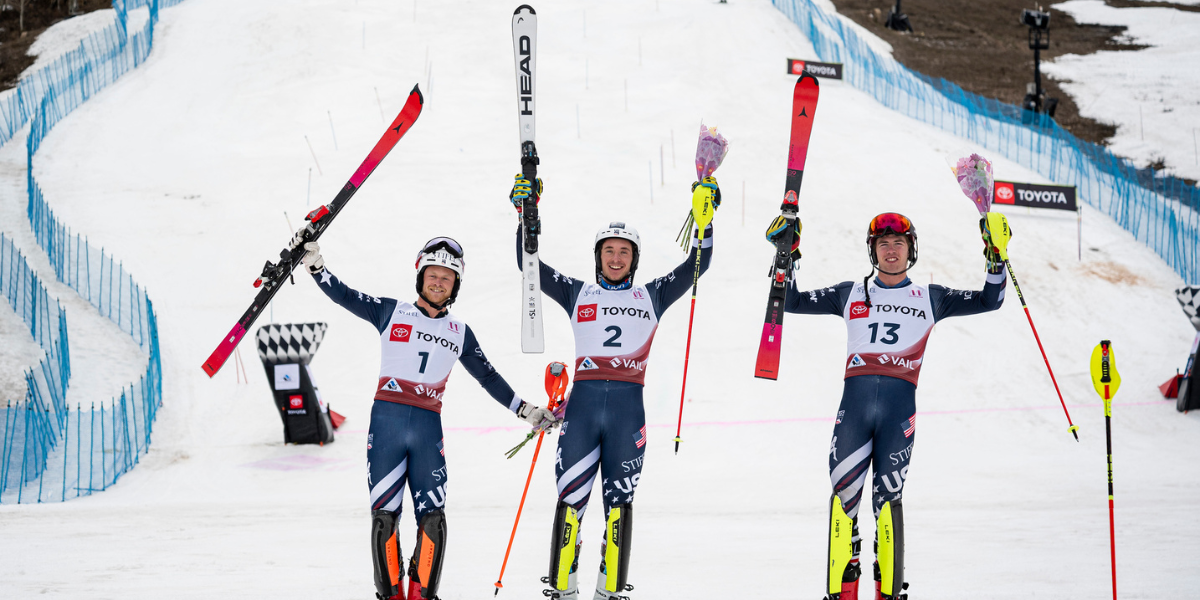
Featured Image: Men’s Slalom Podium at U.S. Nationals in Vail, Colorado. Photo: Eric Brandolini.
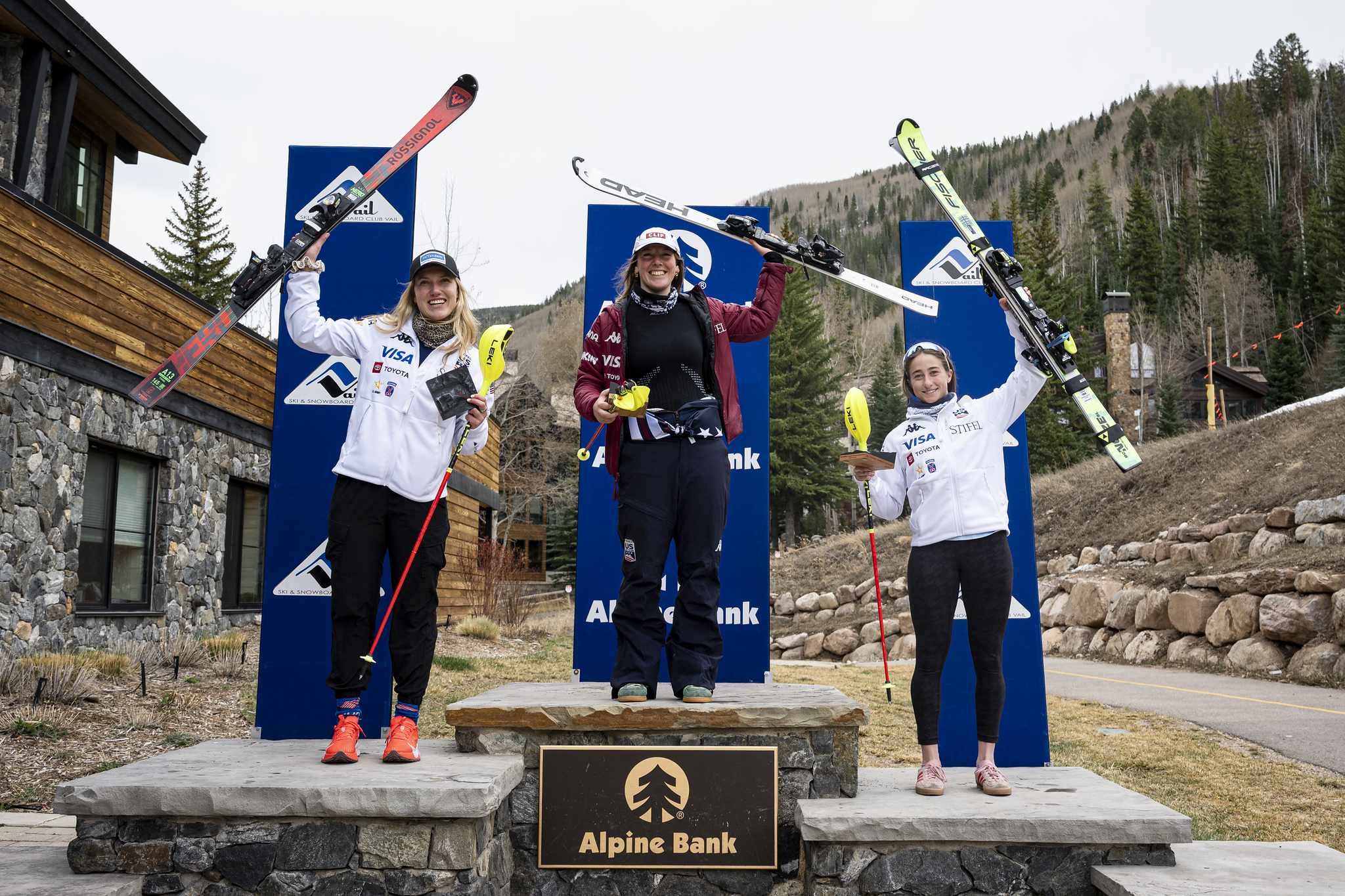
A.J. Hurt won the women’s slalom at the U.S. Alpine Nationals presented by Stifel in Vail, Colorado, delivering two clean runs on a demanding surface. Nina O’Brien finished second, while Kjersti Moritz claimed third, highlighting both World Cup experience and rising talent in the Stifel U.S. Ski Team pipeline.
Warm, soft snow defined the race, turning it into a test of focus, timing, and execution. As the course broke down, rhythm became harder to find and easier to lose. Every turn required precise timing. Every lapse in focus cost speed.
In those conditions, the best executed.
A.J. Hurt delivered.
Top 5 – Women’s Slalom
- 1st 🇺🇸 A.J. Hurt (2000, Stifel U.S. Ski Team / Palisades Tahoe Ski Team, Head) — 1:34.05
- 2nd 🇺🇸 Nina O’Brien (1997, Stifel U.S. Ski Team / Burke Mountain Academy) — +0.18
- 3rd 🇺🇸 Kjersti Moritz (2004, Stifel U.S. Ski Team / Ski & Snowboard Club Vail / Vail Mountain School / Middlebury College) — +0.80
- 4th 🇦🇺 Madison Hoffman (2000, University of Utah All-American) — +0.84
- 5th 🇺🇸 Katie Hensien (1999, Stifel U.S. Ski Team / Rowmark Ski Academy / University of Denver All-American, SHRED) — +0.97
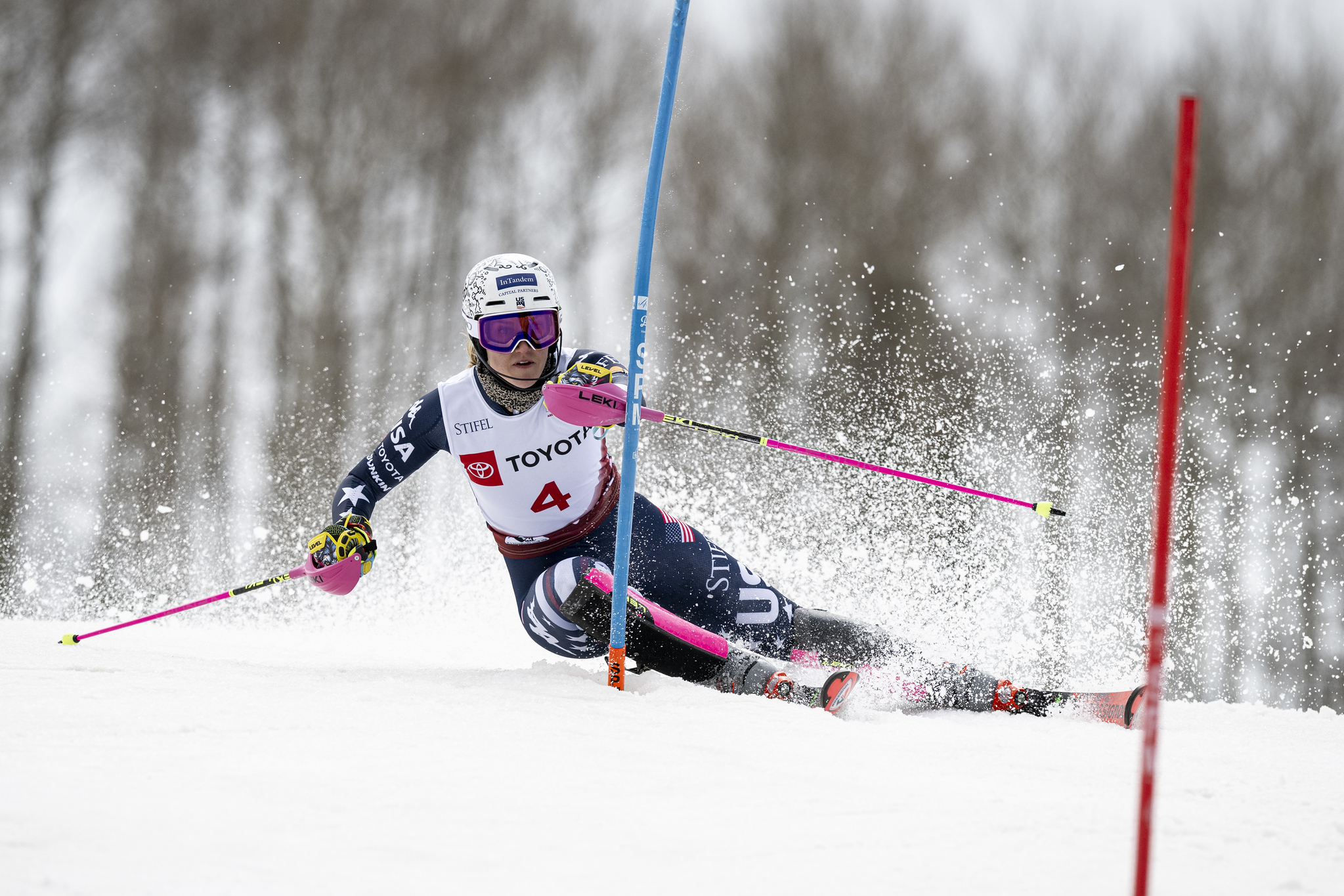
How Did A.J. Hurt Win With Focus and Timing?
The Stifel U.S. Ski Team athlete delivered the two most complete runs of the race to secure her third U.S. National slalom title at the U.S. Alpine Nationals presented by Stifel.
Hurt’s advantage came from her ability to stay locked into the rhythm of the course. She matched her timing to the terrain, released cleanly between turns, and carried speed without forcing it. Where others got late or rushed, Hurt stayed on time—building speed through execution rather than risk.
That level of skiing holds up when conditions get difficult.
“It’s nice to end on a good race,” Hurt said. “It’s been a long season, so I’m really looking forward to going home.”
A two-time Olympian (Beijing 2022, Cortina 2026) and World Cup podium athlete in both slalom and giant slalom, Hurt continues to show she can execute under pressure on any stage.
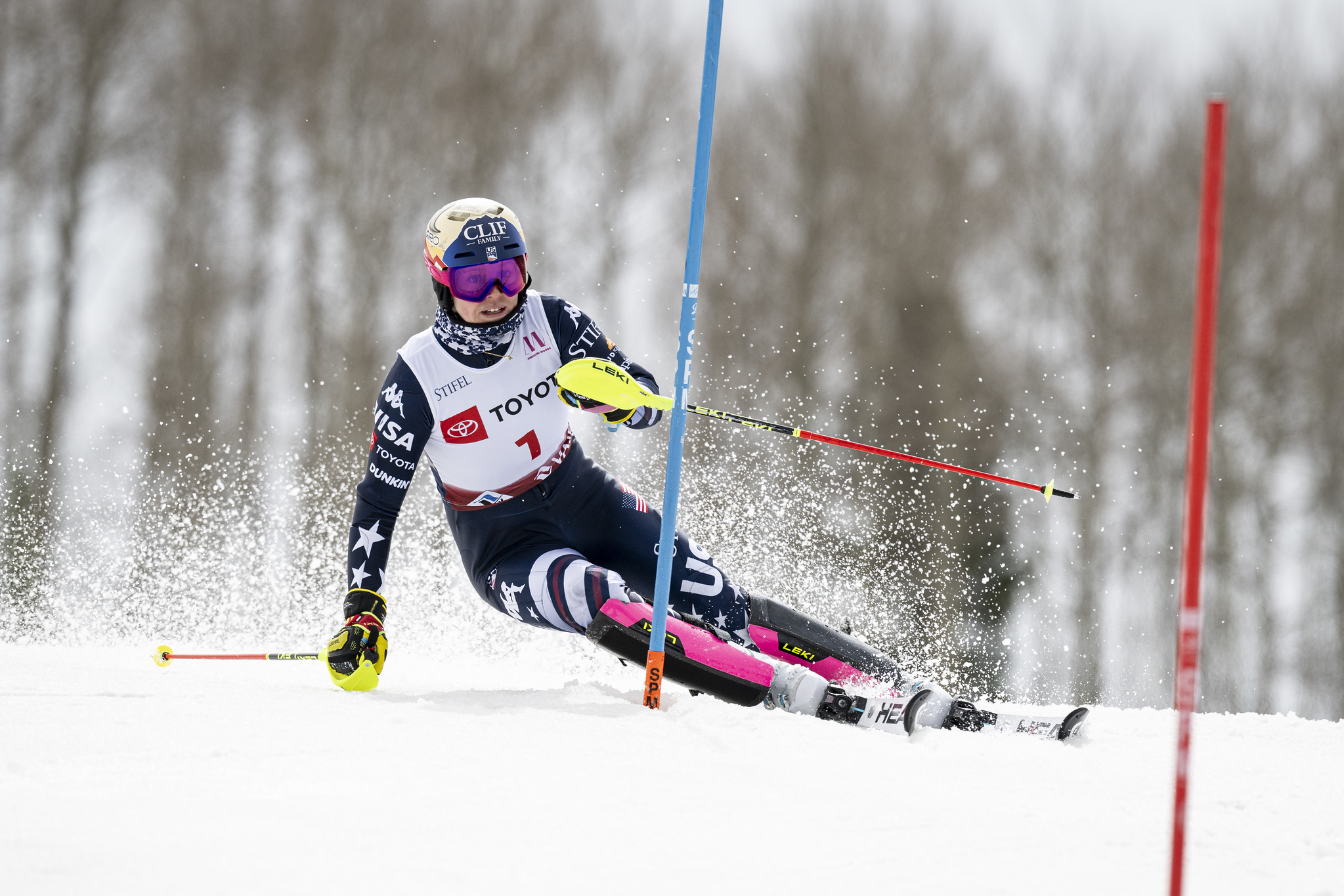
Why Did Nina O’Brien Stay Within Striking Distance?
Nina O’Brien matched Hurt’s pace with composed, disciplined skiing, finishing just 0.18 seconds back in second.
Representing the Stifel U.S. Ski Team / Burke Mountain Academy, O’Brien delivered one of the strongest second runs in the field. Her timing improved as the race went on, allowing her to stay connected to the course while others struggled to maintain rhythm.
“Honestly, it feels great,” O’Brien said. “I feel like I haven’t been letting myself see the finish line of the season until today, so I’m really glad I could end it on a high note.”
Racing in Colorado—where she now lives—added another layer to the performance, turning the final race of the season into something closer to a home event.
A World Cup Finals qualifier and 2026 Olympian, O’Brien’s performance showed the experience and control that define top-level execution.
What Made Kjersti Moritz’s Podium Stand Out?
Kjersti Moritz brought speed—but more importantly, she brought timing.
The Stifel U.S. Ski Team athlete / Ski & Snowboard Club Vail / Middlebury College skier, and a local from the Vail Valley, delivered under pressure to finish 3rd. Racing on home snow, she stayed connected to the course as conditions deteriorated, maintaining rhythm where others lost it.
“It was a really good end of the season,” Moritz said. “It feels really good to do it in front of all my friends and family—they’re here to celebrate with me.”
The moment carried added meaning, with both of her sisters also racing.
“Both my sisters are here too, so it’s just a special place,” she said.
Her connection to Vail showed not just in comfort, but in execution.
“I stayed at home, which is really nice,” she said. “I haven’t been home since before Thanksgiving.”
Moritz finished 2nd in the NorAm slalom standings, earning a fixed World Cup start position next season. With multiple World Cup starts already, she continues to show she can translate her skiing to the highest level—and now deliver at home when it matters most.
How Did Hoffman and Hensien Handle the Conditions?
Madison Hoffman stayed composed to finish fourth.
The University of Utah All-American, representing Australia, used disciplined skiing to manage the course as it broke down. A World Cup points scorer in Levi and a 2026 Olympian, she showed the ability to stay focused and execute under pressure.
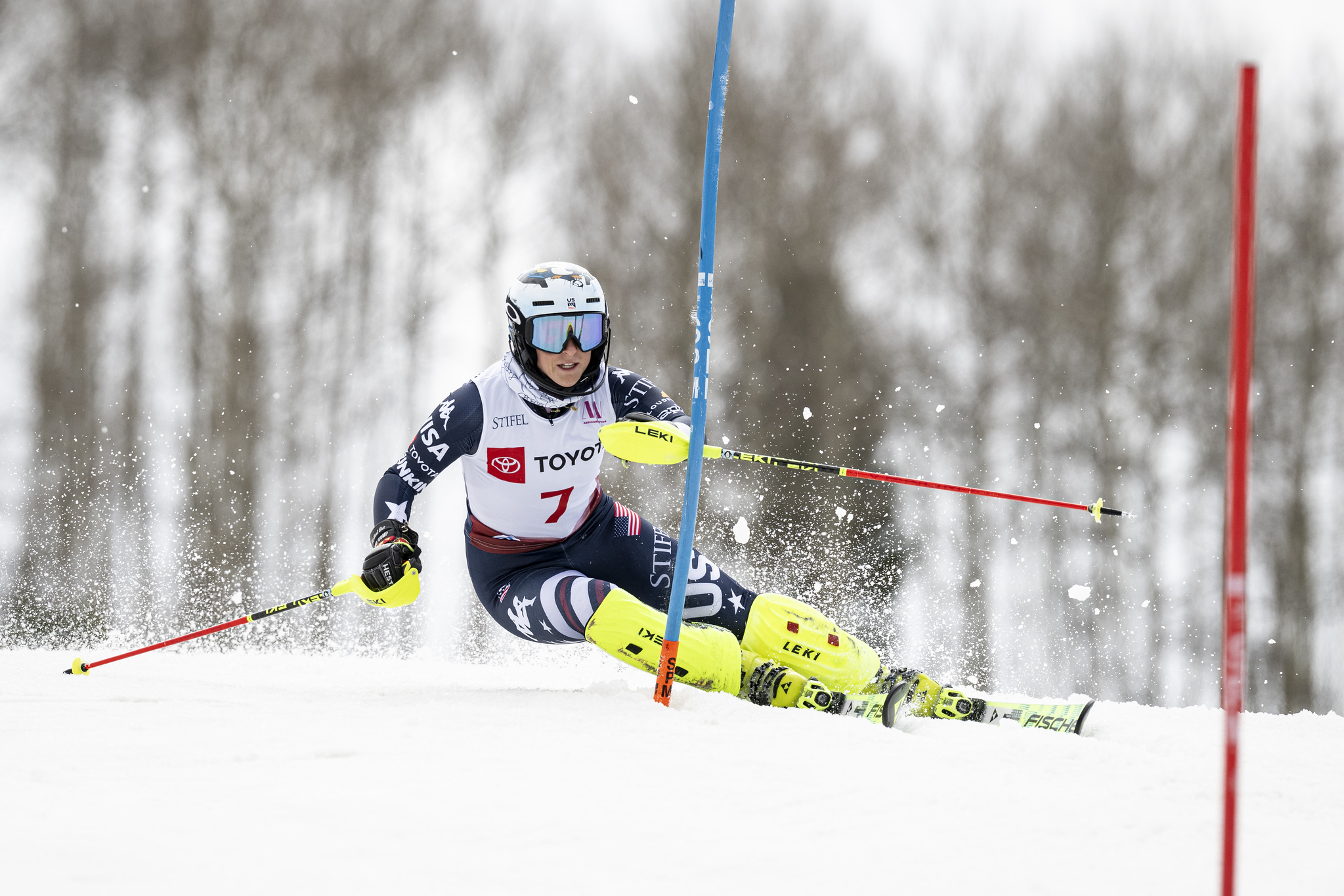
Katie Hensien rounded out the top five with two consistent runs.
The Stifel U.S. Ski Team athlete / Rowmark Ski Academy / University of Denver All-American (SHRED) overcame injury challenges this season to finish the year strong. She maintained her timing through both runs, avoiding major mistakes and staying efficient in difficult conditions.
As seen in the giant slalom, she continues to deliver reliable performances when execution becomes the deciding factor.
What Does This Race Show About Winning at the Limit?
It comes down to focus, feel, timing, and execution.
Hurt and O’Brien demonstrated why they are established World Cup athletes—able to stay on time and deliver when conditions make that difficult. At the same time, Moritz’s podium signals that the next generation is learning to do the same.
On a surface that punished hesitation and exposed mistakes, the athletes who stayed focused and executed cleanly separated themselves.
That is the standard at the limit.

U.S. Men’s Slalom Nationals Presented by Stifel: Puckett Breaks Through on Home Snow
Cooper Puckett won the men’s slalom at the U.S. Alpine Nationals presented by Stifel in Vail, Colorado, delivering a breakthrough performance in front of a home-state crowd. Jett Seymour finished second, while Jevin Palmquist claimed third, as all three podium finishers showcased deep Colorado ties and the strength of the Stifel U.S. Ski Team pipeline.
Warm, soft snow turned the race into a test of focus, timing, and execution. As the surface broke down, rhythm became harder to find and easier to lose. Every turn required precise timing. Every lapse cost speed.
On this day, the athletes who stayed connected to the course—and trusted their movements—separated themselves.
Puckett delivered.
Top 5 – Men’s Slalom
- 1st 🇺🇸 Cooper Puckett (2003, Stifel U.S. Ski Team / Dartmouth College / Steamboat Springs Winter Sports Club / Steamboat Mountain School, Head) — 1:33.89
- 2nd 🇺🇸 Jett Seymour (1998, Stifel U.S. Ski Team / Steamboat Springs Winter Sports Club / University of Denver All American, Atomic) — +0.62
- 3rd 🇺🇸 Jevin Palmquist (2007, Stifel U.S. Ski Team / Team Summit / Buck Hill) — +0.68
- 4th 🇺🇸 Luke Winters (1997, Stifel U.S. Ski Team / Sugar Bowl Academy) — +0.76
- 5th 🇳🇴 Johs Braathen Herland (2003, University of Utah All American) — +1.59
How Did Cooper Puckett Deliver Under Pressure?
Cooper Puckett put together the most complete race of the day to secure his first U.S. National slalom title at the U.S. Alpine Nationals presented by Stifel.
The Stifel U.S. Ski Team athlete, a former Dartmouth College skier, grew up in Colorado skiing with the Steamboat Springs Winter Sports Club and attending Steamboat Mountain School. That foundation showed in his ability to adapt as the course deteriorated.
“It was a really, really challenging year,” Puckett said. “But to end it like this is incredible—I’m really happy.”
Puckett’s defining strength was his timing. He matched his movements to the terrain, released cleanly, and carried speed without forcing the line. Where others got late, he stayed connected.
His season included a standout World Cup moment, starting with bib 69 in Levi and finishing 26th, scoring points in his first-ever WC slalom—an exceptionally rare achievement.
“That was probably the coolest thing I’ve ever done,” he said.
Despite limited slalom preparation and a season spent moving between continents and disciplines, Puckett improved his world ranking through NorAm success and delivered when it mattered most.
“I love racing here—so many friends and family,” he said. “Steamboat Springs Winter Sports Club means everything to me… it takes a village.”
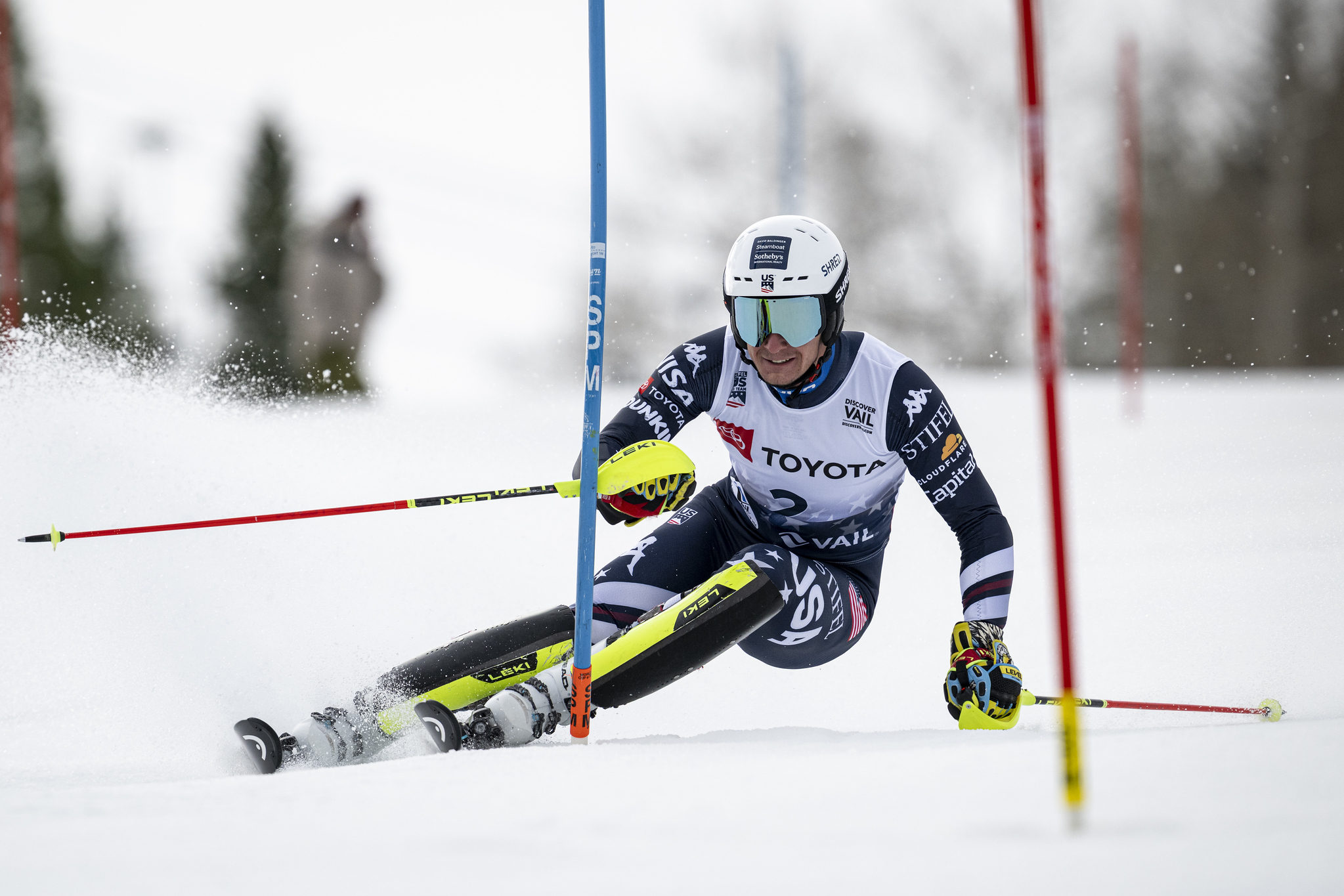
Why Is Jett Seymour One of the Most Proven U.S. Slalom Skiers?
Jett Seymour finished second, reinforcing his role as one of the most reliable American slalom athletes.
The Stifel U.S. Ski Team skier from the Steamboat Springs Winter Sports Club has now scored World Cup slalom points in four consecutive seasons, establishing himself as a consistent performer at the highest level.
“It’s a great way to end the season,” Seymour said. “It’s fun to bring all the best in America together and compete for the national title.”
Seymour emphasized the importance of Nationals within the development pipeline.
“It’s important for the next generation to see us, to race against us, and to get to know us,” he said.
Racing in Colorado allowed him to compete close to home.
“My family can come watch… it’s as close to home as I can get,” he said.
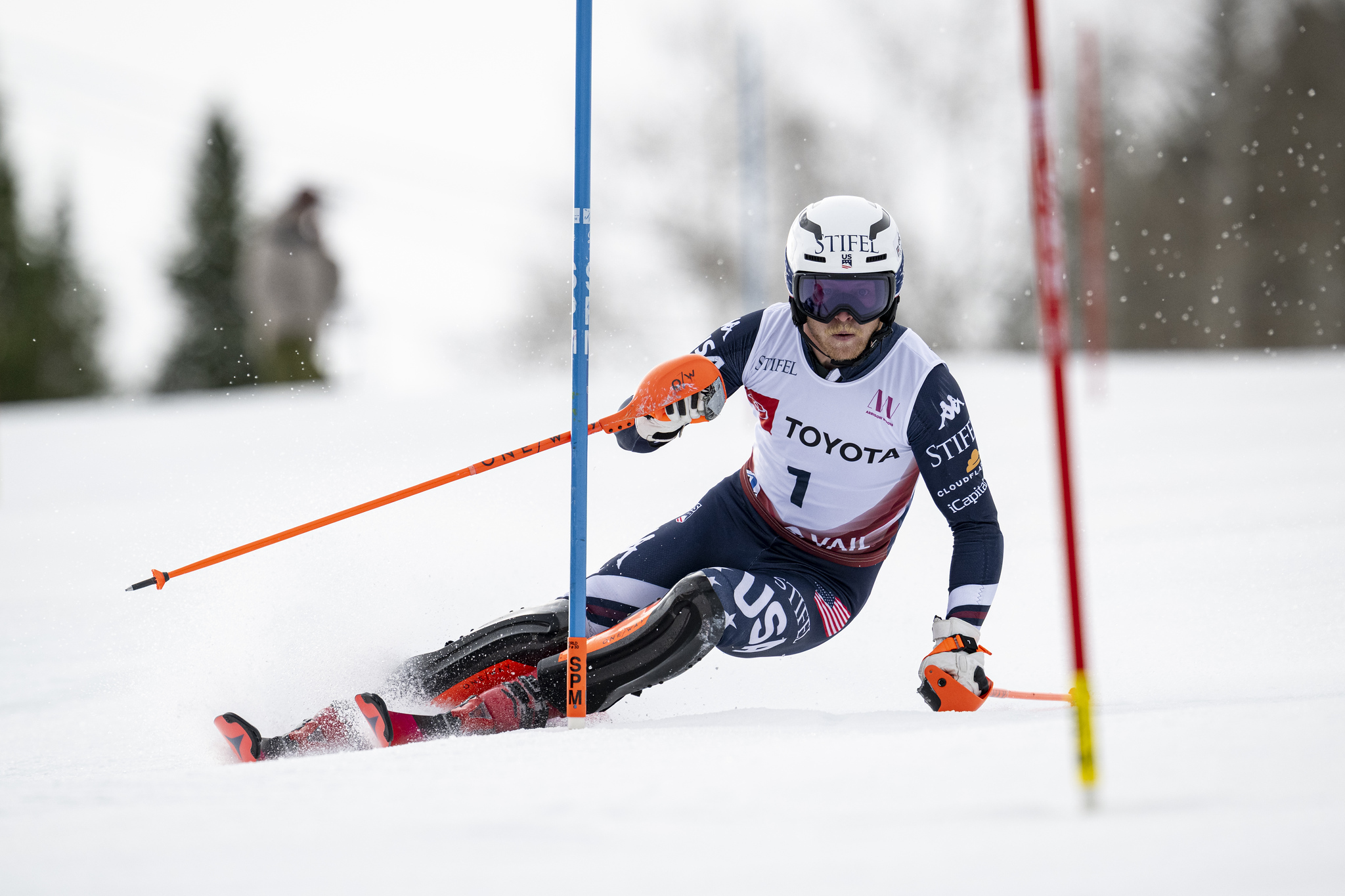
What Makes Jevin Palmquist One of the Next Big Names?
At just 19 years old, Jevin Palmquist delivered one of the standout performances of the race to finish third.
The Stifel U.S. Ski Team athlete, developed through Team Summit and originally from Buck Hill, Minnesota, continues to establish himself as one of the top rising talents in U.S. skiing.
“To end with a strong result like this feels really good,” Palmquist said. “My skiing kept getting better as the season went on.”
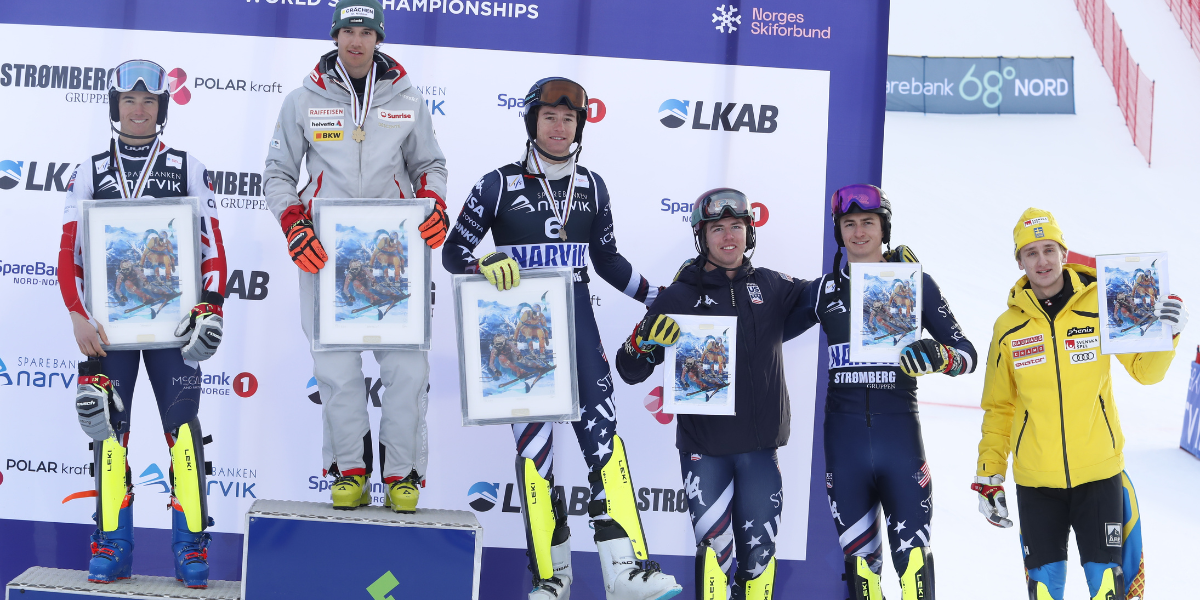
Palmquist finished 4th at the FIS Junior World Ski Championships in Narvik this season and 3rd in the NorAm slalom standings, ranking 2nd among North Americans. That result earned him a personal World Cup start position for the 2027 slalom season.
Surrounded by family—including two brothers and a sister competing in the race—the moment carried added meaning.
“It was super fun racing with my brothers and watching my sisters,” he said.
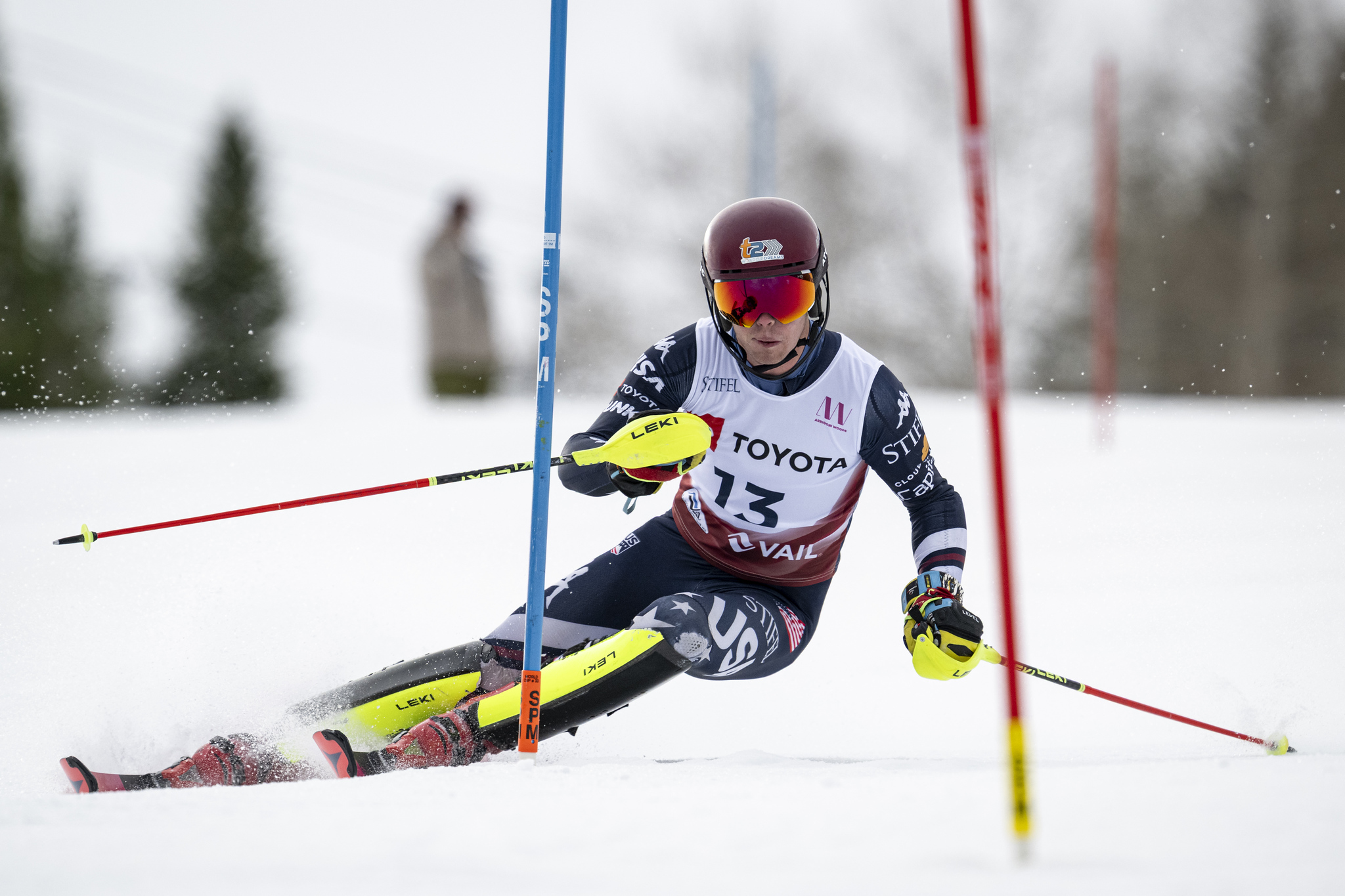
What Did Luke Winters Show in His Return to Form?
New dad, Luke Winters, finished fourth, showing clear signs of returning to the level that has defined his World Cup career.
The Stifel U.S. Ski Team veteran is the only athlete in this field who has qualified for World Cup Finals, highlighting his experience at the highest level.
After recent struggles, Winters closed the World Cup season with improved form. That momentum carried into Nationals, where he skied with efficiency, staying in contention on a surface that exposed mistakes.
His performance was a reminder: when in rhythm, Winters is still a factor.
How Did Johs Braathen Herland Back Up His GS Victory?
Johs Braathen Herland finished fifth, adding another strong result to his Nationals campaign.
The Norwegian standout and University of Utah multi-time All-American won the giant slalom earlier in the week, confirming his strength across the technical disciplines.
In slalom, he showed strong fundamentals and speed, but the grooved surface required near-perfect timing—something that ultimately separated the podium athletes from the rest.
What Does This Race Show About U.S. Slalom Depth?
The U.S. Alpine Nationals presented by Stifel highlighted a clear trend: depth across generations in U.S. men’s slalom.
From World Cup athletes like Puckett, Seymour, and Winters to emerging talent like Palmquist, the pipeline continues to produce athletes capable of competing at the highest level.
On courses that punished hesitation and rewarded execution, the difference came down to timing, discipline, and the ability to stay connected under pressure.
That is the standard at the limit.
About the Author: Peter Lange