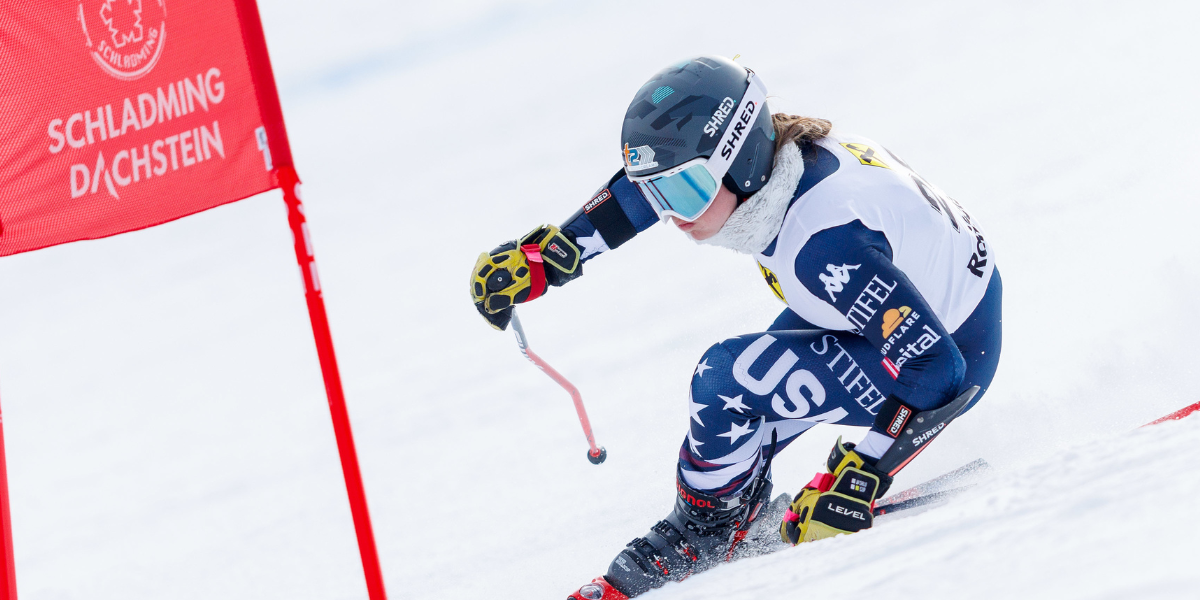
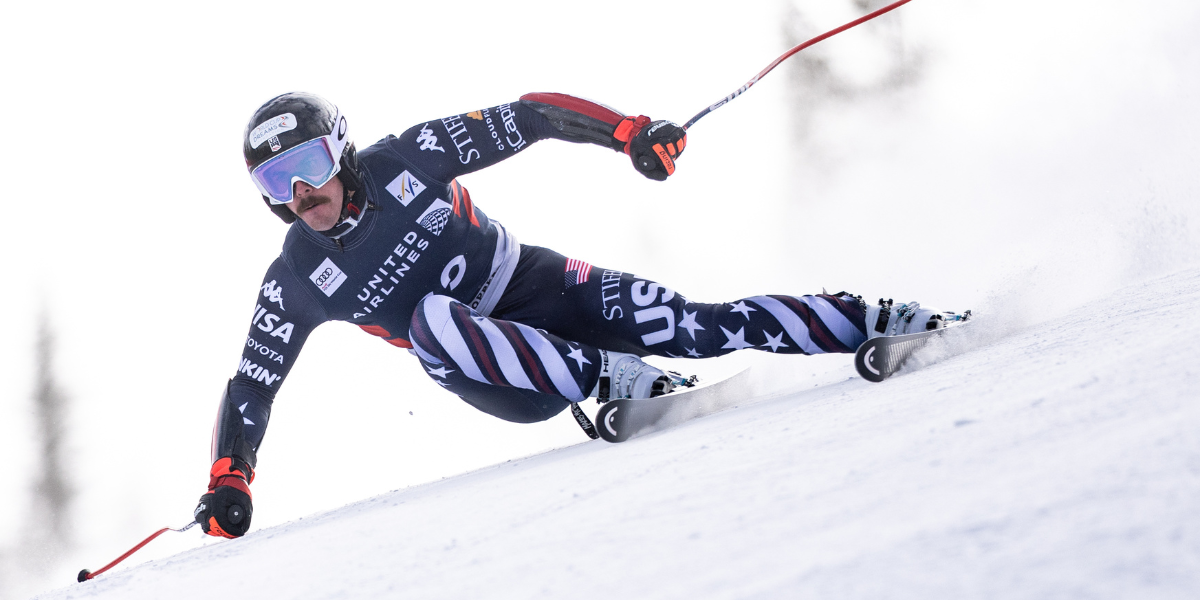
Featured Image: Tanner Perkins of the U.S. Ski & Snowboard Team, a World Cup Dreams recipient. Photo courtesy of U.S. Ski & Snowboard.
How World Cup Dreams Foundation is redefining the future of American ski racing
There’s a moment in every ski racer’s life when the dream gets expensive.
It doesn’t happen all at once. It creeps in, first with travel, then training camps, then the realization that the path to the top of the sport runs largely through Europe, far from home and even further from affordable. For many athletes, this is where the dream quietly fades. Not because they lack talent. Not because they lack drive. But because they simply run out of runway.
World Cup Dreams Foundation exists for that moment.
Founded in 2006 by former U.S. Ski Team athletes, the organization began with a simple mission: support injured athletes who had fallen through the cracks of a system that, at the time, wasn’t built to catch them.
But over the past few years, under new leadership and a bold reimagining of its purpose, that mission has evolved into something far bigger.
Today, World Cup Dreams isn’t just helping athletes survive the sport. It’s helping them succeed in it.
From Survival to System
When Claire Abbe Biesemeyer took on the role of Executive Director nearly a year ago, the foundation was already in transition.
A pivotal moment came in 2021, when World Cup Dreams joined forces with the T2 Foundation, uniting two aligned missions: supporting elite athletes at the highest level while investing in the next generation.
That merger didn’t just expand resources. It changed the philosophy.
What had once been a reactive model, helping athletes in moments of need, became a proactive system, a pipeline designed to guide athletes from their earliest competitive years all the way to the World Cup.
“When Tommy Biesemeyer took over, the organization was raising about $50,000 annually,” Claire explains. “Now we’re distributing about $1.5 million per year in grants.”
That growth isn’t just impressive. It’s transformative.
Because in ski racing, money isn’t just helpful, it’s often the difference between continuing and quitting.
The Hidden Barrier
Ski racing is one of the most expensive sports in the world.
Equipment, travel, coaching, and training blocks, layered on top of a competition circuit based largely in Europe, create a system where access is often dictated by financial means. And as athletes get older, the costs don’t plateau. They accelerate.
What World Cup Dreams recognized is that the most critical drop off point isn’t at the beginning, it’s in the middle.
That fragile stretch where athletes are no longer juniors, but not yet fully supported. Where potential is high, but resources are thin. Where many of the sport’s future stars quietly disappear.
“We were losing talented athletes because of cost,” Claire says.
So they built a system to catch them.

A Pipeline with Purpose
Today, the foundation operates with a clear, structured development model:
- U16 Level (ARCO Grant) – Introducing support early, when belief is still forming (Founded by Olympian River Radamus)
- On the Rise Grant (16–21) – Bridging the critical gap into elite competition
- World Cup Grant – Supporting athletes on the cusp of the highest level
Each stage is intentional. Each dollar is strategic.
Instead of simply distributing funds, the organization now works closely with athletes to understand how support translates into performance, whether that means more days on snow, access to better training environments, or the ability to stay in the sport one more year.
Across the entire platform, WCDF supported 94 athletes and two cross country teams, a reach that continues to expand as the system matures.
They’ve even aligned their metrics with the U.S. Ski Team, focusing on increasing the number of American athletes ranked in the top 300 in the world, a key indicator of future World Cup success.
It’s not just about funding dreams. It’s about building them.
Proof in Performance
The results are already visible.
At the most recent Olympic level, the impact of World Cup Dreams was undeniable:
7 of 11 women on the U.S. Alpine team
4 of 6 men
—all had been supported by World Cup Dreams or T2 Foundation at some point in their journey.
Athletes like Ryan Cochran-Siegle, Paula Moltzan, and Nina O’Brien aren’t just recipients—they are proof of concept. Proof that when talent is supported at the right time, it doesn’t just survive. It thrives.
As O’Brien puts it:
“T2 was my first supporter in this sport, and I genuinely don’t know if I’d be where I am today without them. During high school, the grants helped cover my National Training Group fees, flights to Europe to race, and summer camps in New Zealand. Those opportunities were crucial to my development and simply wouldn’t have been possible without the financial support. They showed up for me before anyone else did, and that early belief is what keeps athletes in the sport long enough to find out what they’re capable of. I’m incredibly grateful for their support, and I know I’m not alone in that.”
More Than Money
But perhaps the most powerful part of World Cup Dreams isn’t financial.
It’s human.
Because behind every grant is a network, a community of former athletes, mentors, and leaders who understand exactly what the journey demands.
One of the clearest expressions of that philosophy is the foundation’s growing mentorship initiative.
As Alice Merryweather explains:
“I’m incredibly proud of the alumni mentorship program. Tommy approached me with the idea during the summer of 2024, when I was pretty fresh off my own retirement from racing and had just started as the World Cup Dreams intern. It was an opportunity to try to leave the system a little better than I found it… rooted in the belief that meaningful support is rarely purely financial.”
The structure is intentionally simple. Every On the Rise athlete is paired with a mentor, someone WCDF has previously supported or who is currently competing at a higher level. Pairings are carefully considered based on discipline, gender, location, goals, and lived experience, and begin each October ahead of the race season.
“After their first meeting… the pairs are largely on their own. It’s up to the athletes to determine how and how much to utilize their mentor.”
Now in its second year, the program has already shown measurable impact.
“Athletes report working with mentors on topics beyond just technique and tactics… conversations about mindset, injury recovery, and life beyond sport.”
Just as meaningful is the response from mentors themselves.
“Many were thankful just to have the opportunity to stay involved… and many have voiced how this is something they wish they had when they were their mentee’s age.”
For Alice, the program is deeply personal.
“When I missed one season for eating disorder treatment and another two for injury, WCDF only leaned in harder… I now get to foster the support that I felt for a whole generation behind me, and I think that’s really special.”
That full-circle dynamic, athletes becoming mentors, is what turns support into something lasting.
A Culture of Giving Back
At its core, World Cup Dreams is powered by something deeper than strategy: a culture.
Many of the people leading and supporting the organization are former athletes themselves, individuals who once navigated the same challenges and now feel a responsibility to change the experience for those coming next.
That culture extends beyond athletes to donors as well.
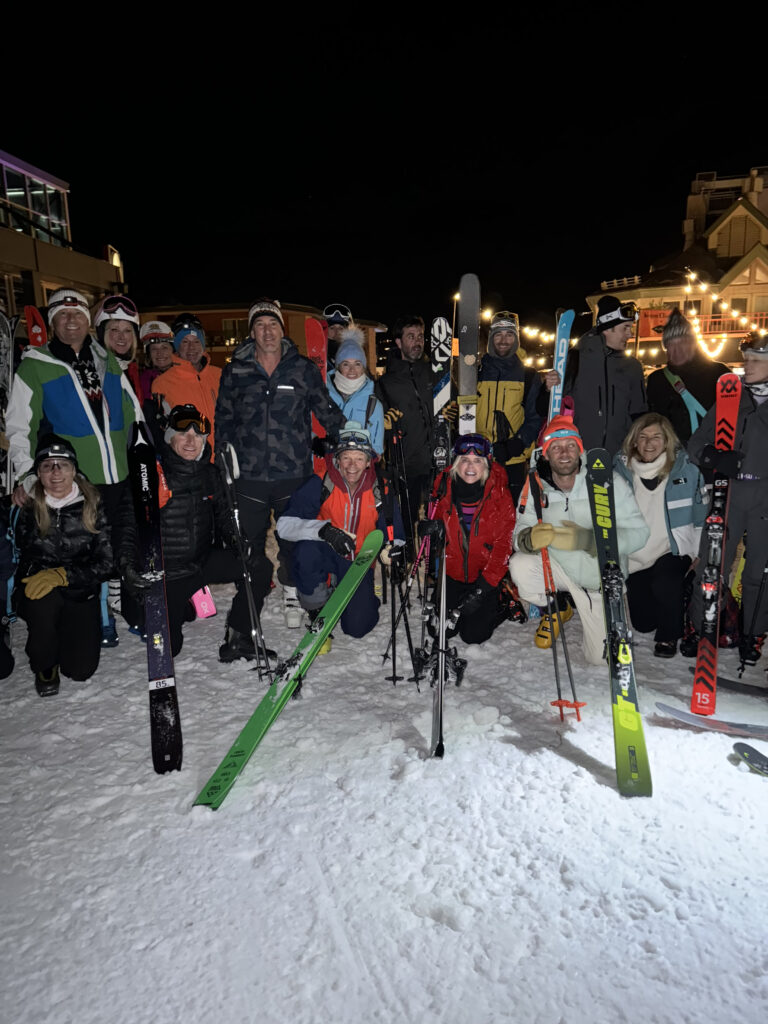
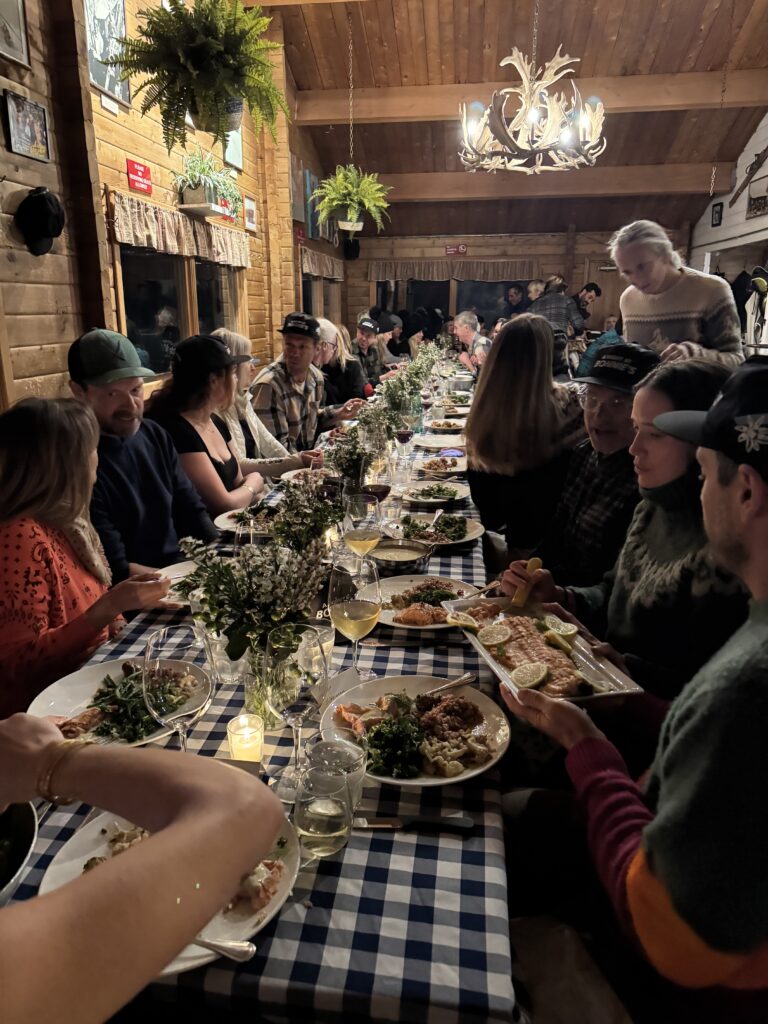
Through creative, community-driven events like A Night at Bonnie’s, the foundation has redefined fundraising.
A Night at Bonnie’s blends Aspen’s rebellious spirit with the goal of giving back. Guests ride snowcats up the mountain at night for a family-style dinner and exclusive wine tasting, followed by a headlamp ski down—all in support of the next generation. It’s become a true staple of the community.
People don’t just give. They become part of the story.
The Reality of the Dream
What most people outside the sport don’t see is just how hard this path really is.
The injuries. The chronic pain. The near-misses. The moments where even the most talented athletes consider walking away.
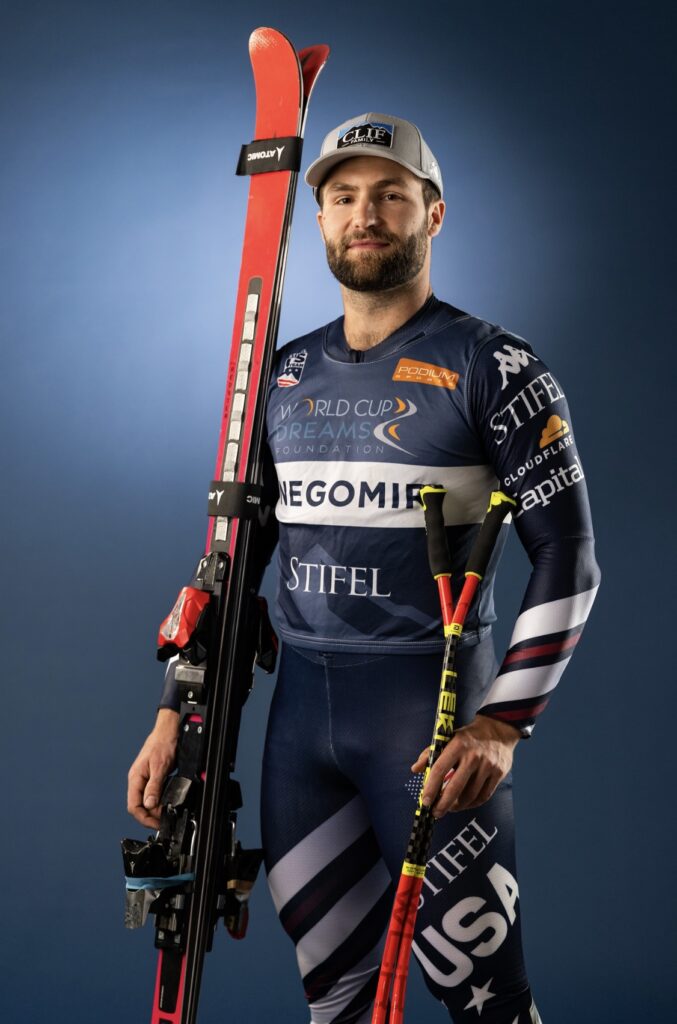
Stories like Kyle Negomir’s are emblematic of that reality:
“I’ve been a part of WCDF / T2 for the entirety of my young career in some way, and couldn’t be more grateful. To have an independent organization as committed as they are to raising and allocating funds directly to athletes is a big part of why American ski racing has continued to thrive despite soaring costs. It’s a crucial niche the way skiing works in the US, and they are the only ones filling it.”
“I know I had some crucial opportunities that were prohibitively expensive early in my career, and would have struggled to take advantage of them without the support of WCDF. From helping pay for my first European race trip at World Juniors to helping me through my comeback from injury when not many people believed in me anymore, they were there through it all. So I’m proud to mentor younger athletes through this same program now and represent them on the hill.”
That arc, from supported athlete to mentor, captures the essence of what WCDF is building.
Looking Forward
In the next decade, the challenges facing ski racing aren’t likely to shrink.
If anything, they’ll grow, driven by rising costs, climate pressures, and increasing demands on athletes.
Which means the need for organizations like World Cup Dreams will only become more critical.
The goal is clear:
- Build a stronger American pipeline
- Support more athletes into the top 300—and beyond
- Create a system where potential isn’t lost to circumstance
But perhaps the vision goes even deeper than that.
It’s about changing what’s possible.
The Space That Matters Most
There will always be talent. There will always be ambition.
But between the two lies a gap, a space filled with uncertainty, cost, and risk.
World Cup Dreams Foundation lives in that space. And because of it, more athletes are making it through.
Not just to the next level. But all the way to the top.
The WCDF grant programs (ARCO, On the Rise, and World Cup) for the 2026–2027 season will be open for applications from June 1 through July 31.
About the Author: Katie Twible