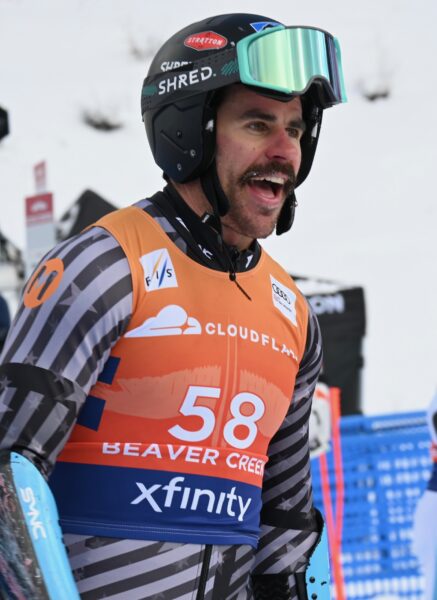
Alex Vinatzer First WC GS Podium Beaver Creek / @meredithguinan
Every racer reaches a point in their skiing where improvement stalls. You train hard. You ski well. You feel like you’re doing everything right. Yet the results stay flat — or sometimes even slip. You feel stuck, and the confidence that once came easily begins to shake. Coaches say you’re close, but nothing seems to change, leaving you wondering what’s really holding you back.
This is the performance plateau.
Plateaus are not a sign of lack of talent or failure. They are often natural developmental thresholds — moments when the mind and body need time to consolidate new skills. Sometimes your current plan, mindset, training, or habits simply aren’t enough to reach the next level. What separates successful racers from everyone else isn’t whether they plateau, but how they respond when it happens.
After decades of working with racers from U12 to the World Cup, I’ve found that most plateaus come from four primary psychological and emotional causes.
The Good-Skiing Trap: Comfort Over Progress
Young athletes are taught to ski well: clean arcs, strong balance, solid tactics. They develop technical competence — then get stuck living there. They execute their skiing, but they don’t challenge it or push into discomfort.
The result is consistency without growth.
Some athletes always look beautiful in training but never threaten podiums. They’re afraid to get messy. Chaos and speed create discomfort, so they back away from it and prioritize perfection instead of performance.
How to break through:
• Stop equating clean with fast.
• Train uncomfortably, especially at speed.
• Accept mistakes and DNFs as part of pushing your ceiling.
• Set process goals like “attack the fall line” instead of “ski clean.”
Look at Marco Odermatt. His skiing isn’t textbook perfect, but he embraces the edge of control because that’s where winning lives.
Fear of Failure — The Hidden Killer of Speed
Many athletes plateau when fear sneaks in: fear of crashing, fear of letting coaches down, fear of seeing a DNF next to their name, fear that improvement has stalled, or fear of confirming they’re not as good as they hoped.
This fear is subtle. Racers rarely talk about it, often telling themselves they’re skiing smart or conditions were tricky. Underneath those explanations is usually self-protection.
Fear restricts the mind and body. It holds skis out of the fall line, creates micro-braking, reduces pressure on the downhill ski, and produces conservative lines.
Top racers know they must risk losing to have a chance to win. Sofia Goggia has said it clearly: she would rather ski out going for the win than finish fifth by holding back. That mindset isn’t reckless — it’s a strategic acceptance of risk.
How to break through:
• Reframe DNFs as data, not identity.
• Practice deliberate risk in training.
• Set goals based on speed, not survival.
• Replace “don’t crash” with “commit to the line.”
Identity Plateaus — When Results Define Your Worth
This is one of the most destructive plateaus and is most common in teenagers and college racers.
A racer begins to believe their worth comes from results:
If I perform well, I am worthy. If I don’t, I’m a failure.
That mindset creates threat mode — anxiety, tension, pressure. It’s like wearing a 25-pound vest in the start gate: everything feels heavier. The outcome is tentative skiing because you’re unconsciously protecting the identity tied to results.
Clément Noël has spoken openly about this phase. When expectations began to define him, his slalom became tight and reactive. Breaking through required separating who he is from what he scores.
How to break through:
• Build identity around growth, effort, and execution — not podiums.
• Approach training with curiosity: “What happens if I push here?”
• Seek environments where mistakes are normal.
• Understand that struggle and risk are developmental tools, not character flaws.
The “Almost There” Mentality
Many athletes plateau because they are good enough to be competitive but not bold enough to break free.
Instead of pushing the limit, they race within the boundaries of their current ability. They race to qualify, protect, or avoid messing up — gradually becoming professional risk-avoiders.
How to break through:
• Constantly look for ways to ski faster.
• Make your default in the gate full send.
• Race to win — even when you know you won’t win.
Petra Vlhová is an example. She doesn’t manage her way through slalom. She attacks with force and commitment. The aggression you see is a deliberate choice.
Breaking Through a Plateau: The Formula
1. Identify the barrier.
Physical, technical, tactical, psychological, emotional, or non-sport related — but you must name it.
2. Train above your current ceiling.
If every training run is “solid,” you’re training comfort, not growth.
3. Redefine mistakes as steppingstones.
A DNF while pushing speed is more valuable than a conservative finish.
4. Commit.
Winning requires the deliberate choice to go all-in every time you get in the gate until it becomes automatic.
5. Build trust in your preparation.
Race-day intensity comes from practice: reps that push speed, exposure to adversity, and time spent skiing on the edge.
In Closing
Plateaus aren’t walls. They’re alerts — and invitations.
They signal that your current level of skiing won’t carry you further. Progress doesn’t come from more drills or more laps alone. The breakthrough comes from changing your relationship with failure, comfort, identity, and risk.
Racers who move beyond a plateau accept that invitation to evolve. And that willingness almost always leads to a breakthrough.
About the Author: Dr. Jim Taylor