Consulting with race community for design input, Alpine X’s Fairfax Peak is slated to open in 2024-25
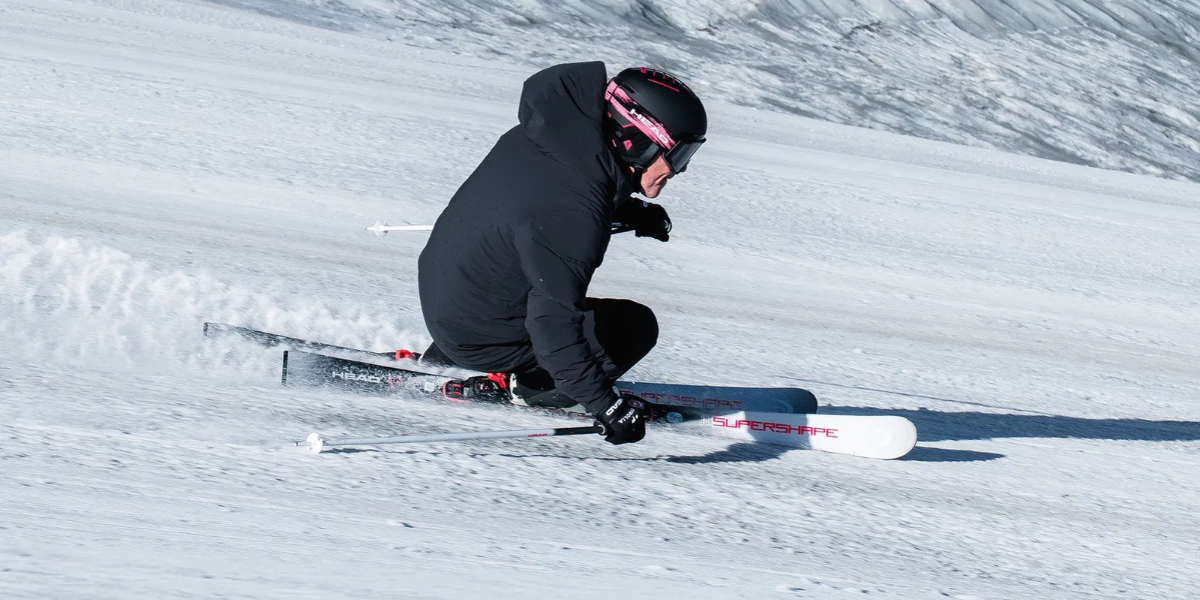
Regardless of the age or level of ski racers, when it comes to training, there is nothing more valuable than snow. As teams everywhere are all too aware, this hot (cold) commodity is scarce, not to mention expensive to access on a year-round basis. The snow chase has historically taken teams from all over the world to the Southern Hemisphere, European glaciers and Mt. Hood to train in the summer and fall. Increasingly, alpine teams of all levels are also looking to training opportunities and indoor ski domes, which are scarce in North America.
From the sounds of it, however, new indoor options are on the horizon that could open major doors for American alpine racers of all levels.
For the last several years, the U.S. slalom team has dedicated a summer training block to a session at Snow Valley, an indoor ski dome in Belgium.
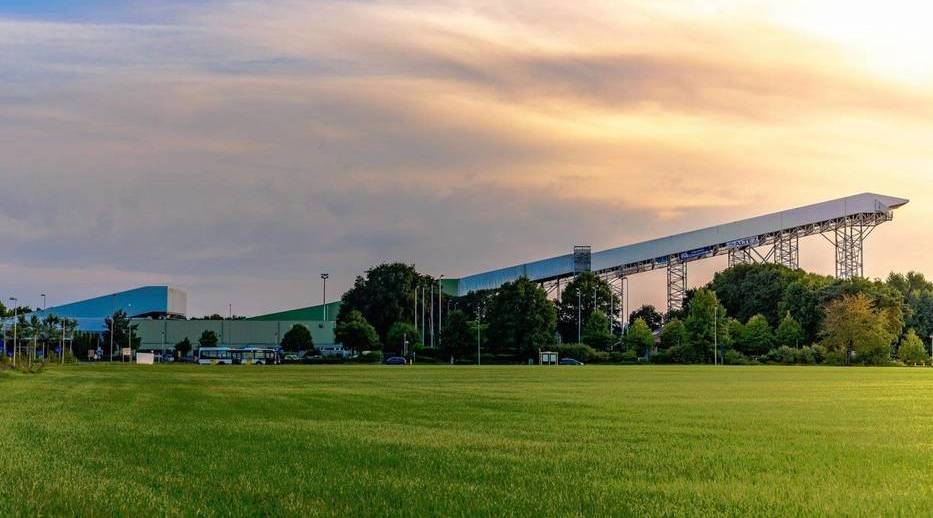
“Almost every World Cup slalom team trains there,” U.S. Alpine Head Coach Paul Kristofic says of Snow Valley. “The ski domes are unique in that you can achieve a very high volume of repeatable on-snow training. You can get a lot of shorter runs in a very controlled environment on super consistent snow. You can do two sessions a day. They’re really good for testing skis. You can control the snow surface. It’s much harder to control it in an outdoor environment. Glaciers are freeze-thaw conditions or glacial ice, which you don’t often race on.”
Also, accessing glaciers is expensive and Covid-19-related limitations and changing regulations across Europe continue to make the prospect of training overseas even less inviting.
Indoor snow has become increasingly appealing during the pandemic. Numerous ski academies in the Northeast have begun training at Big Snow American Dream, America’s first indoor ski park located in a shopping mall in East Rutherford, New Jersey. Although the venue is designed for beginners and recreational skiers and snowboarders and does not have the option to control the snow surface for alpine training, academies are finding value there.
New Jersey training hub
“The primary purpose is to eliminate the length of time between touches on snow,” says Jim Sullivan of Stratton Mountain School, whose U14 racers started training at Big Snow this summer. “It’s proved to be a nice transitional experience. It’s great for doing drills. You can get 30 runs in two hours. We’ll rent out the whole space for a three-hour block with other academies. The snow is not injected, but you can’t be picky skiing in August. We’re going again in October.”
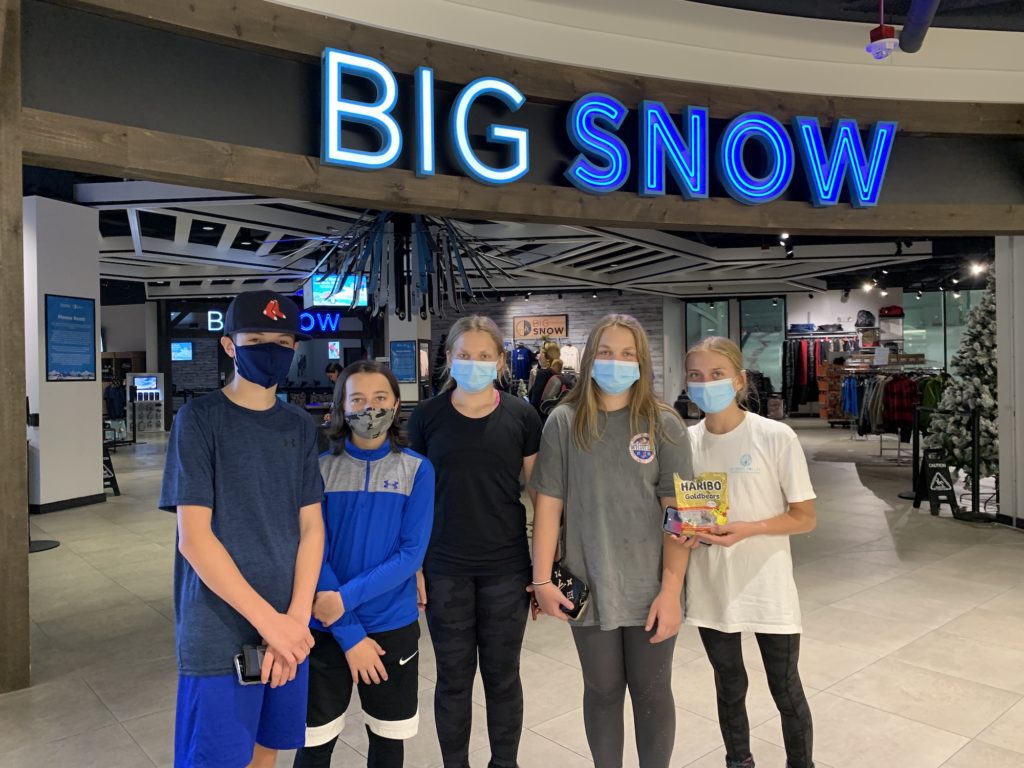
The Stratton team had planned a training camp in Saas-Fee, Switzerland, but “given the uncertainty of international travel,” went to Big Snow instead and “were pleasantly surprised by how much we accomplished there,” Sullivan says.
In the next decade, there will be far more options for indoor ski training, according to John Emery, the CEO of Alpine X, a company planning to build numerous indoor snowsports facilities throughout the United States, beginning with the flagship venue in Fairfax, Virginia.
New dawn awaits for year-round snow access
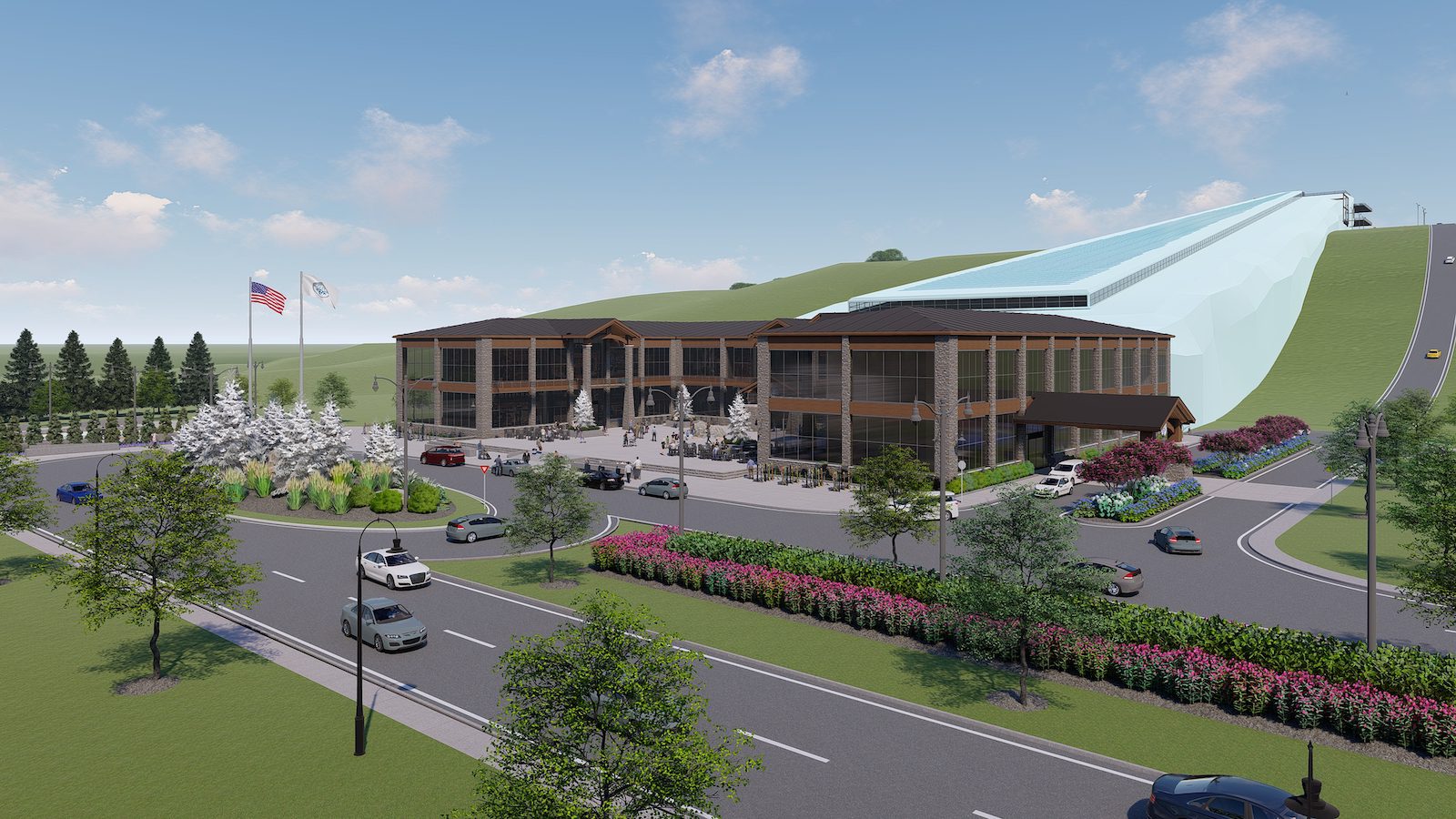
Slated to open in late 2024 or early 2025, Fairfax Peak will be a 400,000 square foot snow dome featuring an attached 200-300-room hotel, restaurants, tubing hill, mountain coaster, terrain park, at least one high-speed chairlift and multiple ski runs. Still in its planning phase, Emery estimates a $230 million price tag for the facility.
Previously the CEO at Great Wolf Resorts – a company specializing in indoor water parks – Emery’s key goal for the snow facilities is to make skiing and snowboarding more accessible to individuals of all backgrounds and socioeconomic levels who might never otherwise get an opportunity to ski or ride outdoors.
“Somebody coined the term ‘democratization of skiing.’ That’s exactly what we’re trying to do,” says Emery, who grew up in Fairfax and describes himself as a recreational skier who “visits Colorado every other year and sticks to blues. Maybe one black.”
“We want to take the exclusivity out of the sport,” he says. “We’re trying to develop resorts where everybody in the community, regardless of their social economic status, can step in the door. The bigger impact on the racing community is the number of opportunities more kids will have to become competitive skiers or boarders. They can’t right now because they don’t live near ski resorts. What I get excited about are kids who grew up in places like Fairfax – maybe Latin American immigrants – coming through our program and developing a level of skiing. It’s not just providing fantastic year-round training for existing enthusiasts, but opening the door to the entire community.”
Built on a former landfill, Fairfax Peak will offer a vertical drop of more than 200 feet – more than most indoor snow domes worldwide. Big Snow, for example, measures about 160 vertical feet and Snow Valley about 180 feet.
Biggest indoor hill in the Western Hemisphere
“It will be well north of 200 [vertical] feet, substantially larger than Big Snow. The exact height is not determined yet,” Emery says. “More importantly, we’re working with competitive coaches in the racing community to design the length, angles and drop and also making sure we’re set up for the right type of snow quality. It’s everything you can think of in a facility to create a good training environment.”
Sullivan, along with a handful of other long-time coaches, is a member of the Alpine X advisory board, helping steer the facility design to accommodate the needs of competitive alpine teams.
“I saw their design and appreciated the additional length and vertical. We have a great time in New Jersey, but something with 30 to 40 percent more vertical and twice the length is appealing from a racer’s perspective,” Sullivan says. “They’ll actually have two slopes, one of which they can maintain for racers. We’ve talked about ancillary characteristics like places to do video and even the potential of holding a race there.”
Sullivan believes Fairfax Peak and similar stateside ski domes could be a game-changer for domestic racers.
“I’m optimistic and enthusiastic,” he says. “I foresee these facilities being great resources for ski academies. It’s not going to take the place of extended trips to the West or Europe, but will cut down on expenses and make the ski racing world a little more accessible.”
Joe Paul, managing director of Team Gilboa, has brought his team to train indoors at Snow Valley in Belgium on only one occasion. In winter, his athletes train at Hyland Hills, a ski area in Minnesota with a hill measuring 42 meters vertical. Thus, a facility like Fairfax Peak could more than fill the void of on-snow training in the off-season for the sizeable community of racers in the Midwest, many of whom can’t afford training camps out West or in Europe.
“There’s an overarching agreement that one thing that makes good ski racers besides starting them young is time on snow,” Paul says. “Now teams are going to Europe specifically to ski indoors. Just recently, teams are going to Big Snow in New Jersey. People are realizing there’s more demand for something like that. If teams in the U.S. knew there was an indoor training facility at least part of which was catered to or set up for alpine training, they’ll definitely fly to Virginia. Once it’s there and it’s built, if it’s dedicated to training, I don’t see it ever NOT being in demand.”
The future is bright for urban skiers
Paul says a training camp at Mt. Hood costs each Gilboa athlete about $350 per day, including skiing, meals, lodging and coaching expenses. Training camps in Colorado are similarly pricey due to the high costs of lodging. Other than the cost of airfare to Europe, he says the cost of training at a facility like Snow Valley is comparatively inexpensive, its lodging and meal training package clocking in at about $100 per day per athlete.
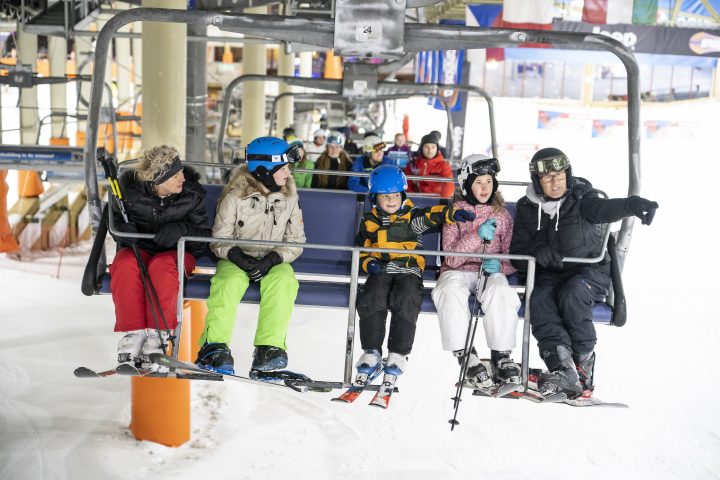
Emery says that one of the key draws of Fairfax Peak and Alpine X’s yet-to-be-announced additional indoor snow facilities is that they’re located in urban centers, meaning there’s a major airport nearby and plenty of lodging (including the attached hotel at Fairfax), rendering them especially affordable for alpine teams who would otherwise travel to glaciers to access snow.
“At Fairfax, there’s two cool things about building on a landfill. No. 1, it’s got a natural slope to it, which we all want. Also, the landfill puts us right into the population center. That makes it really affordable. I want people to not have to stay with us. We’ve got millions of people who live within 20 minutes who can come ski for two to three hours and have dinner for less than 100 bucks,” he says. “The lucky thing about being open every day of the year is we get to spread our costs more than a traditional seasonal resort. We’re building future racers and skiers.”
About the Author: Shauna Farnell