25th World University Games Report:
Where Do We Come From? What Are We? Where Are We Going?
A classic question—past, present, and future—applies to humanity as a whole. In this case, it pertains to U.S. Alpine skiing and its representation at the World University Games.
Where Do We Come From?
Historically, U.S. intercollegiate skiing at the World University Games (WUG) held a strong position among ski nations. American athletes have earned medals and podium finishes dating back to the event’s current format, which began in 1960.
The U.S. consistently sent full teams of athletes and coaches, using clear selection criteria. Initially, the U.S. Olympic Committee (USOC) managed the WUG franchise for the United States. Later, U.S. Ski & Snowboard (USSA) took over for about a decade before returning control to USOC.
At the time, USOC’s support of WUG was significant, training officials for Olympic events and fully funding participation. However, in 2009, USOC cut its budget and ceased financial support for student-athletes. Logistics were handed over to Basketball Travel International (BTI), which assumed responsibility for budget management.
BTI does a commendable job ensuring smooth operations, but they cannot do it for free. As a result, all organizational costs—including BTI’s operating expenses—are now passed down to student-athletes.
What Are We?
The United States has the strongest intercollegiate ski racing system in the world, featuring both the U.S. Collegiate Ski & Snowboard Association (USCSA) and the NCAA. U.S. scholarship programs attract top student-athletes from around the globe, supported in part by American taxpayers.
And yet, when it comes to the World University Games, a paradox emerges.
Every two years, international student-athletes studying at U.S. institutions represent their home nations, with expenses covered by their national federations or educational funds. Meanwhile, American students must pay all costs out of pocket.
Despite supporting global student-athletes throughout the year, the U.S. provides no financial backing for its own competitors at the premier international event for university sports.
While nearly every developed nation funds its student-athlete representation through sports and education budgets, U.S. athletes must cover all expenses—roughly $3,500 plus travel this year.
For many families, that cost is prohibitive. As a result, participation dwindles, and the selection process becomes nearly nonexistent due to financial barriers and low attendance.

Where Are We Going?
As the echoes of the closing ceremony speeches in Torino fade, one pressing question remains: what’s next?
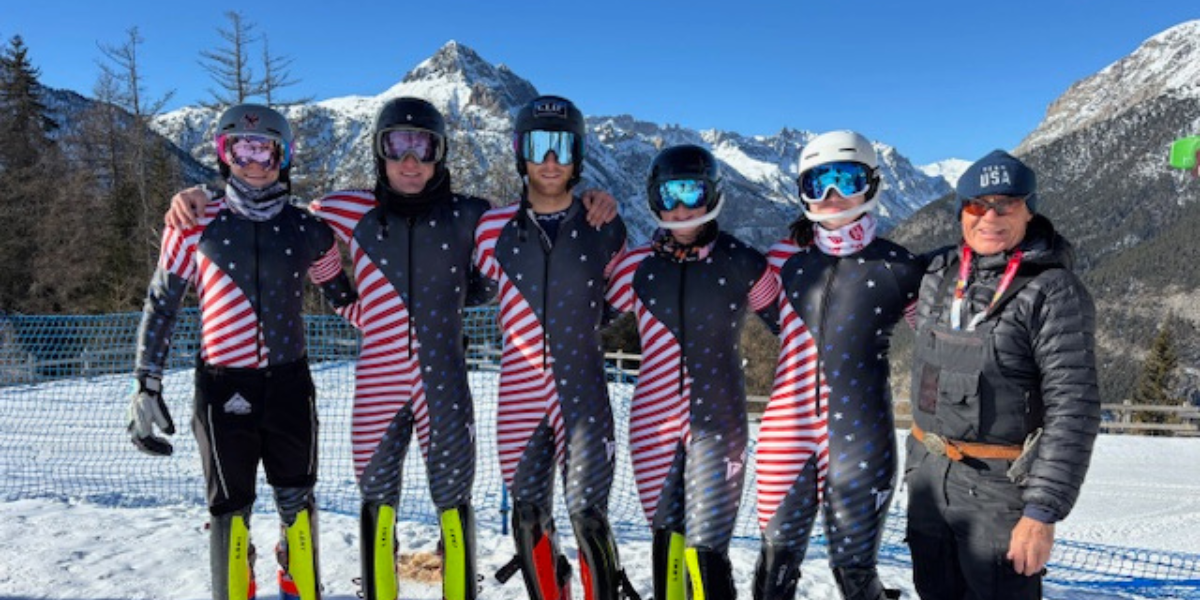
This year, the U.S. Alpine delegation consisted of just two female and three male athletes, along with one veteran coach. The team was driven by tradition and pride, but it was the smallest U.S. delegation in history. These five athletes competed against fully staffed, well-supported teams—including a delegation from Ukraine, a nation at war, that still secured government support to compete on the world stage.
Without a significant change, the U.S. may not have an Alpine team at the next WUG.
Some may say, “No big deal.” But does the U.S. still have pride in competition? Do we fold and walk away, or is there a way to rebuild and return?
We have a reason. We exist.
A Personal Note
A special thanks to Sync Performance for providing exclusive race suits featuring Stars and Stripes graphics. After all, they were our only support.
About the Author: Richard Rokos