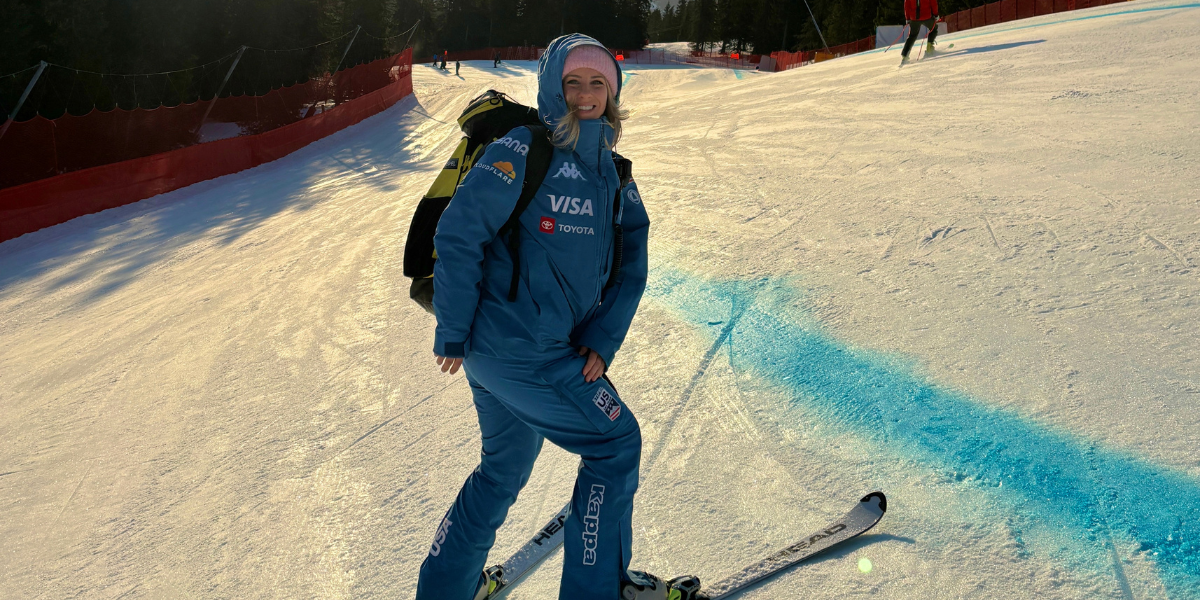
Featured Image: Martina Plunger Beech on the hill with the Stifel US Ski Team. Provided by Martina Plunger Beech.
Remember the saying, “There’s no ‘I’ in team?” That couldn’t be more true for athletes competing at the highest level.
Remaining at the top of the podium takes more than just talent and hard work; it requires a strong, dedicated support team. And it’s not just fellow athletes in their corner. We’re talking coaches, sports scientists, physiotherapists, managers, agents, sponsors, family, and the list goes on.
Out of that support system, physiotherapists are much more than injury fixers; they’re key players in an elite athlete’s performance and long-term success.
Physiotherapists play a crucial role in injury prevention, pain management, and recovery strategies, while also supporting and guiding strength training to optimize performance and long-term health.
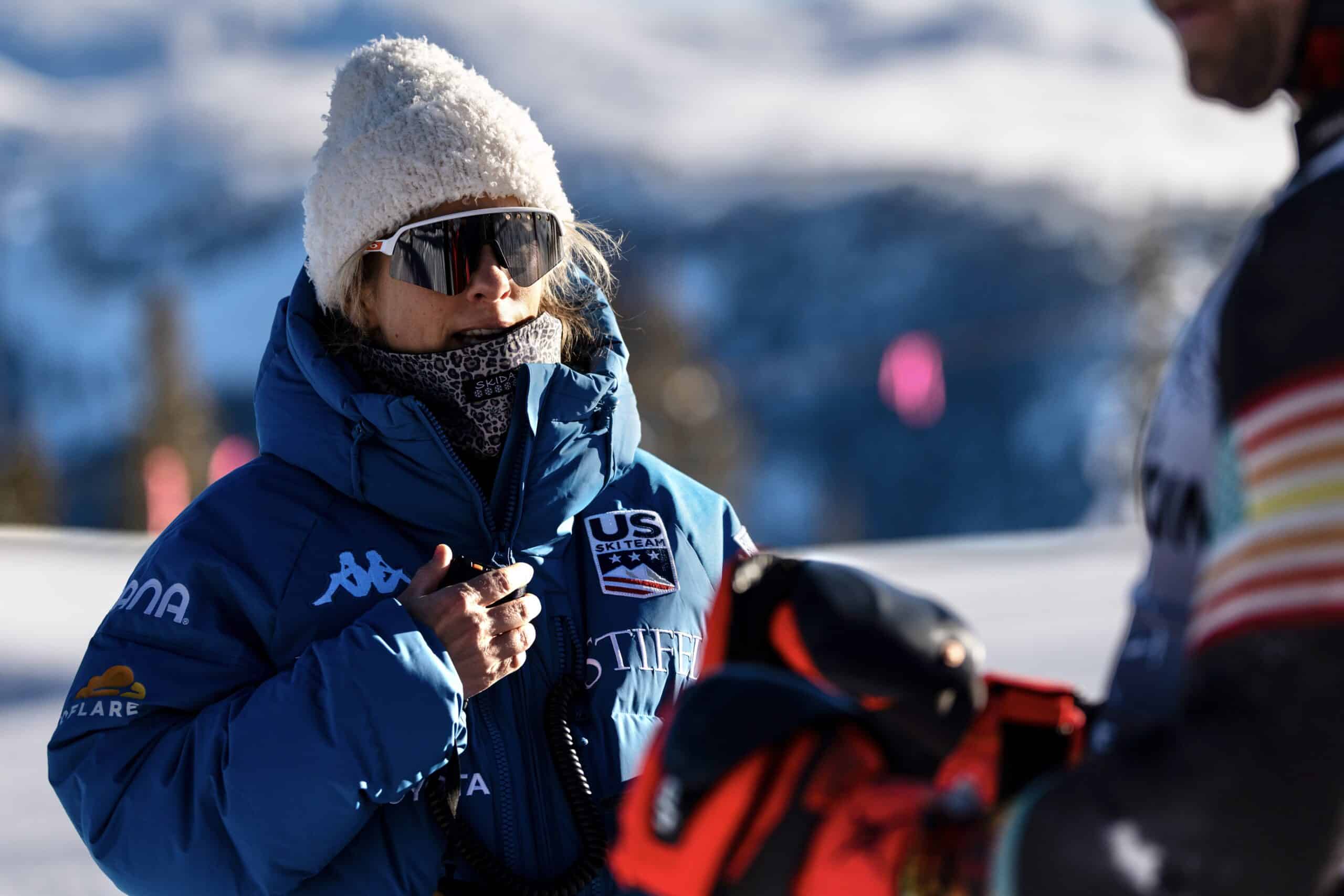
Martina Plunger Beech has built her career supporting athletes through every stage. She has worked with top organizations, including the Stifel US Ski Team and the Paralympic Ski & Snowboard Team, runs her own company, and now brings her expertise to Red Bull.
With the Olympic season approaching, Martina offers valuable insight into off-season preparation and how a team can work together to maintain a healthy and confident environment under the pressure of peak competition.
From Racer to Physio: Martina’s Passion was Born on the Slopes
Growing up in the Italian Dolomites, with a ski slope outside of Martina’s door, racing became a key part of her life. She was passionate about the sport, competing seriously until the age of 16.
However, by that point she had already undergone four knee surgeries and had sustained multiple fractures.
“I’d seen the inside of doctors’ and physios’ offices more often than the finish line during race day,” she explained. “So, I started studying the anatomy posters in the waiting rooms. That’s when it became clear to me that I wanted to work in the medical field.”
Beyond Borders: Building a Global Physio Career
From the start of her career in physiotherapy, Martina discovered the vastness of the field. Drawn to the business side of the profession, she took the leap and opened her own clinic in 2012. Since then, she has consistently worked as a freelancer or contractor.
She stated, “Setting up my career in this way gave me the freedom to explore different fields and work across multiple projects simultaneously, in both sports and corporate settings.”
Martina worked with various athletes from a slew of different sports, including soccer, dance, and running. For alpine ski racing, she dedicated over five years to the Stifel US Ski Team, which she found the experience to be “incredibly special and rewarding.”
“I enjoyed the laid-back lifestyle that the US Ski Team is famous for in Europe,” she stated. “Culturally, working with US teams is very different from working with European teams. They’re away from home for most of the season, which creates a unique dynamic. I found it very important to be with the team as consistently as possible.”
A Shift to One-Athlete with Red Bull
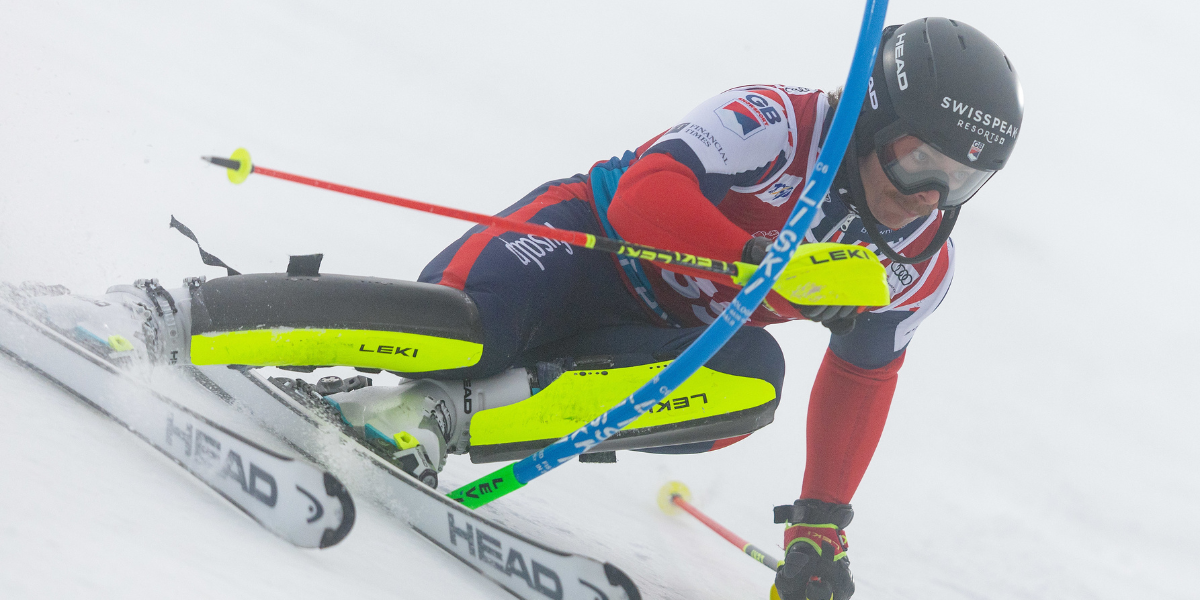
Martina has recently embarked on an exciting new chapter, working as a contractor for Red Bull, mainly collaborating with Lucas Pinheiro Braathen, a distinguished Norwegian-Brazilian World Cup alpine ski racer.
She sees this transition to working closely with an individual athlete as an opportunity to explore a more immersive, deeply connected, and uniquely dynamic direction in her career.
She stated, “[Working with one athlete,] there’s more time to focus on the details, to evaluate progress thoroughly, and to stay flexible. It allows for individualized, uncompromised care and the opportunity to experiment and refine protocols during the pre-season.”
Laying the Groundwork: Preparation for the Olympic Year
“Don’t change what’s working. Dial in consistency. That consistency adds far more value and clarity heading into a major event than any last-minute tweak,” Martina explains.
As a physio assists an athlete or multiple athletes heading into a high-pressure, peak year like the 2026 Winter Olympics, it is critical to stick to what already has been working. Last-minute changes, often introduced by well-meaning staff hoping to gain an edge, can create unnecessary complexity and disrupt an athlete’s focus.
Any adjustments to training or support should happen early in the season, giving athletes time to adapt. A smooth, predictable rhythm is key for performance.
She notes, “Of course, injury or rehab situations require flexibility, but for healthy athletes, consistency is the most effective strategy.”
Martina emphasizes the importance of close collaboration, particularly during the pre-season months before competition begins. She suggests that being physically present (gym or conditioning camps) allows physiotherapists to more easily identify patterns, compensations, or early warning signs, while also facilitating immediate communication with coaches.
This proactive approach can significantly enhance the overall performance and well-being of athletes.
“By the time the first races arrive, we want the entire team operating on rinse-and-repeat mode: calm, confident, and cohesive,” she stated.
Peak Season, Peak Demands: Supporting Performance Under Pressure
As the athlete moves into the peak season, with high demands and expectations, Martina believes that: “this is where the physio’s role becomes essential.”
“Amidst the travel, racing, media obligations, and general tension, we aim to create pockets of calm and focus. It’s about keeping the athlete grounded: supporting recovery, nutrition, hydration, and sleep,” she explained.
Martina points out that each athlete copes with stress in their own way, making it crucial to establish a sense of balance, especially with major events like the Olympics on the horizon.
It is imperative to work together as a united team to build a foundation of trust. With strong relationships comes deep understanding, and with that, physiotherapists can truly tailor care that empowers the athlete to perform at their best.
About the Author: Ellie Hartman