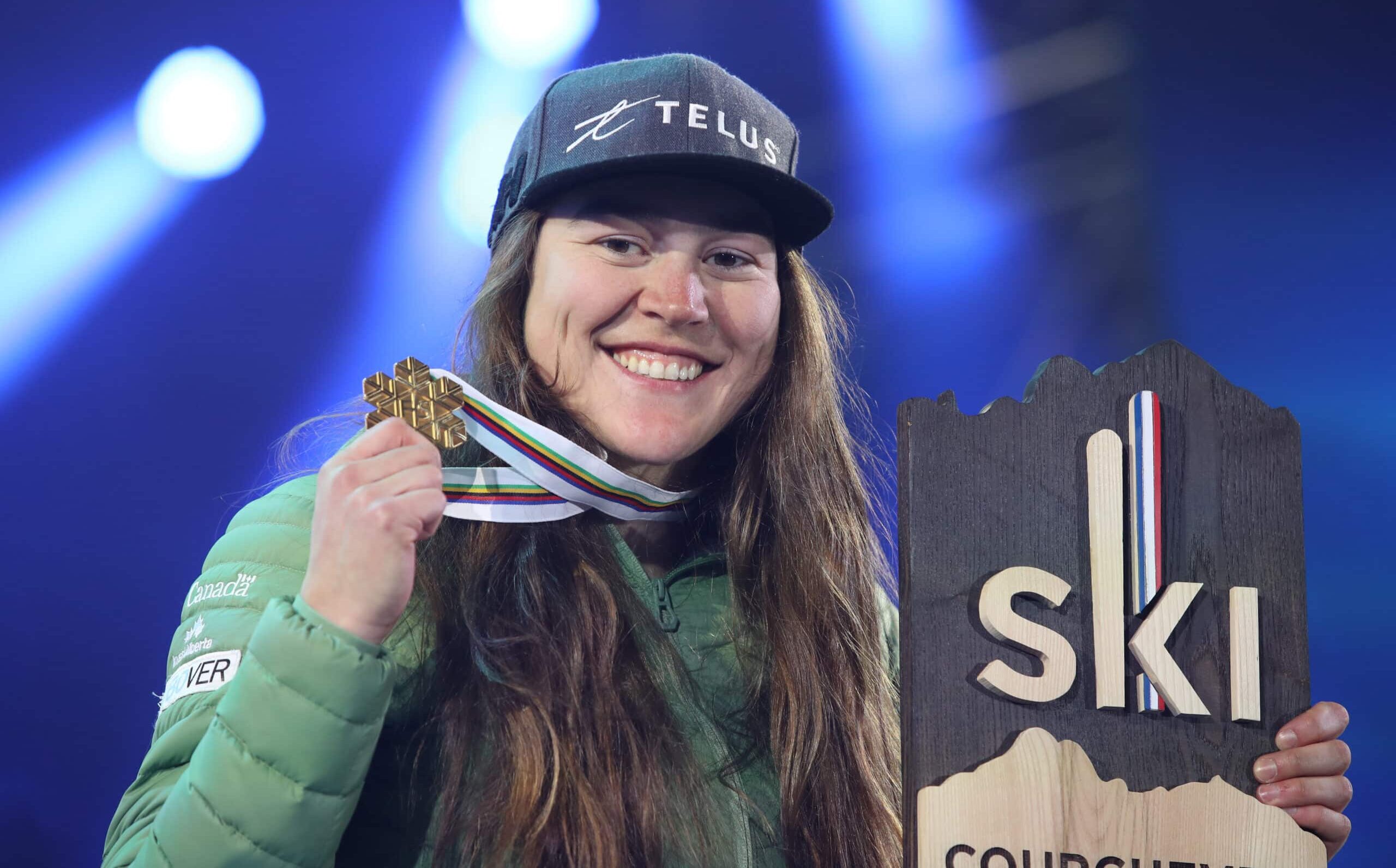
Ali Nullmeyer Alpine Canada and Middlebury College: PHOTO Stephen Cloutier
On the frigid morning of February 4th, Eastern Intercollegiate Ski Association (EISA) athletes traveled to the St Michael’s carnival slalom at Smuggler’s Notch in their team vans. Many watched the second run of the Chamonix World Cup slalom and saw former Dartmouth athlete AJ Ginnis climb the leaderboard. Eventually, Ginnis would land in second place, scoring his first World Cup podium. Former DU skier, American Jett Seymour, finished seventh.
Two weeks later, as the teams arrived at Jiminy Peak for the Williams carnival, they watched former UVM skier, Canadian Laurence St-Germain, win the World Slalom title in Méribel. St-Germain’s fellow Catamount teammate Paula Moltzan had already led Team USA to gold in the Team Parallel event. Ginnis closed the World Championships by winning slalom silver the following day.
Individually, these results were inspiring. Collectively, they made a statement. As Middlebury athlete Michel Macedo put it: “For ski racers, college is no longer the beginning of the end.”

COLLEGE COMEBACKS
This year’s World Championships featured current and former racers from colleges in the East and West. The US Ski Team alone featured six former NCAA athletes. Canada’s entire slalom squad was composed of former or current NCAA athletes. St-Germain’s World Championship teammates included DU grad Amelia Smart and Middlebury senior Ali Nullmeyer.
When Nullmeyer came back from double ACL reconstruction in 2019 and considered whether or not to go to college, she consulted her GMVS coach Dave Gavett. He had come from an EISA carnival and told her, “I just watched World Cup level skiing.”
At the time, the EISA field included Moltzan and St-Germain, both of whom had been booted from their respective national teams and had used college skiing to return to World Cup racing. “Knowing that level of skiing was at the NCAA level definitely persuaded my decision.”
Nullmeyer went on to race for Middlebury while pursuing a full World Cup schedule. She finished 12th in the 2023 World Championships before heading home to compete in the final EISA carnival, then back to Europe to finish the World Cup season. She will graduate this spring, in four years.
While Nullmeyer is looking forward to being able to focus only on skiing next year, she is a big advocate for college skiing. Nullmeyer admits that the demands of high-level skiing and academics may not be the best choice for everyone. “You know, there’s no golden ticket, but it definitely can extend your ski career, whatever your goals are. I think it’s an amazing route.”
KEEPING KIDS IN THE GAME
UVM coach Bill Reichelt did not actively recruit Laurence St-Germain for the 2015 season but took her on as a kind of package deal with her brother, Will. She soon proved her mettle and earned her way back to the National Team while boosting UVM’s squad. For athletes like St-Germain, Moltzan and Ginnis, college skiing offered them a home to keep skiing until they could start winning again. From the perspective of a national team, be it Norway or Canada or the US, “Speed settles everything,” says Reichelt. “That’s the only thing that matters.” UVM assistant coach Andrew McNealus notes that there are plenty of people who have the dream and come to college that don’t punch through, “but college skiing keeps all these kids in the sport, and it keeps them in the sport at a pretty competitive level.”
When these skiers progress to the World Cup and then return to the NCAA circuit, they inspire an even higher level within the field. Reichelt recalls showing up on the SL training day for the 2015 NCAA champs in Whiteface and watching DU athletes Espen Lysdahl, Trevor Philp and Sebastian Brigovic who were all fresh from representing Norway, Canada and Croatia, respectively, at the 2015 World Alpine Skiing Championships. (DU pioneers Erik Read and Leif Kristian Nestvold-Haugen also competed in those championships). “We thought, ‘we’re skiing for 4th place. There’s no way anyone’s gonna beat those guys,’” recalls Reichelt. “But then Dom [UVM athlete Dominique Garand] did it!”
ATTITUDE ADJUSTMENT
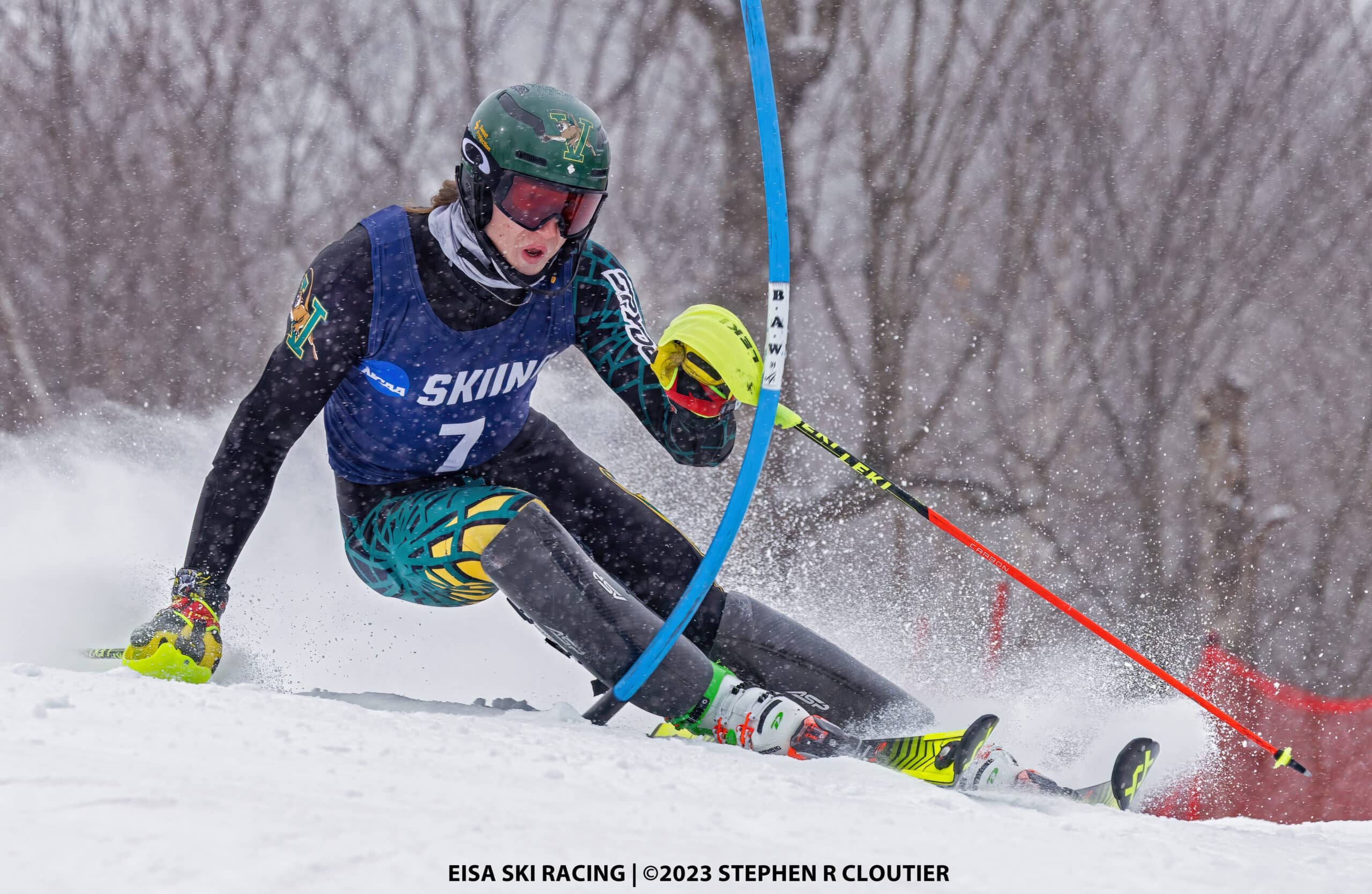
Last season, in his freshman year, Vermont native and UVM skier Cole Palchak raced in two carnivals. With teammates like 12-time carnival winner Jagge Lindstoel and two-time NCAA champ Mathias Tefre, he started to think he might be in over his head. Then, last summer, he attended the NCAA indoor camp Ginnis organized with his coaches, former UVM skiers Sandy Vietze and Gaby Coulet.
“I got to AJ’s camp, and everything kind of changed mentally for me, which was a blessing,” explains Palchak. “He opened my eyes to realize that it doesn’t really matter unless you’re having fun. I went from worrying about how I’m gonna do before I even started to not thinking about it and realizing it’s more fun just to go ski.” Palchak was among the athletes watching Ginnis’s second-place finish on the way to Smuggler’s Notch. “I came into that carnival not worrying about how I was going to do. I was just so fired up that he finally did it.” Palchak won the SL that day, then added two more podiums to his EISA season. He will represent UVM in Lake Placid.
NCAA experience
In 2022, eight American men and 13 women qualified for the NCAA championships. This season, ten American men and 11 women made the cut. Among those new faces are Palchak and St Michael’s College freshman Gray Flanagan. Like Palchak, Flanagan took two PG years before starting college. Initially, he looked at carnival racing as stepping back from the high-level races he was targeting. “Then you go to a college race and every single team has a guy that can win at that penalty level,” says Flanagan, “and a different guy is doing that every week.”
Flanagan has also enjoyed the shift away from the hyper individual focus in high school and PG years, which tends to pit you against your teammates. “At the end of the season, those are the guys you’re competing against for age world rank and standings, or for college coaches to email you back or to make selection criteria for a national team.” Now, he enjoys the more relaxed team atmosphere and the chance to enjoy the sport fully. “I’ve never had this much fun skiing since I can remember. Ski racing feels like a reward again.”
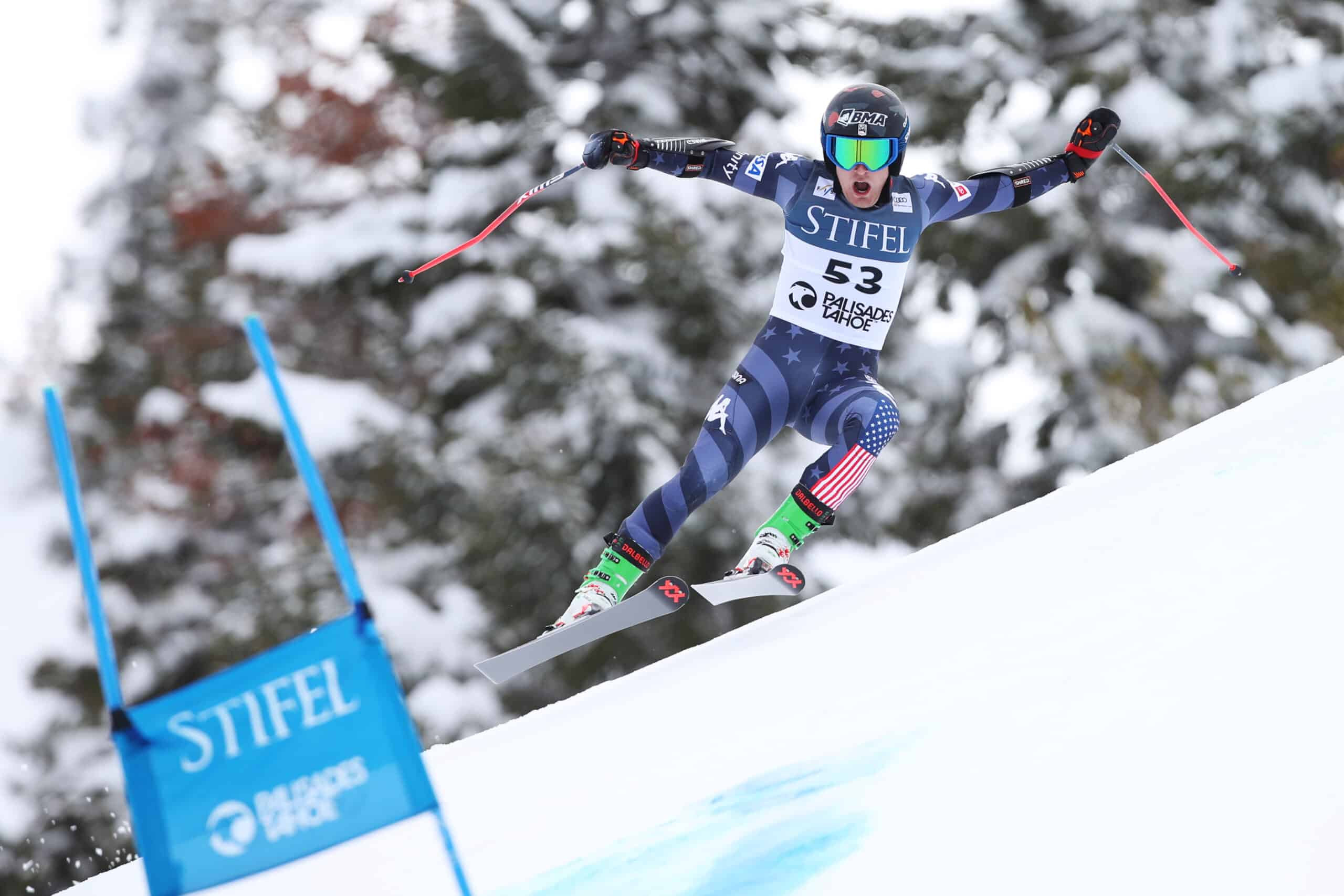
One of Flanagan’s inspirations is Patrick Kenney, who went to Burke, then UNH and is now racing on the World Cup with Global Racing. “He was a good skier before and then went to college and just had fun with it. I never really saw him stress out after bad races or anything like that.”
LEARNING FROM THE MASTERS
This season’s final NorAm GS included an NCAA all-star list, including 2018 and 2019 NCAA Champ Tanguy Nef from Switzerland. Kenney and his Global Racing teammate Brian McLaughlin—2019 Dartmouth grad and 2018 NCAA GS champ—also raced at Burke before heading back to Europe to wrap up their World Cup GS season in Kranjska Gora. For Dartmouth athletes, the NCAA champs fall directly during finals. Speaking from experience, McLaughlin advises them not to obsess too much on either the athletics or academics leading into the stressful week because nothing will be perfect. “When you kick out of the gate, you have to believe in what you’ve got,” says McLaughlin. “And that’s true anywhere.”
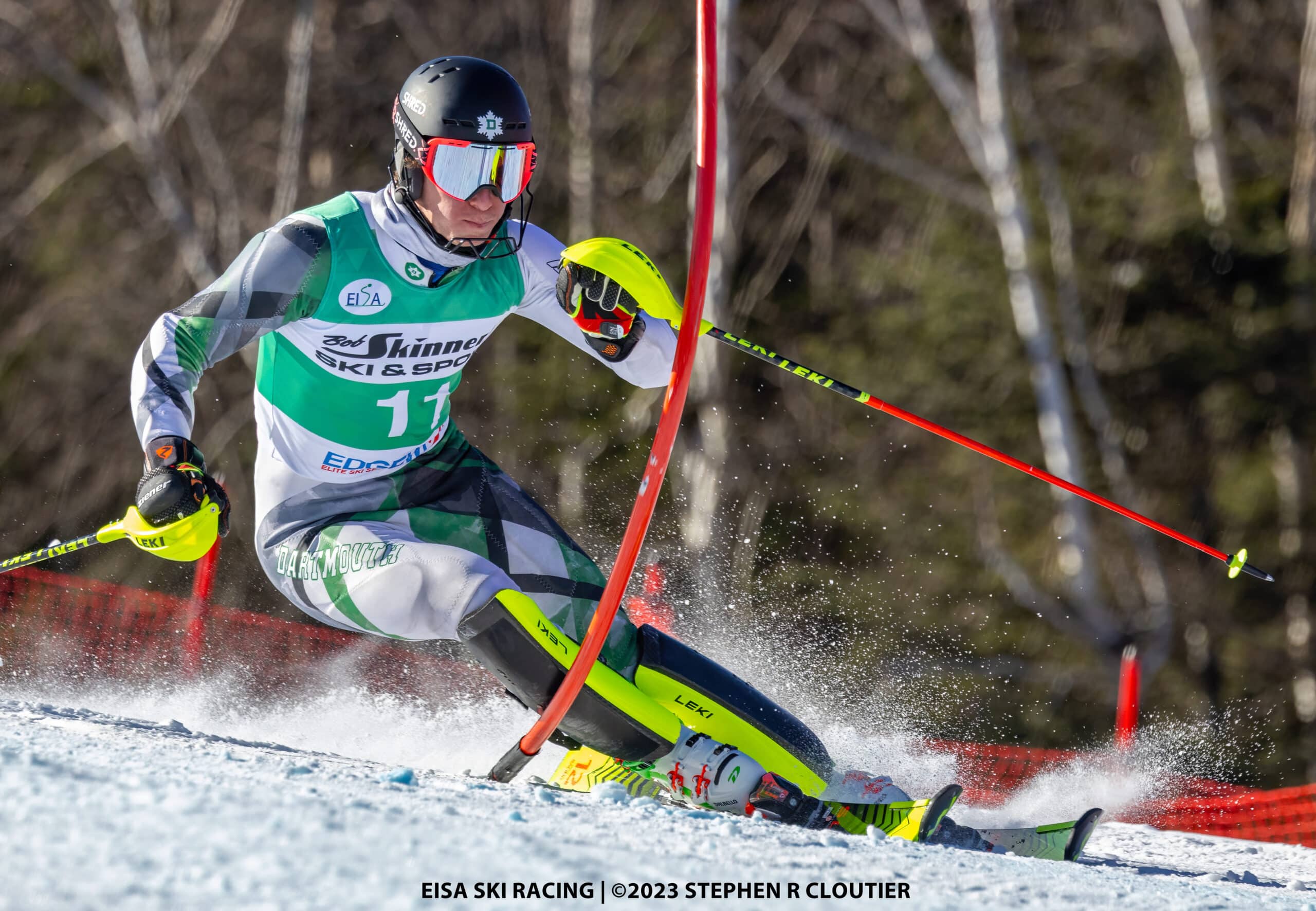
Current World Cup racers inspire with their performances and also offer direct counsel and support. Last spring, when Cooper Puckett struggled with his pull towards racing for both Dartmouth College and the US Ski Team, he went to AJ Ginnis for advice. “It was a pretty scary decision to make. AJ was totally my Yoda,” recalls Puckett. “He helped me completely visualize it and map it out. I’m so grateful for him, and to see the architect of my plan this year be the best in the world is the most inspiring thing ever.” Puckett, who competed in his third World Junior Championships in February, earned a spot on Dartmouth’s 2023 NCAA Championship team and scored a personal best GS result at Burke. Stifel US Alpine Team member Allie Resnick also added college racing to her syllabus and will compete for Dartmouth at the NCAA champs.

NCAA World Cup success in speed events
College skiers aren’t only excelling in tech events. Middlebury skier and 2021 graduate Erik Arvidsson led the US men’s DH team at the 2023 World Championships with his 17th-place finish. As Middlebury skiers Bradshaw Underhill and Macedo chatted in the finish at Burke, Arvidsson skied to a 14th-place finish in Aspen’s World Cup Super G. (Canadian Riley Seger, who finished 10th in Aspen, will compete in the NCAA champs for Montana State University).
Like Underhill, Arvidsson came to Middlebury from a stint skiing speed on the US D Team. He used his time at Middlebury to get a top-tier education while honing his technical skills. “Erik didn’t really do speed for four years,” notes Underhill. “I saw that and realized I don’t have to push and do all these [speed] races. The speed is there and it’s not going anywhere.” Underhill hopes to continue high-level ski racing beyond college. “Erik’s already done it, so I know it’s attainable.
As Palchak articulates, the success of college racers sends a message to ski racing kids everywhere. “It gives hope that skiing is not just going to die after college. You can go on to complete your childhood dreams if you really push for it.”
The 2023 NCAA Championships start on Wednesday, March 8, with the GS, followed by the SL on Friday, March 10. Find info, complete rosters and live updates here.
About the Author: Edie Thys Morgan