
Editor’s note: Ski boot developer Hubert Immler died Sept. 15, 2026, at age 64. Ski Racing Media originally published this profile in July 2022. We have updated the article to reflect current editorial standards while preserving the story of Immler’s extraordinary influence on alpine ski boot development. [LINK TO NEW TRIBUTE]
Hubert Immler was a kind man who loved a joke.
He was also one of the most influential ski boot developers of his generation.
If you have raced or skied in Lange, Atomic, Nordica, Tecnica or HEAD boots, there is a good chance Immler’s work influenced the equipment on your feet.
For decades, the Austrian stood at the forefront of race boot design, testing, fitting and setup. His career connected him with some of the greatest racers of the modern era and with several of the sport’s most important boot developments.
But Immler was never interested in simply putting his name on a finished product.
He wanted to make the boot better.

Immler contributes to boot development
No matter where his career took him, Immler deserved recognition from the ski racing community.
When Ski Racing Media first published this story in 2022, I wrote that if a ski boot developers’ hall of fame existed, Immler would be elected on the first ballot.
That assessment has aged well.
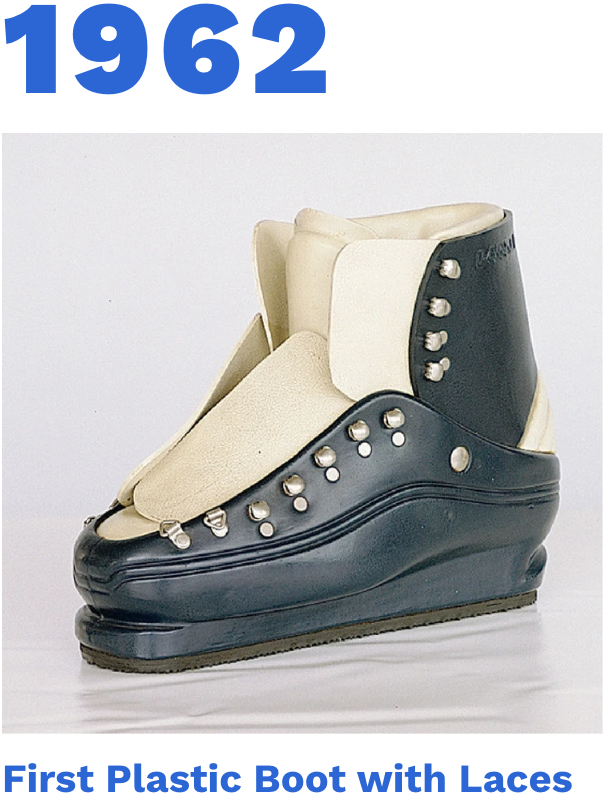
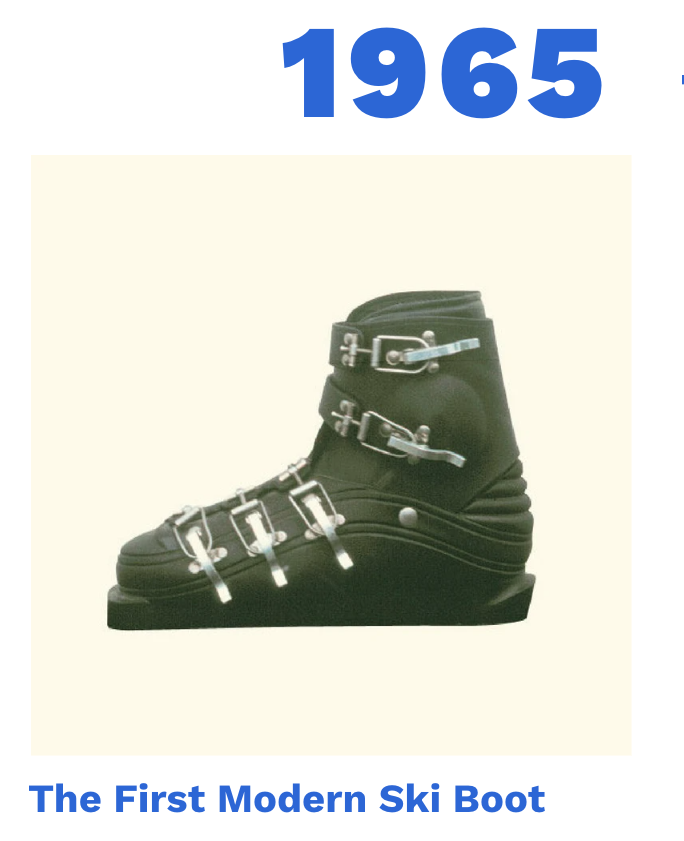
Perhaps no name belongs earlier in a discussion of modern ski boot development than American Bob Lange, whose company pioneered the successful use of plastic shells and helped transform alpine skiing.
But the development of the modern race boot did not end there.
It required generations of engineers, technicians, boot fitters and athletes continually asking how the connection between skier and ski could improve.
Immler became one of the most important people in that process..
click on images to enlarge
A trained carpenter from Vorarlberg, Austria, Immler began his equipment career testing skis for Kästle.
His first ski boot service position came with Lange. From 1994 through 1996, he worked with Austrian racers using the brand. Recent Austrian reporting also identifies those Lange years as the beginning of the ski boot career that would eventually take him through Atomic, Nordica, Tecnica, HEAD and Van Deer.
When I spoke with Immler for the original version of this article, he remembered starting with only a few Austrian athletes, including Kilian Albrecht, Hans Knauss and Günther Mader.
A year later, he said, the Lange group had grown to more than 40 athletes.
“Good thing I was young,” Immler joked.
The comment captured something about him.
There was always more work to do.
And for Immler, working on ski boots involved far more than simply making a shell stiff enough for racing.
A race boot had to connect a specific athlete to the ski.
That meant understanding plastics, cuff movement, hinge placement and buckles. It also meant understanding feet, anatomy and fit.
The engineering mattered.
So did the person standing in the boots.
Immler influences Atomic boots
Atomic hired Immler in 1996, beginning one of the most important chapters of his career.
There, he led the development of the unconventional Tritech race boot.
The project brought him into close collaboration with Norwegian great Lasse Kjus.
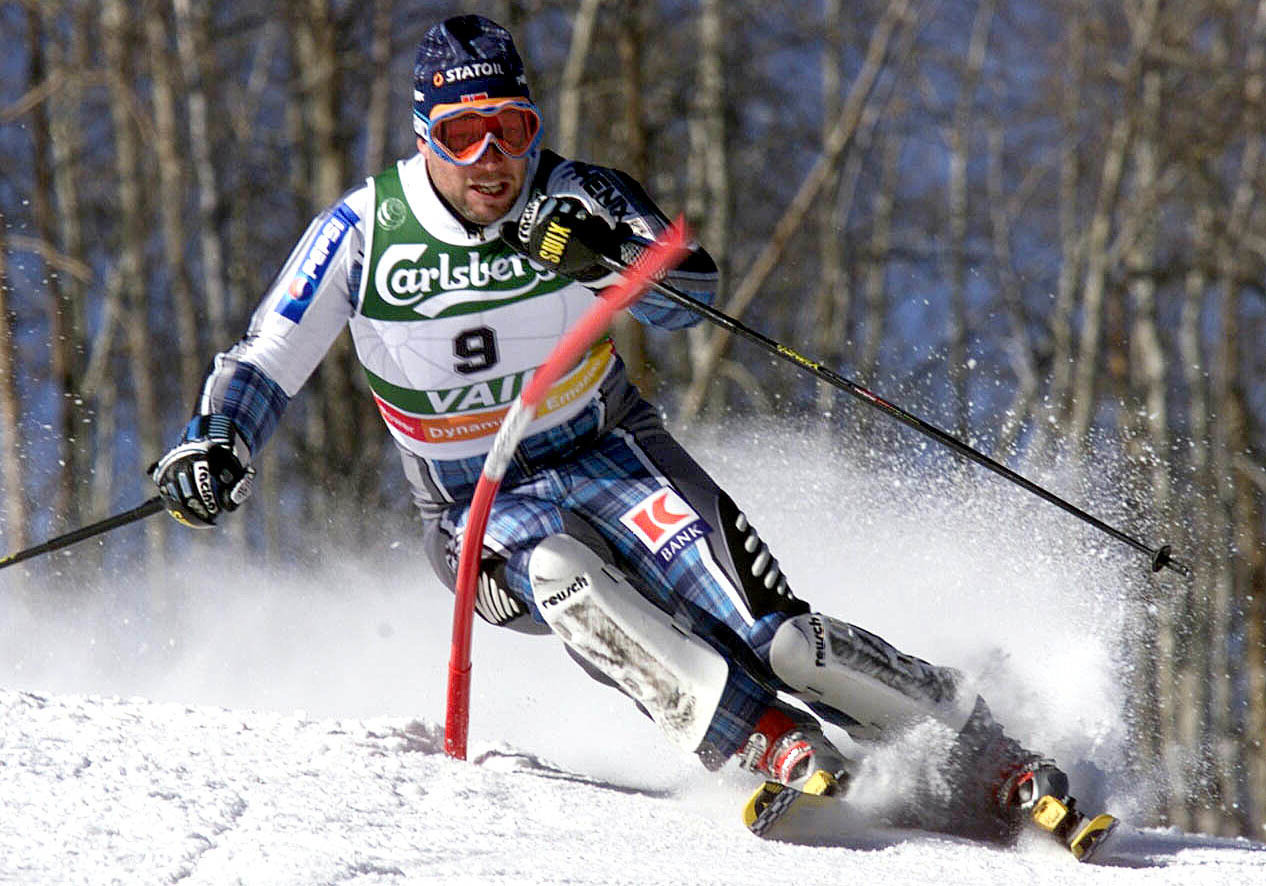
At the 1999 World Championships in Vail and Beaver Creek, Kjus did something no man had accomplished before or has matched since: He won a medal in all five alpine races, taking two golds and three silvers.
Immler told Ski Racing Media that Kjus used four different boots during those five races — and had not skied in any of them before arriving in Colorado.
That detail offers a remarkable glimpse into equipment development at the highest level.
Kjus possessed the sensitivity to recognize small changes in his equipment.
Immler possessed the ability and willingness to keep changing it.
The process required listening, experimenting and responding to what the athlete felt.
Although the Tritech achieved success at racing’s highest level, its unconventional construction never gained broad acceptance.
Immler kept working.
He developed another Atomic race boot that moved the company in a different direction. When we spoke in 2022, he no longer remembered the exact model designation but thought it might have been the RT.
That design became an important step in Atomic’s race boot development.
Eventually, the familiar white Atomic shell with the red cuff appeared on some of the sport’s biggest names, including Daron Rahlves and Bode Miller.
Miller raced Atomic boots when he won his first overall World Cup title in 2004-05.
By then, Immler had already moved to his next project.
Immler takes on Tecnica and Nordica
In 2002, Immler joined Tecnica and Nordica.
He remembered one of his early meetings particularly well.
Immler placed a Nordica Dobermann and a Tecnica race boot on the table.
He pointed to the Nordica.
“This is a Dobermann.”
Then he turned to the Tecnica.
“This is a St. Bernard.”
Fortunately, the people in the room had a sense of humor.
More importantly, they gave Immler the resources to work on it.
He helped develop the Tecnica Diablo while continuing to refine Nordica’s already successful Dobermann platform.
Four years later, athletes racing in Tecnica boots reached the Olympic podium.
Austria’s Reinfried Herbst won the men’s slalom silver medal at the 2006 Turin Olympics. Finland’s Tanja Poutiainen earned giant slalom silver.
Immler’s work had again reached the highest level of the sport.
But medals tell only part of the story.
His career was a constant search for small improvements.
Could another plastic create a better flex pattern?
Could the cuff articulate differently?
Was the hinge in the optimum location?
Could a buckle close the shell more effectively?
How should the shell work with the athlete’s foot?
Those questions never stopped.
HEAD brings Immler closer to home

In 2006, another opportunity arrived.
HEAD’s headquarters in Kennelbach were close to Immler’s Vorarlberg home. At the same time, the company had signed two of the world’s leading racers: Bode Miller and Didier Cuche.
HEAD needed a race boot capable of serving athletes of that caliber.
Immler joined the company.
Within months, he helped create the foundation of the original HEAD Raptor race boot, according to both his account to Ski Racing Media and subsequent Austrian reporting.
Success followed quickly.
Cuche won his first World Cup downhill discipline title during the 2006-07 season.
Miller won the super-G discipline title that winter, then captured his second overall World Cup title the following season.
Ted Ligety joined HEAD in 2010 and went on to win four more World Cup giant slalom discipline titles while racing on HEAD equipment during one of the most dominant GS periods in the sport’s history.
Kjus.
Rahlves.
Miller.
Cuche.
Ligety.
The names illustrate the level at which Immler worked.
They still do not fully explain what made his contribution important.

Equipment development happens in details.
A different plastic changes the way a shell flexes.
Moving the cuff or hinge alters leverage.
Changing the location of a buckle affects how the shell closes around the foot.
The differences can be small.
At World Cup speed, small differences matter.
Immler understood something equally important: There is no universally perfect race boot.
The boot has to work for the athlete wearing it.
That combination of technical development and practical boot fitting became a defining part of his career.
German federation taps Immler’s experience
By 2019, Immler had been working on another innovative boot concept at HEAD.
The company ultimately moved in another direction.
For perhaps the first time in decades, Immler did not have a production race boot to develop.
His involvement in the sport did not end.
The German ski federation brought him into its equipment program, giving its athletes access to decades of accumulated knowledge.
The work fit him naturally.
Give Immler a racer, a ski boot and a problem, and he would begin searching for an answer.
Plastic.
Cuff.
Hinge.
Buckle.
Liner.
Fit.
Everything was available for examination.
Van Deer opens another chapter
By the summer of 2022, Immler had joined Marcel Hirscher’s growing Van Deer project.
That move prompted Ski Racing Media to write the original version of this article.
At the time, the obvious question was whether the legendary boot developer might eventually help create another race boot.
It was a reasonable question.
Van Deer was rapidly building an elite racing program, and hiring someone with Immler’s background attracted attention.
What came next was less important than what had already happened.
By then, Immler had spent decades influencing race boots at Lange, Atomic, Tecnica, Nordica and HEAD. He had worked with Olympic champions, world champions and World Cup overall winners.
Van Deer became the final chapter of that career. Recent Austrian reporting confirms that he continued working there with Marcel Hirscher’s company.
A legacy that extends beyond the champions
It is tempting to measure an equipment developer’s career by the athletes who won on his products.
That would produce an impressive list for Immler.
But it would also miss the larger point.
Equipment development is cumulative.
A successful idea becomes the starting point for another idea.
Plastic compounds improve.
Cuff geometry changes.
Hinge locations evolve.
Buckles move.
Shell shapes change.
Fit gets better.
The next generation begins with knowledge created by the generation before it.
That is why Immler’s influence reaches beyond the famous racers who worked directly with him.
Thousands of athletes who never met Hubert Immler have benefited from the progression of race boot technology to which he contributed.
Many will never know his name.
That is common in ski racing.
We know the athletes standing on the podium.
We rarely know all the people whose ideas helped put them there.
The wizard of boots
Hubert Immler spent his career asking whether a ski boot could be better.
A better connection between the athlete and the ski.
Then, when one solution worked, there was another question to answer.
That relentless curiosity helped shape race boots across several manufacturers and multiple generations of athletes.
When Ski Racing Media called Hubert Immler the “wizard of boots” in 2022, it was meant as recognition of an extraordinary career.
The description still fits.
Perhaps even better now.

About the Author: Peter Lange