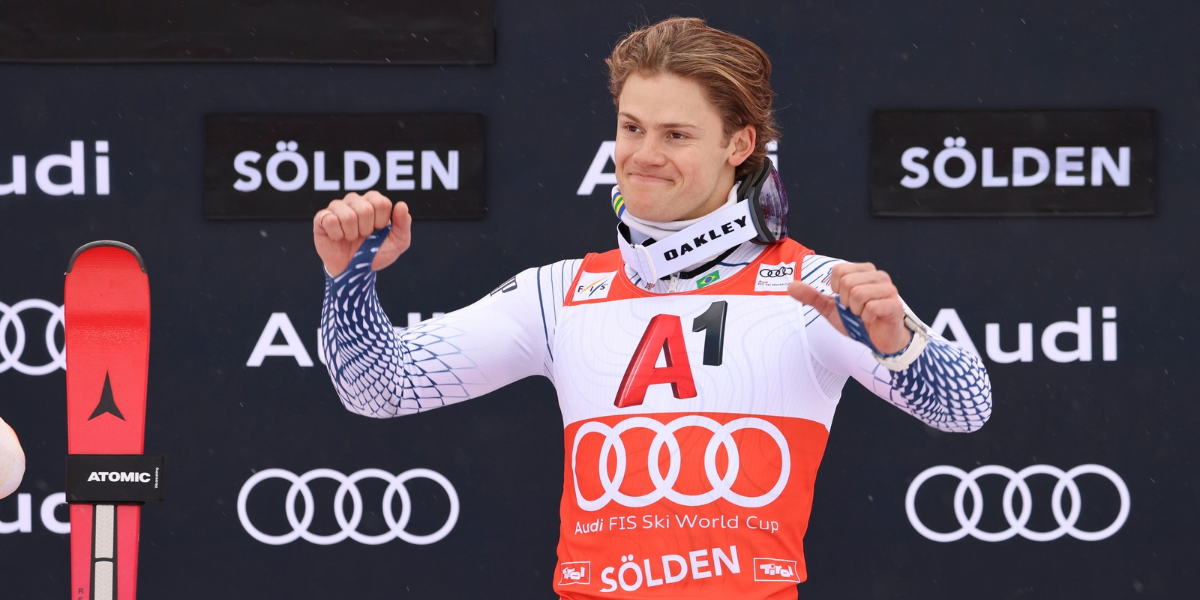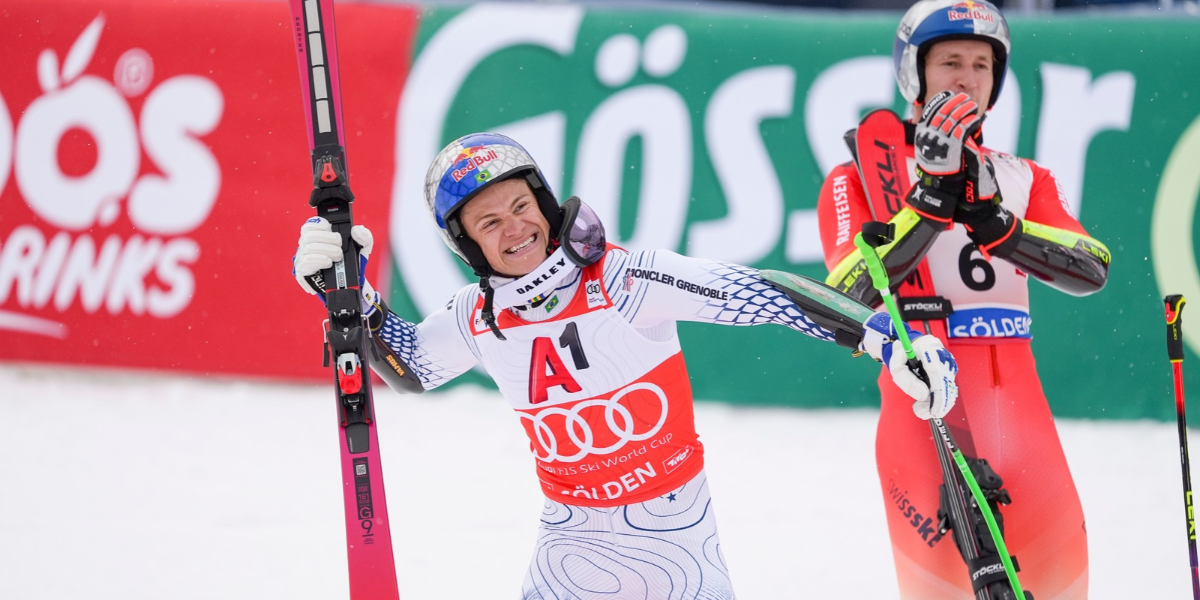
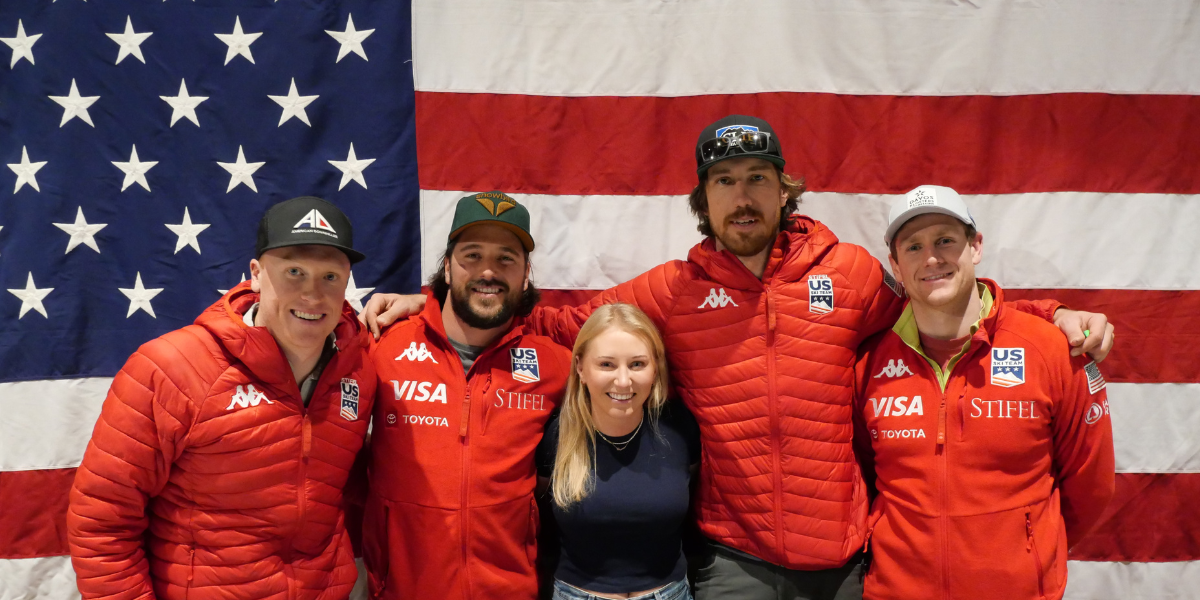
Morse, Goldberg, Ryder, Bennett and Cochran-Siegle Photo U.S. Ski & Snowboard
A Dream Job on the Road: How Sierra Ryder Covers the World of Elite Alpine Skiing
When Sierra Ryder saw the job posting on Ski Racing Media’s Facebook page, it didn’t feel real. At the time, she was working as a reporter and anchor for NBC Montana in Missoula. The position? Alpine Communications Manager for the Stifel U.S. Ski Team. The post was for a Ski Racing Media article written by her predecessor, Megan Harrod.
“I was like, oh, my goodness, that job is open. That’s crazy,” Ryder said. “It seemed like such a dream job.”
On a whim, she applied. It was already mid-September, and she assumed she was too late. But within 24 hours, U.S. Ski & Snowboard’s HR called. A week later, she had the job. Two weeks after that, she packed up her car, drove to Utah, and immediately flew to Austria for the season-opening World Cup in Sölden.
“It was a total whirlwind,” she said.
Returning to Her Roots
Ryder grew up ski racing at what is now Palisades Tahoe. She competed through college, racing NCAA for Bates. Many of the athletes she works with today—like Erik Arvidsson, Brian McLaughlin, Nina O’Brien, AJ Hurt, and Keely Cashman—were once her peers.
“I grew up racing with a lot of the athletes on the team right now,” she said. “So it’s just cool to be working with them again.”
After graduating in 2018, Ryder stepped away from the sport. She worked in Los Angeles, then in the Bay Area, before moving to Montana for journalism. That time away gave her clarity.
“Taking a step back was a blessing,” she said. “When I came back into it, I felt very refreshed and ready to dive in.”
Managing the Chaos
Ryder covers both the men’s and women’s Alpine teams—often when they’re far apart, like when the women race in Cortina and the men are in Bormio. She can’t be in two places at once, so planning and teamwork are everything.
She maps out her travel in September, before the season begins, prioritizing venues based on expected media presence and podium potential. But even the best plans can shift in real time. If she anticipates big results on both sides, she leans on the marketing communications team back home.
“We have a group chat that goes all night, all day long,” she said. “If I can see we’re going to have a double podium, I’ll call in backup and say, ‘You guys, I’m going to be tied up in the mixed zone.’”
Off-site, she works closely with FIS media staff to gather athlete sound bites. She always checks in with both teams, aiming to be a consistent point of contact even if she isn’t physically present.
“I try to be a touchpoint for everyone,” she said.

Driven by Connection
What gets her out of bed each day? The people.
“I just love the community and the athletes,” she said. “I’m excited to do my part in helping our team succeed—whether that’s taking a finish photo or being the support person when emotions are high or low.”
Over time, she’s built trust with athletes and staff. That growing comfort shows in their openness—and their energy.
“It’s rewarding to see those relationships evolve,” she said. “I hope I can bring positive energy to whatever team I’m with.”

No Home Base, Just a Spreadsheet
Ryder thrives on the road, but it can be challenging.
She doesn’t have a European home base. Instead, she hotel-hops and lives out of a suitcase. On rest days, she’ll sometimes reset in Zurich and squeeze in what she calls “beauty maintenance”—a haircut or manicure to feel like herself again.
To stay grounded, she relies on a master spreadsheet: where she’ll be, where she’s staying, how long the drive is, and what she needs to arrange.
“There are times when I don’t know if I’ll have somewhere to sleep that night,” she said. “But if I can just look at my spreadsheet and see I’m driving to, say, Torino and staying here, I’m at peace.”
Olympic Pressure, Olympic Pride
This season will be Ryder’s first Olympic Games in her role. She’s already preparing for it—and the U.S. Ski & Snowboard marketing team plans to bring in additional help to manage the flood of media and social media requests.
“We’ve already started planning months ahead of normal,” she said. “I think we’re on a really good track.”
Ryder knows the volume of interest will spike. But to her, that’s a good thing.
“If our team blows it out of the water at the Games, my inbox is going to explode—and I hope that happens,” she said.
She believes in this team. She believes they’ll show up when it matters most.
“One thing about the U.S.—we love the Olympics more than any other country on the tour,” she said. “And our team knows how to perform on the biggest stage. I think they’re going to surprise a lot of people.”
A Structured Communication Strategy
The Alpine team doesn’t wing it when it comes to social media. Ryder helped implement a results-based system:
- Top 30: Instagram story
- Top 15: Instagram post
- Podium or best result: Post graphic and a reel
- Behind the scenes: If she’s onsite, she captures celebration moments for stories
“We’re very results-focused, but I know the team well at this point,” she said. “I can spot storylines quickly and flag them for our team to highlight.”
During the week, between races, she shifts focus to storytelling. That’s when longer-format posts spotlight individual journeys and standout performances.
Team First, Always On
What most people don’t understand, she says, is that her job never ends. It’s not a 9-to-5. She’s always on call. She works under the marketing communications department but spends most of her time embedded with Alpine Athletics.
“I’ll be doing things to help the athletic side and our head coaches all the time,” she said. “At the end of the day, I just want our whole team to succeed.”
That team-first mindset defines how she shows up every day.
Advice for Future Communicators
Ryder doesn’t believe you need to be a former athlete to succeed in elite sports communications. But you do need passion—and proof.
“I’m a big believer in doing, not just saying,” she said. “Cold calls, cold emails, LinkedIn messages—just keep learning and connecting. You never know where it might lead.”
The Only Thing She’d Change
If Ryder could change one thing, it might be the long offseason.
“If I had it my way, we’d only have one month off and just go all year long,” she said with a laugh. “But I know that’s not sustainable.”
Still, she doesn’t take a moment of it for granted—not even the most exhausting days.
“I’d rather be stressed and tired in Austria than sitting at a desk in the U.S.,” she said. “This job has been incredible.”
About the Author: Peter Lange