Vincent Kriechmayr / GEPA pictures
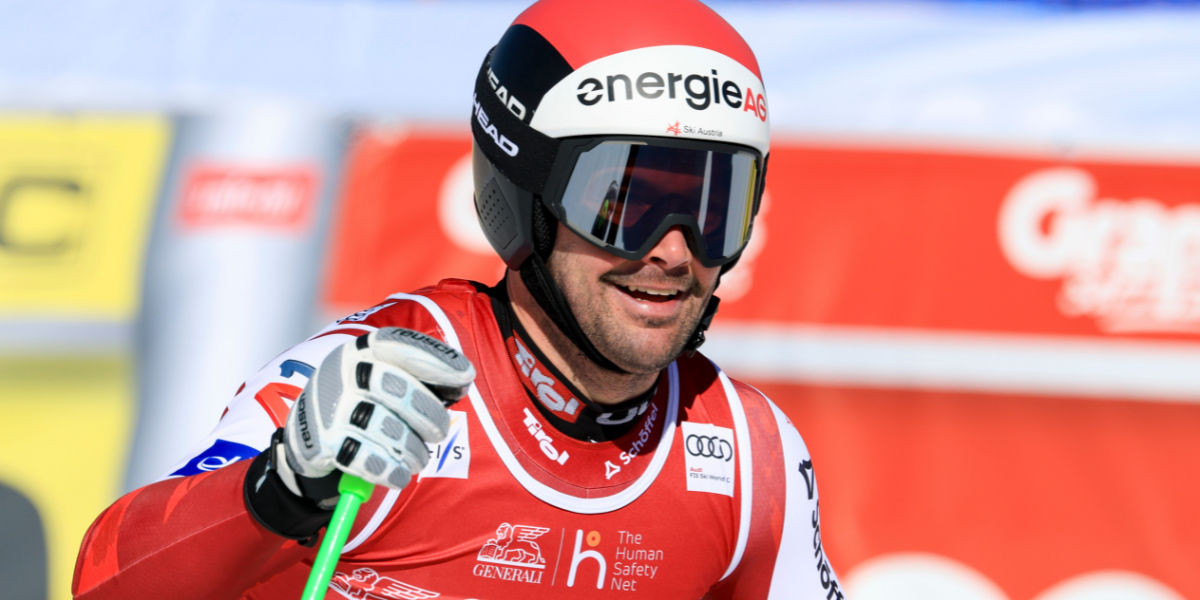
Austria’s Vincent Kriechmayr ended one of the most surprising streaks in men’s alpine skiing Friday, winning the FIS Alpine Ski World Cup downhill in Courchevel, France, and stopping a run of 23 consecutive men’s World Cup downhills without an Austrian victory.
Kriechmayr attacked the Éclipse course under blue skies and delivered an exciting and aggressive run to stop the clock at 1:47.26, edging Italy’s Giovanni Franzoni by 0.09 seconds. Switzerland’s Marco Odermatt finished third 0.31 back, securing both his third consecutive downhill season title and his fifth consecutive Overall World Cup title.
For Kriechmayr, the victory was his 10th career World Cup downhill win.
“I think maybe the middle part of the race was the key,” Kriechmayr said. “I tried to find a very direct line there and it worked pretty well. And of course I also had a bit of luck with the hundredths on my side today.”
The Austrian admitted the wait for another downhill win had been longer than expected.
“I don’t know exactly what was missing,” he said. “Maybe I just didn’t ski well enough. The level in downhill is always very high and there are so many strong athletes. Maybe I wasn’t showing my best skiing the last few years, but it doesn’t matter now. I’m just happy about today.”
Despite the victory, Kriechmayr downplayed any thoughts of chasing the Super-G globe.
“I’m not thinking about the globe,” he said. “Marco was fantastic this year. I just try to show my best skiing and we will see what happens.”
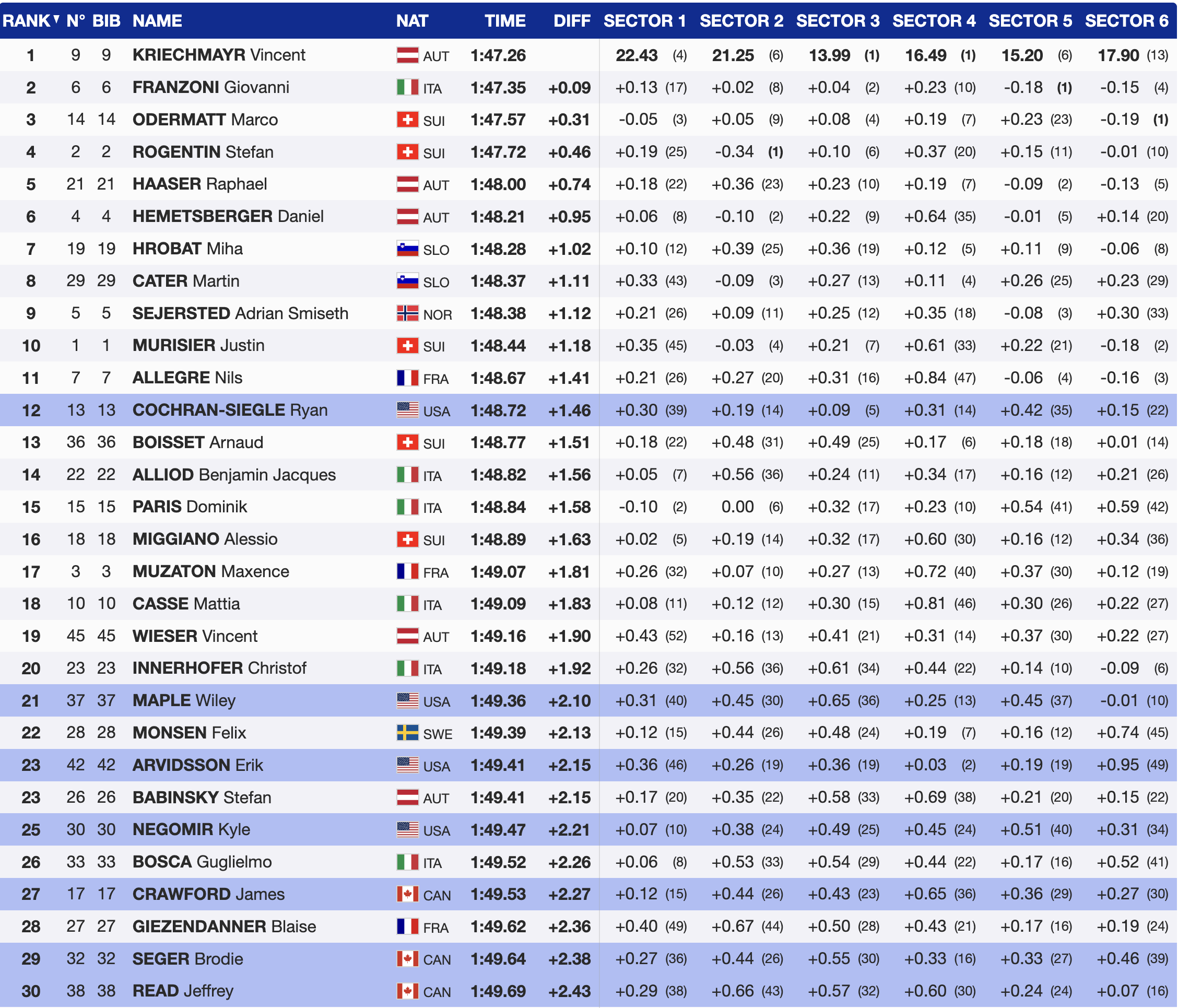
Top 5 — World Cup Downhill Courchevel
1st 🇦🇹 Vincent Kriechmayr (AUT, Head) — 1:47.26
2nd 🇮🇹 Giovanni Franzoni (ITA) — +0.09
3rd 🇨🇭 Marco Odermatt (SUI, Stöckli) — +0.31
4th 🇨🇭 Stefan Rogentin (SUI) — +0.46
5th 🇦🇹 Raphael Haaser (AUT) — +0.74
Where Kriechmayr Won the Race
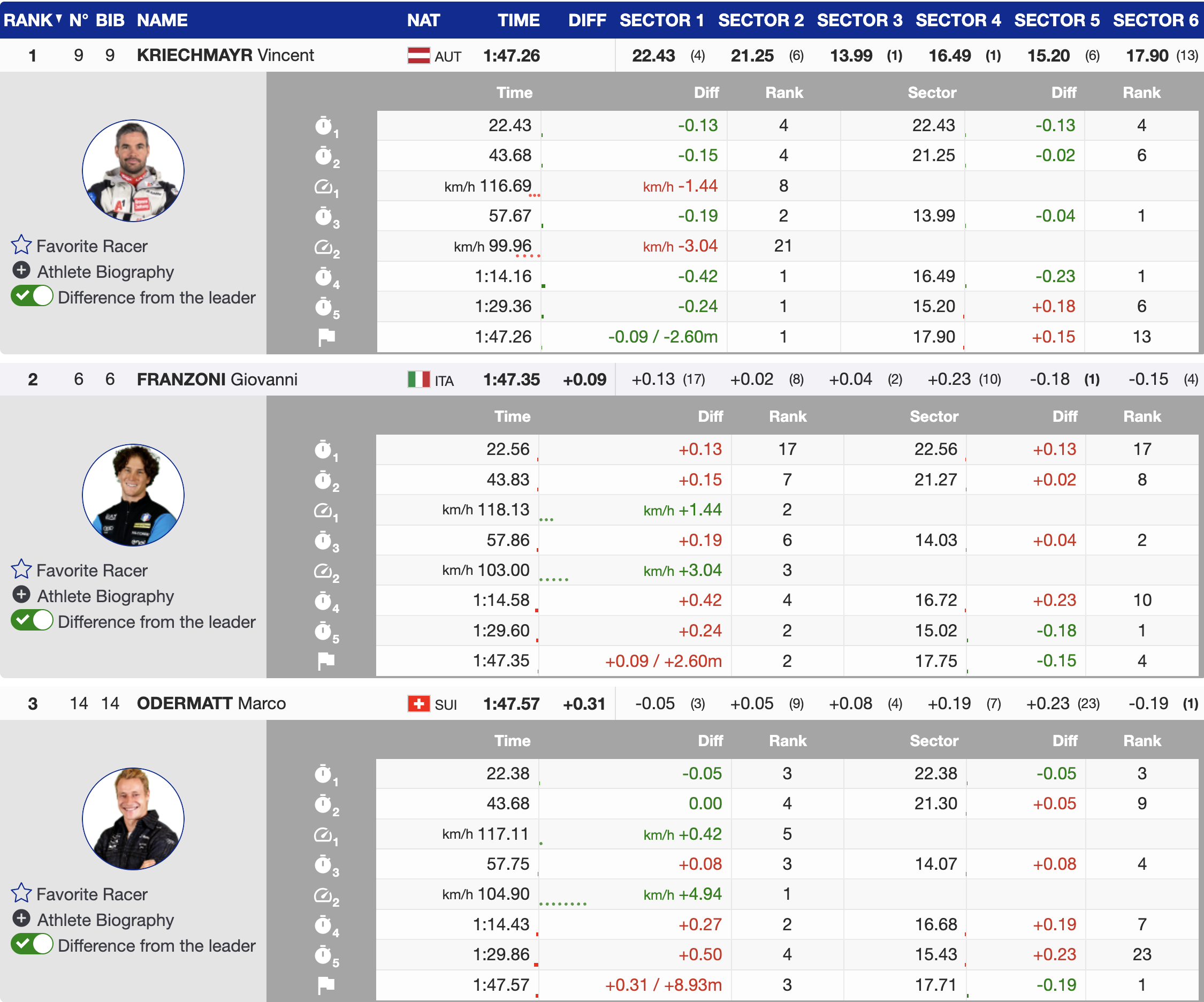
A closer look at the splits shows where the race was decided. Kriechmayr built his advantage in the middle section of the Éclipse course, posting the fastest times through sector three and sector four. At the fourth intermediate, he held roughly four-tenths of a second on Franzoni, creating the margin that ultimately secured the victory. Franzoni was fastest in the lower portion of the course and cut the deficit to 0.09 seconds, while Odermatt lost crucial time in the mid-section before producing the fastest final sector to secure the podium.
How Did Giovanni Franzoni Finish Second in Courchevel?
Italy’s Giovanni Franzoni continued the breakout season of his young career with another podium performance.
Starting with bib 6, Franzoni set the early pace and ultimately held on for second place, earning the third downhill podium of his career — all this season.
“I have only had one training session here and it was difficult to understand the lines because of the conditions,” Franzoni said. “But I skied well. I didn’t expect the result today. It has been a long season, but I am proud of myself to have skied really well in these conditions.”
The 24-year-old Olympic downhill silver medalist reflected on the remarkable rise of his season.
“I started to get results in super-G, but I am very confident in downhill because of the training and video analysis,” he said. “It is crazy to think how things have escalated since the start of the season. It has just been great.”
How Did Marco Odermatt Clinch the Downhill Globe and Overall Title?
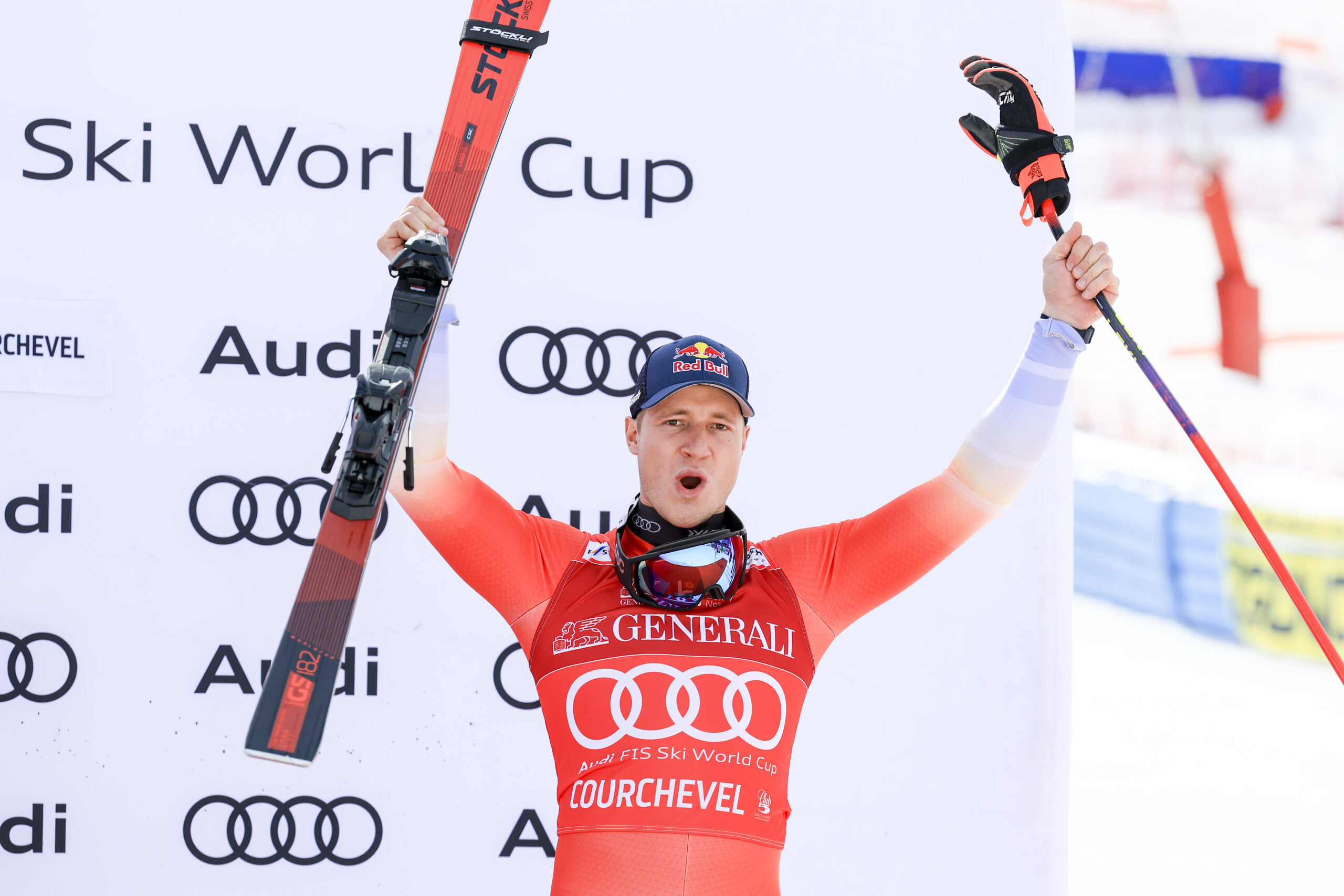
Even without the victory, the biggest prizes of the day belonged to Marco Odermatt.
The Swiss superstar finished third to secure the 2026 downhill crystal globe and his fifth consecutive Overall World Cup title, matching the legendary Marc Girardelli with five career overall titles.
The race itself proved exhausting for the Swiss star.
“It was very difficult, a very tough race,” Odermatt said. “I have never been as tired as at the finish today. It has been a long season.”
The lower section of the course proved particularly challenging.
“In the lower section the snow wasn’t good,” he said. “I was pushing against nothing.”
Winning the downhill globe carried special significance for the Swiss champion.
“For me the downhill globe has become the most important thing in my career,” Odermatt said. “To win it for a third time in a row, with such a big gap, makes it extra special.”
“To be so consistent in every race and every condition, to fight for the top spot every week with all the pressure makes me proud.”
Odermatt secured the titles after his Swiss teammate Franjo von Allmen — his closest challenger in the standings — did not finish after making errors on the tricky Courchevel piste.
How Did Martin Čater Qualify for the World Cup Finals?
One of the most dramatic performances came from Slovenia’s Martin Čater, who started with bib 29 knowing he needed a breakthrough result to reach the World Cup Finals.
Čater delivered exactly that.
His aggressive run placed him 8th, 1.11 seconds behind Kriechmayr, earning 32 World Cup points and lifting him to 25th in the downhill standings. That result secures the final qualification spot for the World Cup downhill finals.
Entering the race ranked 31st, Čater produced his season’s best result when it mattered most.
Stifel U.S. Ski Team
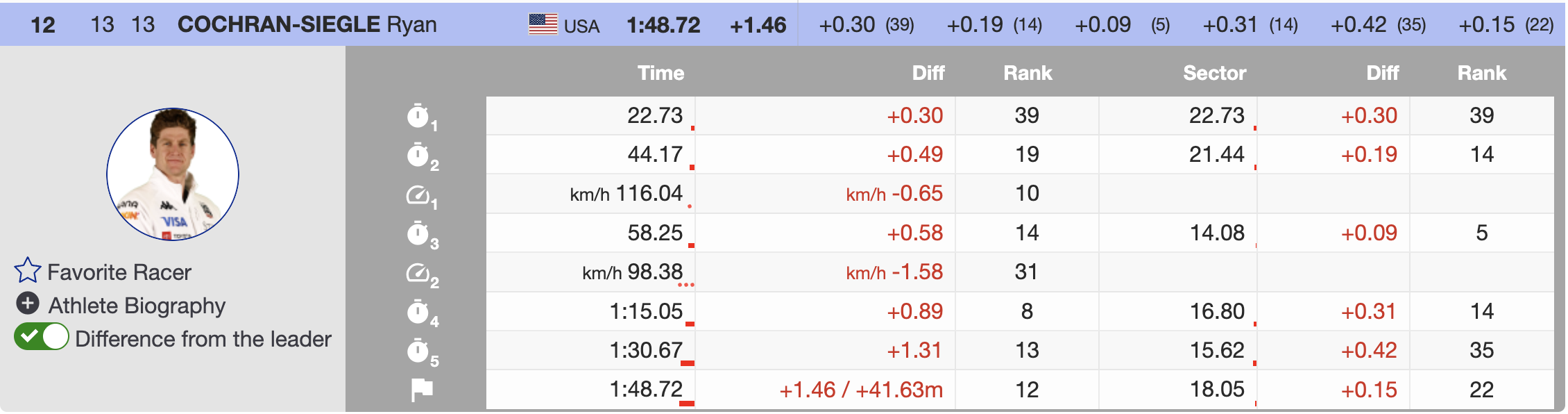
Ryan Cochran-Siegle led the Stifel U.S. Ski Team in Courchevel, finishing 12th (+1.46) on the demanding Éclipse course to secure another solid points result as the World Cup season approaches the finals.
- 12th 🇺🇸 Ryan Cochran-Siegle (bib 13), USA, 1992, Head — +1.46
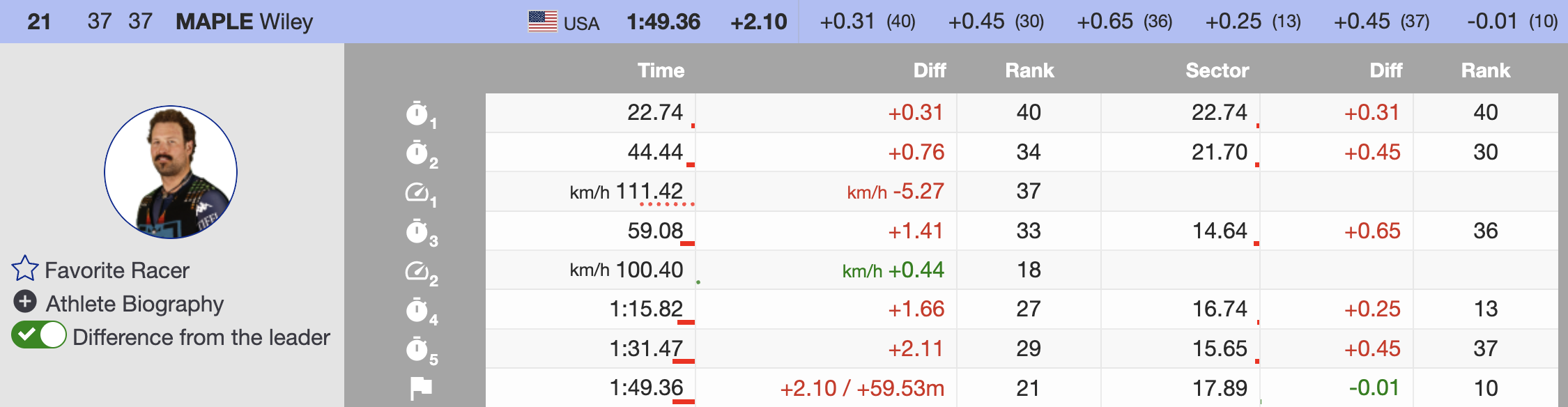
- 21st 🇺🇸 Wiley Maple (bib 37), USA, 1990, Atomic — +2.10
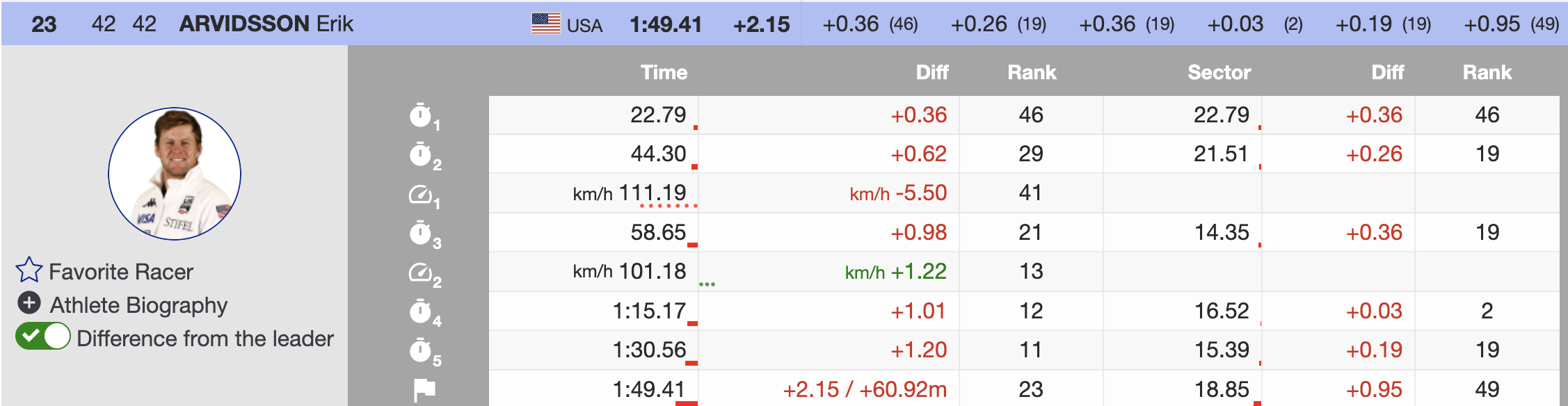
- 23rd 🇺🇸 Erik Arvidsson (bib 42), USA, 1996, Head — +2.15
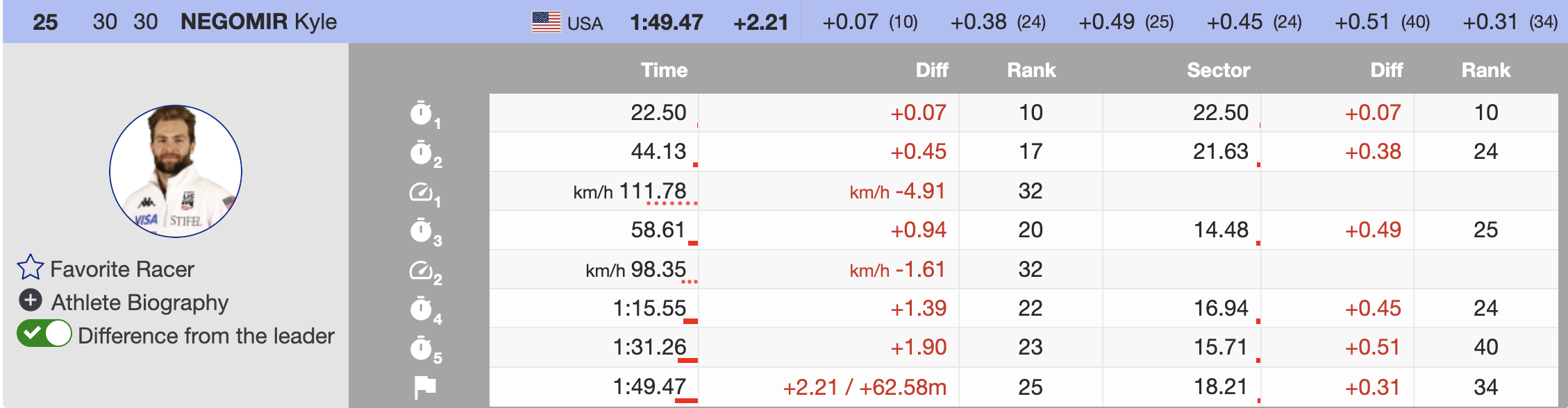
- 25th 🇺🇸 Kyle Negomir (bib 30), USA, 1998, Atomic — +2.21
Independent skier Wiley Maple continued one of the quiet success stories of the race. Starting with bib 37, Maple finished 21st to score points for the fourth consecutive downhill, a personal milestone as he closes his World Cup downhill season with momentum.
Cochran-Siegle Reflects on Demanding Course and Season
Cochran-Siegle said the Éclipse course required strength and precision as warm conditions created a rough, physical surface.
“The track was awesome today,” Cochran-Siegle said. “It held up really well with the warm temperatures and they did a great job preparing it. It was proper downhill — fast, in your face and a little bit of rattle.”
The American felt there was still time left on the course.
“My run was okay, but I probably needed to stand over it more and initiate a little earlier so I could ski through that rattle rather than getting affected by it. There was definitely time to be found.”
Reflecting on the season as he prepares for the World Cup Finals in Kvitfjell, Cochran-Siegle described a campaign marked by both strong performances and inconsistency.
“It’s been a bit up and down,” he said. “There were a lot of really good days, but especially in downhill there were also races where I didn’t finish or didn’t score points. When my skiing has been good it’s been really competitive, so now it’s about finding that level more consistently.”
Arvidsson Finishes Season with Momentum
Erik Arvidsson added another points result for the U.S. team, finishing 23rd (+2.15) to continue a strong late-season run that included a season-best 11th place in Garmisch-Partenkirchen.
“I’m very content, but also a little frustrated because I feel like I left a lot on the table in the last section,” Arvidsson said. “But it’s nice to keep proving to myself that I have the top gear to be competitive and to put a few more World Cup points in the pocket heading into next season.”
The American said the result reflects the progress he has made after returning from a knee injury earlier in the season.
“I’m proud of how the season progressed, especially coming back from the knee injury and limited training,” he said. “Obviously I’m disappointed with today, but overall I’m happy with how things developed.”
Although Maple, Arvidsson, and Negomir will not ski in the World Cup downhill finals, their late-season results provide valuable momentum heading into the 2027 season.
Alpine Canada
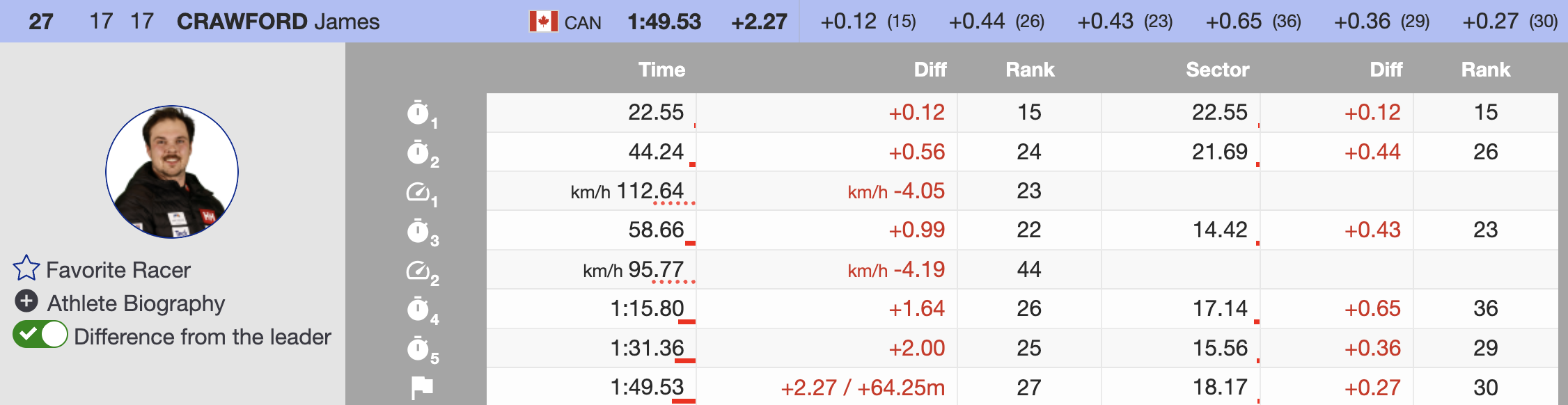
Canada placed three skiers in the top 30.
- 27th 🇨🇦 James Crawford (bib 17), CAN, 1997, Head — +2.27 — 4 WC points
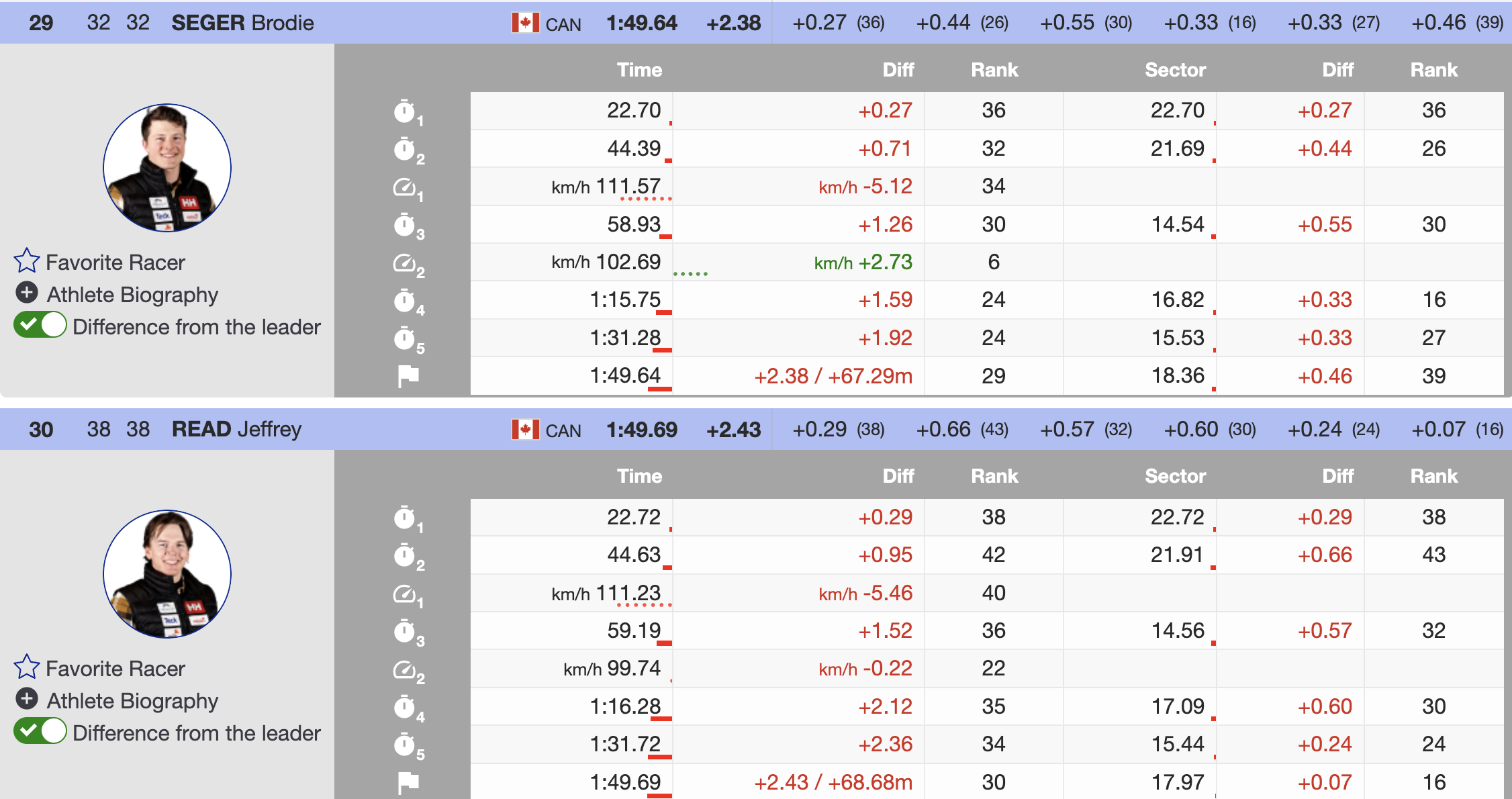
- 29th 🇨🇦 Brodie Seger (bib 32), CAN, 1995 — +2.38 — 2 WC points
- 30th 🇨🇦 Jeffrey Read (bib 38), CAN, 1997 — +2.43 — 1 WC point
🇨🇦 Cameron Alexander did not finish after missing a gate but still qualifies for the World Cup Finals.
The two North Americans advancing to the downhill finals in Kvitfjell are:
- 🇺🇸 Ryan Cochran-Siegle — 214 points, 7th
- 🇨🇦 Cameron Alexander — 122 points, 15th
Bib 31+ Skiers Scoring Points
Several late starters delivered impressive runs to finish in the top 30.
- 13th 🇨🇭 Arnaud Boisset (bib 36) — +1.51
- 19th 🇦🇹 Vincent Wieser (bib 45) — +1.90
- 21st 🇺🇸 Wiley Maple (bib 37) — +2.10
- 23rd 🇺🇸 Erik Arvidsson (bib 42) — +2.15
- 26th 🇮🇹 Guglielmo Bosca (bib 33) — +2.26
- 29th 🇨🇦 Brodie Seger (bib 32) — +2.38
- 30th 🇨🇦 Jeffrey Read (bib 38) — +2.43
A Ceremonial Finish for Adrien Théaux
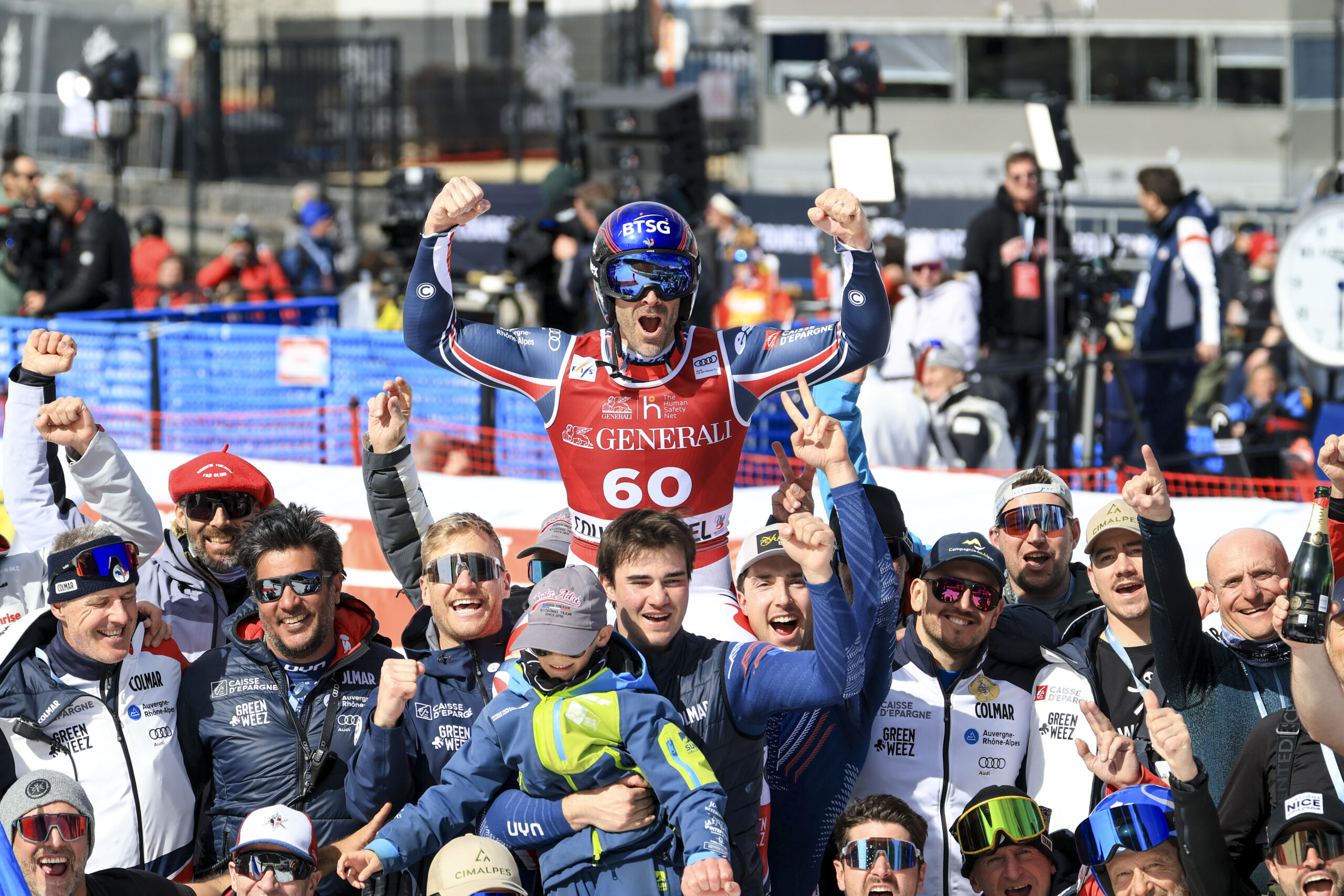
The race also marked a symbolic moment for veteran French skier Adrien Théaux, who started last with bib 60 for a ceremonial retirement run.
The two-time downhill winner and 13-time World Cup podium finisher closes one of the most respected careers in French alpine skiing.

Top 30 results
Click images to enlarge
Analysis of the top three and North Americans among the top 30
About the Author: Peter Lange