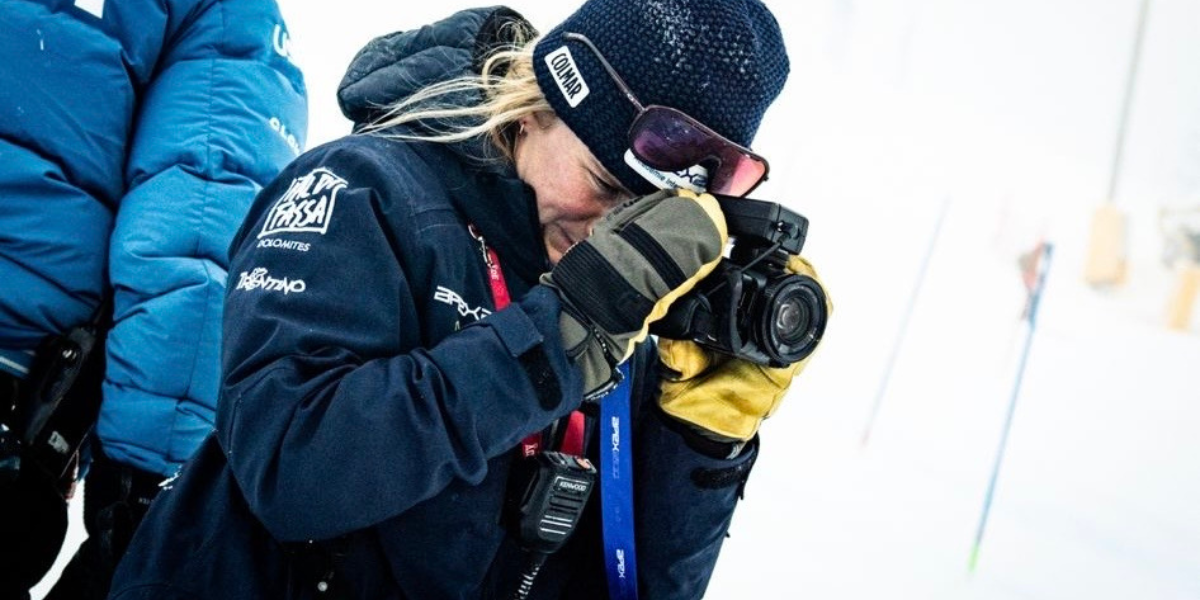
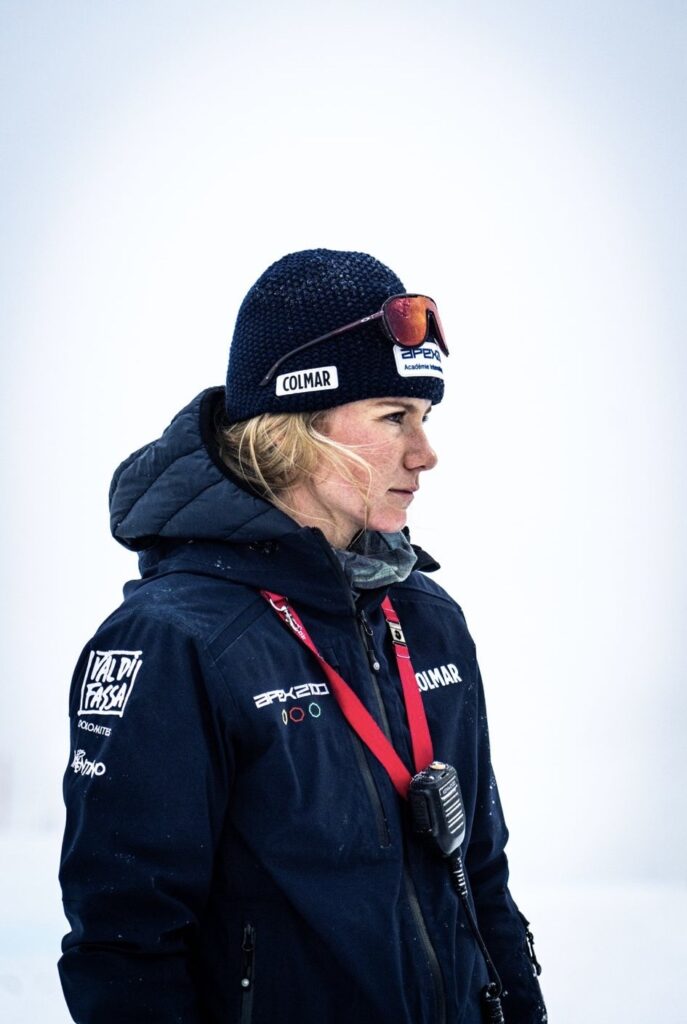
Featured Image: Coach Lucy Brown
At 25 years old, Lucy Brown is already coaching on one of Europe’s most competitive development platforms. But she doesn’t frame her work in terms of age or optics. She frames it in terms of trust.
“A big thing for me is look after the person before the athlete,” Brown says. “If they’re happy mentally, you’ll start to see improvements on snow.”
It’s a philosophy that has shaped her work at Apex2100, where she coaches Latvian standout Dženifera Gērmane and operates within an international high-performance environment that feeds the Europa Cup and World Cup pipeline. Brown is part of a new wave of young female coaches entering elite alpine skiing, not to make statements but to make athletes better.
And quietly, it’s working.
From Queenstown to Europe
Brown grew up in Queenstown, New Zealand, immersed in ski racing culture. During Southern Hemisphere winters, global stars filtered through her home mountain. She trained beside names like Lindsey Vonn and Mikaela Shiffrin before eventually stepping away from ski racing to pursue competitive horse riding.
But skiing pulled her back, this time through coaching.
She began at 17, working weekends while still in school. She progressed through youth programs, eventually becoming head coach of U12 and U14 groups. A High Performance Sport New Zealand scholarship aimed at developing female coaches became a turning point.
“They asked, ‘What are your goals? What are your aspirations?’” Brown recalls. “That was a big eye-opener.”
Her answer led her to Europe and to Apex2100, first as an intern and then into an embedded coaching role within the academy’s FIS and Europa Cup structure.
At Apex2100, she found an environment that matched her ambition: integrated strength and conditioning, physio support, indoor training access, and a culture that blends independence with accountability.
Go Slow to Go Fast
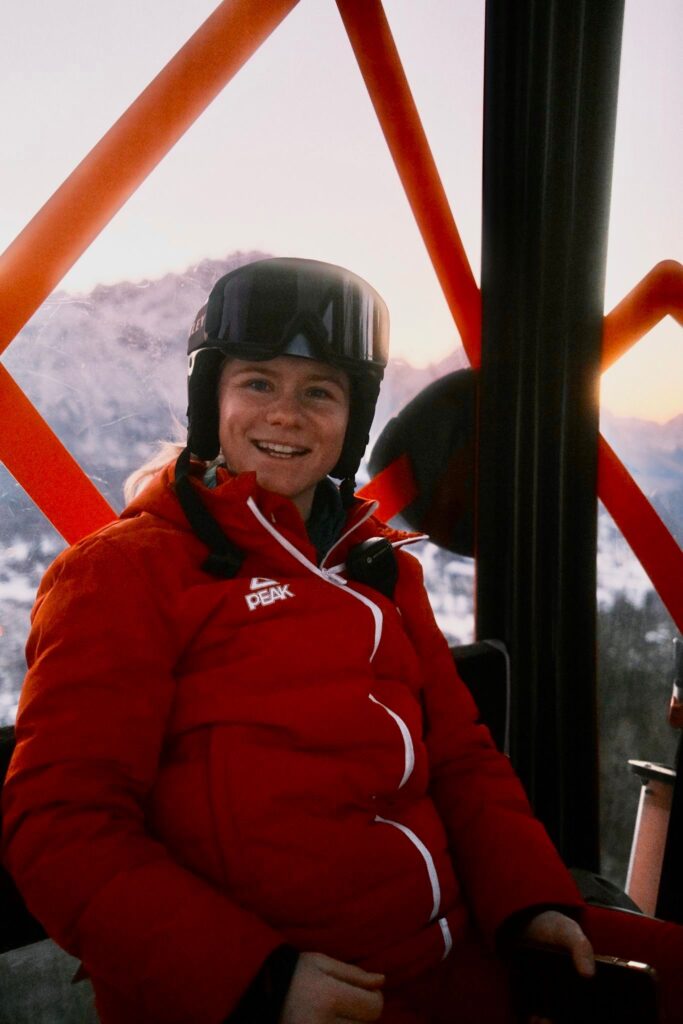
One of Brown’s clearest case studies is her work with Dženifera Gērmane. Gērmane arrived at a pivotal moment in her career, navigating the frustration of repeated injuries and the psychological toll that follows.
“She’s been injured a few times,” Brown says candidly. “But to now come back like this after surgery — she’s doing bloody well.”
The rebuild wasn’t rushed.
“Go slow to go fast,” Brown explains. “Work on the basics.”
That meant a summer anchored in the gym at Apex. Collaboration with physios and S&C coaches. Bike camps. Structured progression. When Brown rejoined her on snow in September, the technical focus was stripped back to fundamentals. “Lateral balance. Upper body position. Hand position — the simple tasks you do in ski instructor courses,” she says. “Basics, basics, basics.”
In a sport that often chases marginal gains and complex technical language, Brown believes clarity beats clutter. “Skiing can be simple,” she says. “I see a lot of coaches get too caught up in very small details.”
For Gērmane, simplicity rebuilt consistency. And consistency rebuilt confidence.
Trust Before Risk
Brown’s coaching philosophy has matured quickly over the past three years, and at its core is relational trust.
“If you get to know the background of the person — where they’ve come from — and build that relationship, they trust you,” she says. “And when they trust you, they believe in what you’re teaching them.”
In alpine skiing, belief isn’t soft skill language. It’s performance currency. Risk, the kind required to ski fast, only happens when athletes feel secure.
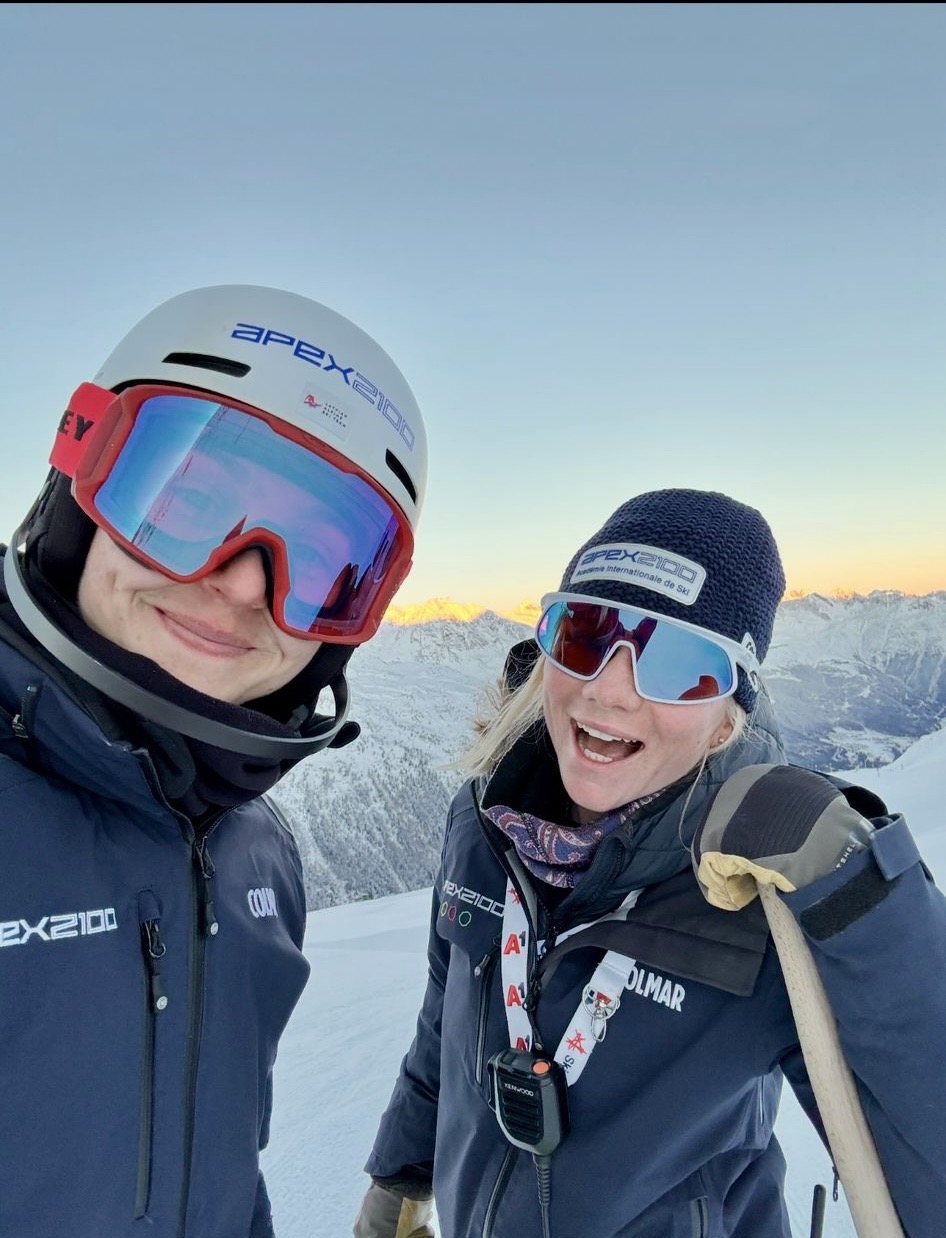
At Apex, Brown builds that security intentionally. Communication is open. Time off the hill matters. Team culture matters. Afternoons sometimes mean cross country skiing (“We’re both terrible at it”), board games, coffee stops, moments designed to ensure athletes aren’t emotionally consumed by results.
“So they’re not locked into skiing the whole time,” she says. “Having fun while we’re at it — that’s important.” For athletes training far from home within an international academy structure, that balance can define longevity.

A Different Coaching Presence
Elite alpine skiing remains a male dominated coaching landscape, particularly in European high performance environments. Brown doesn’t make her gender the headline, but she understands the context.
“You’re here for your athletes,” she says. “So focus on making them better.”
She doesn’t want to be labeled a “female coach.” “I just want to be a coach.” Still, her presence represents something meaningful: young women stepping into performance leadership roles earlier, backed by formal development pathways and international exposure. Brown’s age is often cited as an advantage. At 25, she’s close enough to her athletes’ generation to relate naturally, culturally fluent, communicative, collaborative. But her standards are firm.
“We’re here to improve,” she says. “That doesn’t mean you overcomplicate everything.” Her authority doesn’t come from volume. It comes from clarity.
Sustainability Over Flash
Coaching winter to winter between New Zealand and Europe demands resilience. The team intentionally builds structured reset periods into the calendar for both coaches and athletes.
“You come back fresh. You look at things with fresh eyes.” That rhythm mirrors the development model she’s helping shape at Apex: not chasing quick spikes in performance, but building durability. In Gērmane’s case, the early signs of stability are encouraging. More importantly, the foundation feels different.
And that may be Brown’s most defining quality as a coach, she’s thinking long term.
At 25, Lucy Brown isn’t just building faster ski racers. She’s building environments where athletes can last.
About the Author: Katie Twible