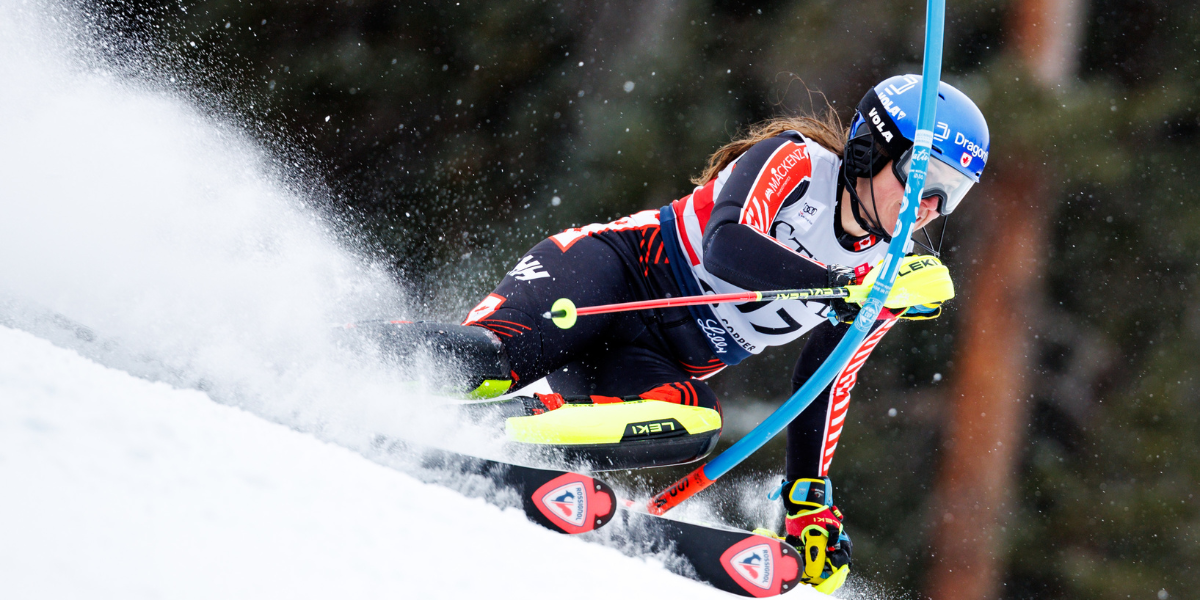
Featured Image Laurence St-Germain/ GEPA
Laurence St-Germain’s journey to becoming a world champion didn’t begin in gates or on perfectly groomed training lanes. It began in the heart of a Québec winter, in the deep cold of Saint-Ferréol-les-Neiges, just minutes from Mont-Sainte-Anne.
Growing up there shaped her in ways she didn’t fully understand until much later. The terrain was rugged, the trees endless, and her childhood was defined less by organized sport and more by play. “We were always skiing in the woods and making up our own trails,” she recalls. “It wasn’t structured. It wasn’t gates. It was just skiing—just playing.” It wasn’t until she was 12 that real training entered her life. Before that, competition wasn’t the goal. “I wasn’t the kid who loved competition,” she says. “I just loved doing sports.”
That foundation of creativity on snow, resilience built through frigid Québec winters, and joy before pressure would become the backbone of her ski racing career.
Family, Rivalry, and the Push to Improve
If the mountains shaped Laurence, her family accelerated her. Her brother, William St-Germain, is also a ski racer, and his competitive fire lit something in her. “As kids, we weren’t that close,” she laughs. “But once we were both on Skibec, we got closer. He was so competitive—way more intense than me.”
Chasing him forced her to think differently, to push harder, and eventually, to take skiing more seriously. William excelled mentally, she says, and having him ahead of her taught her how to think like a high-performance athlete. Their dad added another layer of competitiveness. A former golfer from Texas who raced the pro tour locally, he brought the competitive DNA that both kids inherited, William more obviously and Laurence in her own quieter, determined way. Their mother, a lifelong skier from Montréal, gave them the love for the mountains.
Now, with both siblings climbing the high-performance ranks, the possibility of competing together on the world stage, even the Olympics, is surreal. “It would be insane,” she says with a grin. “We’re both on the development path, and anything can happen. It would be super cool.”
The UVM Years: Pressure, Growth, and Independence
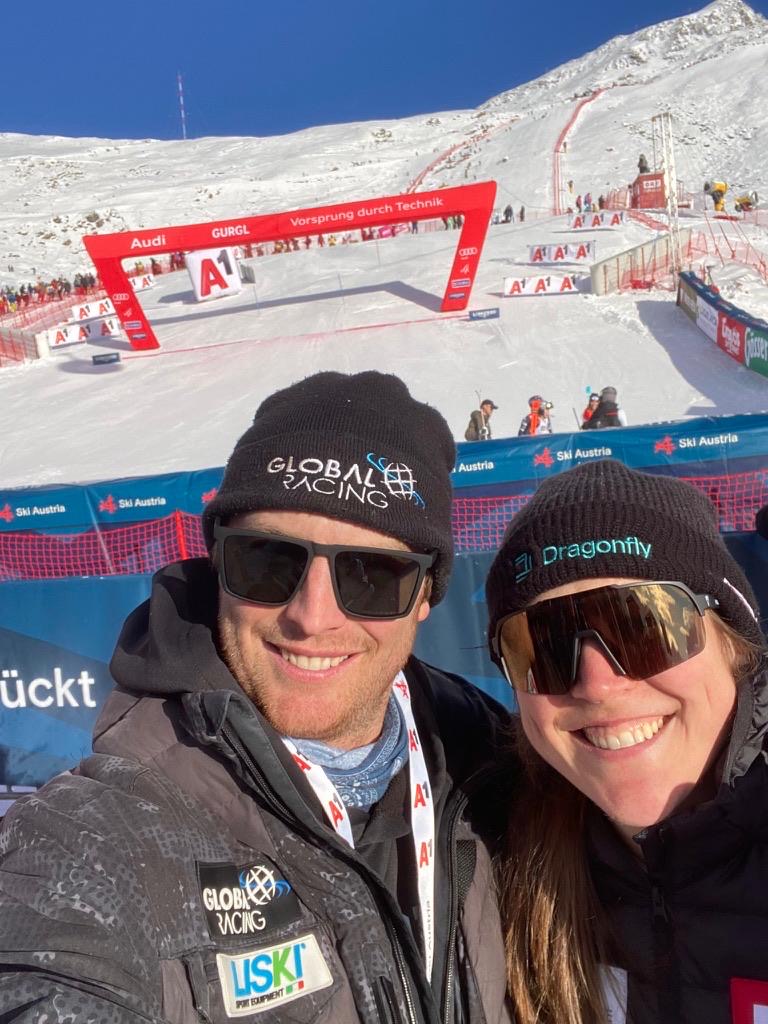
Being cut from the Canadian development team was a turning point, but not a dead end. The University of Vermont became her springboard. “I was lucky to go to UVM and ski with girls who were way faster than me,” she says. “It forced me to coach myself more. Before that, I relied a lot on coaches. NCAA made me independent.”
The collegiate circuit sharpened her racing skills and her ability to handle pressure. And off the hill, academics provided balance. She studied computer science at UVM before transitioning into biomedical engineering, a path that kept her grounded.
“It was important to me to do school. It helped me disconnect from skiing and prepared me for life after sport,” she explains. “Everyone on the team was studying, so we held each other accountable.” Her studies also shaped her approach to skiing. Problem-solving became her default. “Whenever I had a bad day, I’d step back and analyze. What’s the problem? How do I fix it? I’ve always been solution-based.”
Her dream job, whenever skiing ends? Working in robotics and prosthetics, blending technology with the human body.
The 2023 World Championship: Pressure, Visualization, and Gold
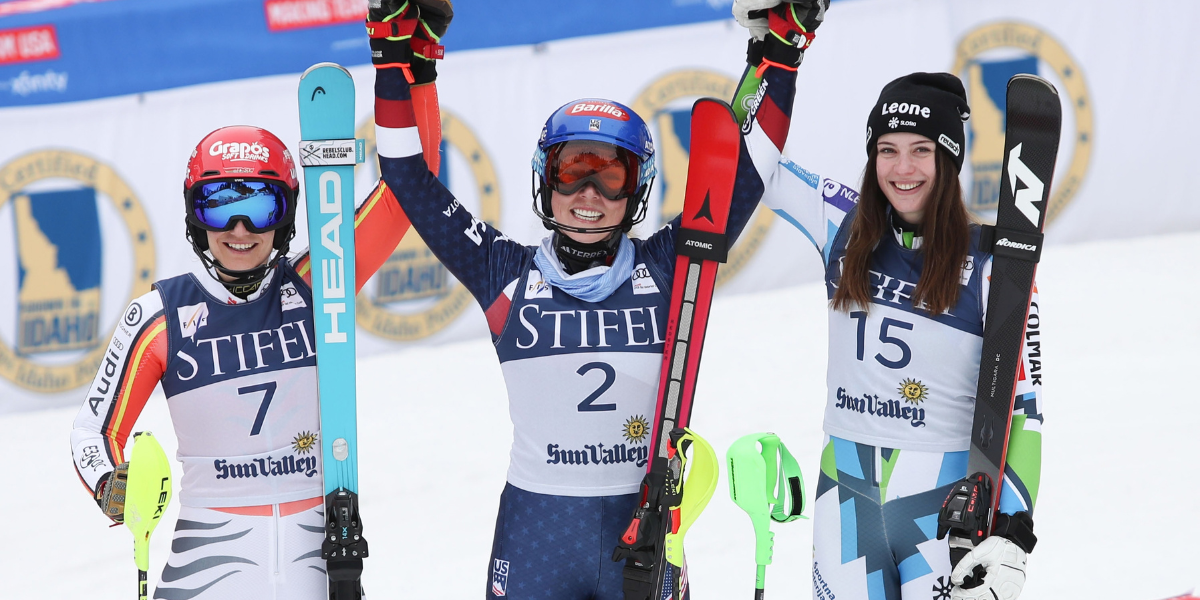
In Méribel, Laurence delivered one of the most remarkable performances in Canadian ski history. Sitting third after the first run of the slalom, she knew the margins were razor-thin. “After inspection I was stressed,” she admits. “So I just visualized the course over and over. I kept coming back to the plan, commit, execute, keep my spot.”
She did more than that. Her second run was a masterclass in precision and composure. Crossing the finish, she became a World Champion. “It was unbelievable,” she says quietly. “Everything I had worked for… it just came together.”
Training, Mindset, and the Olympic Push
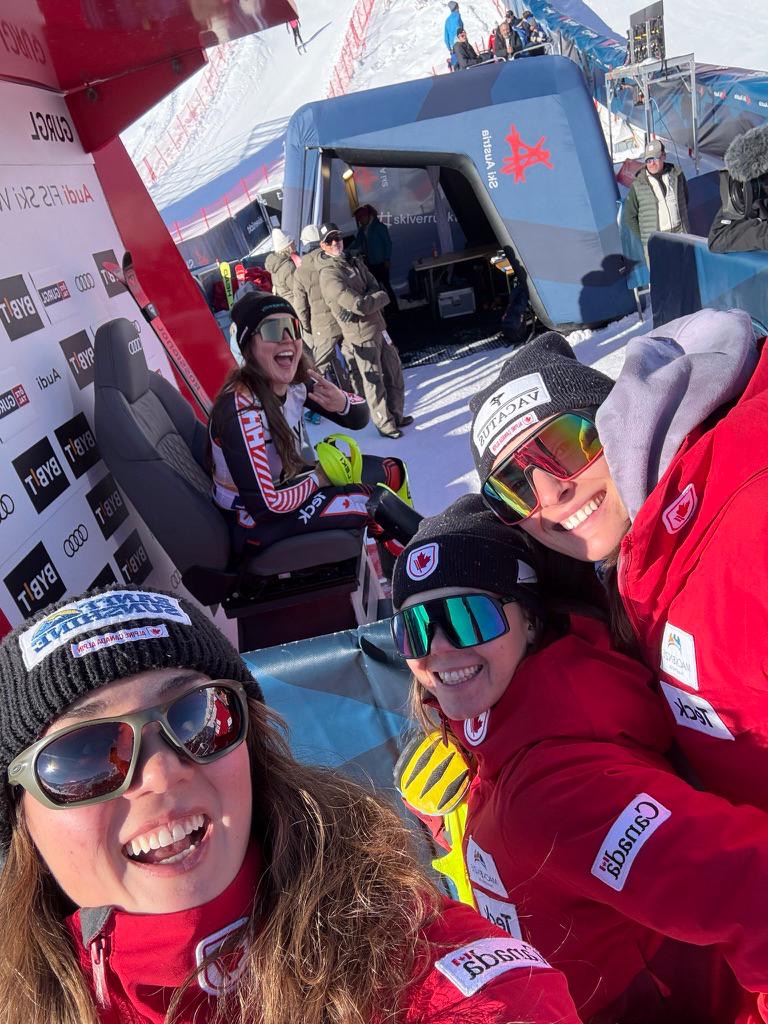
As she builds toward another Olympic year, Laurence’s training structure looks different but stronger in its own way. “With my knee, I haven’t had a lot of volume, but I feel more accountable this year,” she says. “More in control. And my team has been super supportive.” The lessons from her world-championship run, including visualization, trust, and composure, are now guiding her Olympic preparation.
Her past Olympic experiences taught her how to manage pressure. “The first one, I was just happy to be there. The second one, the pressure was higher. Now I know how important it is to limit the noise.” For the next Games, success won’t be measured by medals alone.
“If I can control my nerves, push hard, and attack two runs, that’s a success.”
Setbacks, Injuries, and Learning to Pause
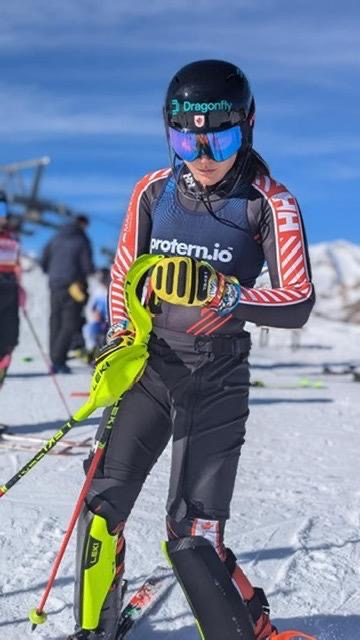
Laurence doesn’t hesitate when asked about her biggest career setback. “I’m living it right now,” she says candidly. A series of injuries, including a major knee issue this past summer, have tested her physically and mentally more than anything before.
“This summer was the hardest. The other injuries were close to the season, but this one… I had to question when to stop. My body was telling me to stop.” Still, she calls it a “good summer” for preparation, a reminder that even tough chapters build strength. And as a slalom specialist, where inconsistency is part of the job, she leans heavily into problem-solving.
“Always be in solution mode,” she says. “Find the reasons, and move forward.”
Team, Community, and Québec Pride
Laurence credits much of her progress to the people around her. “We pull each other up,” she says of her teammates. “It’s frustrating and good when someone is skiing faster than you. We’ve built a really strong dynamic between staff and athletes.”
As someone who grew up in Québec’s vibrant ski community, she feels a responsibility to inspire the next generation. “It’s humbling to be recognized in Québec City or back home. I hope I can inspire more girls.”
Off the Snow: What Keeps Her Grounded
Despite the intensity of her career, Laurence prioritizes a balanced life. She loves mountain biking, rock climbing, and, “I’m a big puzzler,” she laughs. Having friends outside the ski world has also been crucial. “That’s what helped me most this summer, staying stable and remembering who I am outside ski racing.”
Legacy, Mentorship, and What Comes Next
Becoming a world champion shifted how others see her, but Laurence is still adjusting to the idea of being a role model. “I never thought of that,” she says. “It’s humbling. I just hope I can inspire more girls in Québec and across Canada.” She credits people who shaped her: her brother William, who pushed her; her coach Francis, who fought for her; and UVM teammate Maddie Irwin, who helped her find her voice. “Maddie taught me to take my place and believe in myself, not just as a racer, but as a person.” As for her legacy? She hopes it’s about more than medals.
“I want to help change how girls in Quebec and across Canada see themselves in sport. I want them to know they can do both, school and skiing. They can find joy in it.”
Her advice to young skiers is simple and heartfelt: “Enjoy skiing. Don’t get stuck only doing courses all the time. The more things you do, the better you become. And in school, choose something you love. That’s how you make it work.”
Up next: Catch Laurence St-Germain at the Courchevel, France World Cup slalom, under the lights on one of the sport’s biggest stages. ❄️⛷️
About the Author: Katie Twible