Matilde Lorenzi GEPA pictures
A tragic loss revisited
One year after the death of 19-year-old Italian ski racer Matilde Lorenzi, prosecutors in Bolzano reopened a criminal investigation into her fatal training crash. The decision turns what was once seen as a tragic accident into an active legal case.
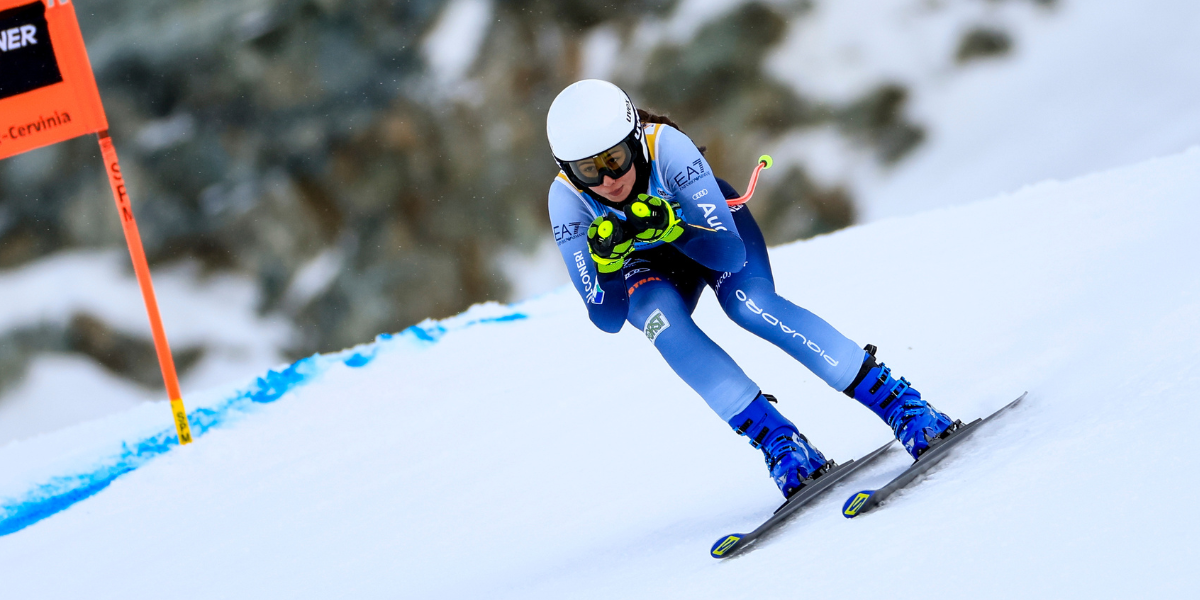
Lorenzi, a Junior National Team athlete and member of the Italian Army sports group, died on October 29, 2024, after suffering catastrophic injuries during a training run on the Grawand G1 slope at the Schnalstaler Glacier in South Tyrol. Her death shocked Italian ski racing, where many viewed her as a future World Cup contender.
Case reopened after private expert reports
According to SnowBrains.com, public prosecutor Igor Secco reopened the case in February 2025 after Lorenzi’s family submitted reports from two private experts—one medical, one technical—whose conclusions directly contradicted the original findings.
Medical examiner Dr. Roberto Testi, Director of Forensic Medicine at the ASL of Turin, rejected the first claim that Lorenzi died from facial injuries after a forward fall. His analysis identified severe thoracic trauma from an impact behind, which caused a tension pneumothorax and cardiac arrest. Testi said the pattern of injuries ruled out a face-first fall.
Technical expert Ernesto Rigoni determined that Lorenzi had hit a raised edge left by a snow groomer. He argued that proper safety margins or b-netting could have prevented the death. Those safeguards were missing on the training course.
Visible evidence and expert review
A resort webcam running in 10-minute intervals recorded the slope that day. A frame captured at 10:10 a.m. on October 28—about 20 minutes after the crash—shows the raised ledge still in place.
To reconstruct events, the Preliminary Investigations Judge appointed two independent experts: Roberto Nizzi, a specialist in slope-safety management, and Dr. Mario Domenico Gulisano, a forensic medical examiner. They will determine whether Lorenzi’s death resulted from her initial crash or from the secondary impact with the unprotected snow wall, and whether stronger safety measures could have changed the outcome.
Prosecutors charged two people with manslaughter:
- Lukas Tumler, head of slope safety at Alpin Arena Senales
- Angelo Weiss, one of Lorenzi’s coaches
Investigators also demanded videos, documents, and training records from the Italian Ski Federation (FISI) to support the inquiry.

Flaws in the original investigation
The Lorenzi family’s lawyers outlined several “important inconsistencies” in the first investigation. They said officials failed to interview the assistant coach, skipped an autopsy, and left the crash scene undocumented.
They added that investigators never seized the video of Lorenzi’s training run. It was initially claimed that no video existed, but that proved false. Officials closed the case within 24 hours, ending the review before key evidence surfaced.
When the family located the video months later, they submitted it to prosecutors in February 2025. That footage prompted the renewed criminal investigation.
A family’s mission for change
After their daughter’s death, Lorenzi’s parents founded the Matilde Lorenzi Foundation to turn grief into action. The foundation funds research and innovation that improve ski-racing safety.
On October 31, 2025, the organization completed a charity auction that raised thousands of euros for safety research. World Cup racers and other international athletes donated signed memorabilia to support the cause.
Broader implications for ski-racing safety
The reopened case follows another recent tragedy—the death of Italian World Cup racer Matteo Franzoso, who crashed during training at La Parva, Chile, in September 2025.
Both incidents renewed pressure on ski federations to enforce stronger slope-safety standards, tighten homologation reviews, and protect athletes more effectively.
If prosecutors prove negligence, the case could trigger sweeping reforms in how training environments are managed and approved.
For Lorenzi’s family and the broader racing community, the mission is clear: ensure her memory drives change so that future athletes can chase speed and success with greater safety.
Information source: SnowBrains.com (Julia Schneemann, November 3, 2025).
About the Author: SR Staff Report