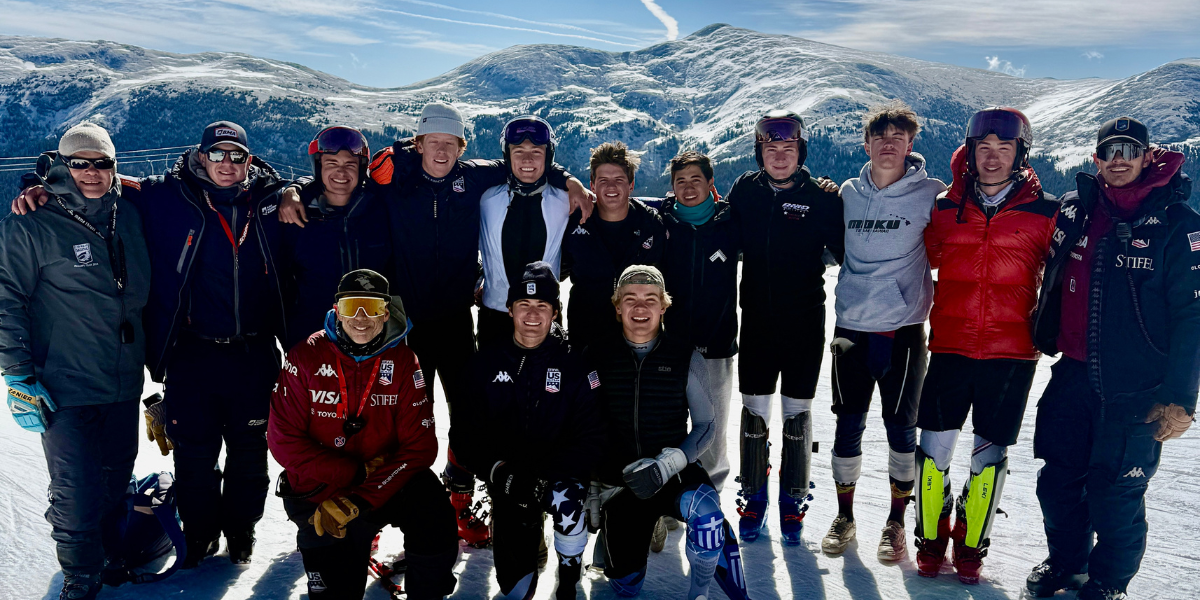
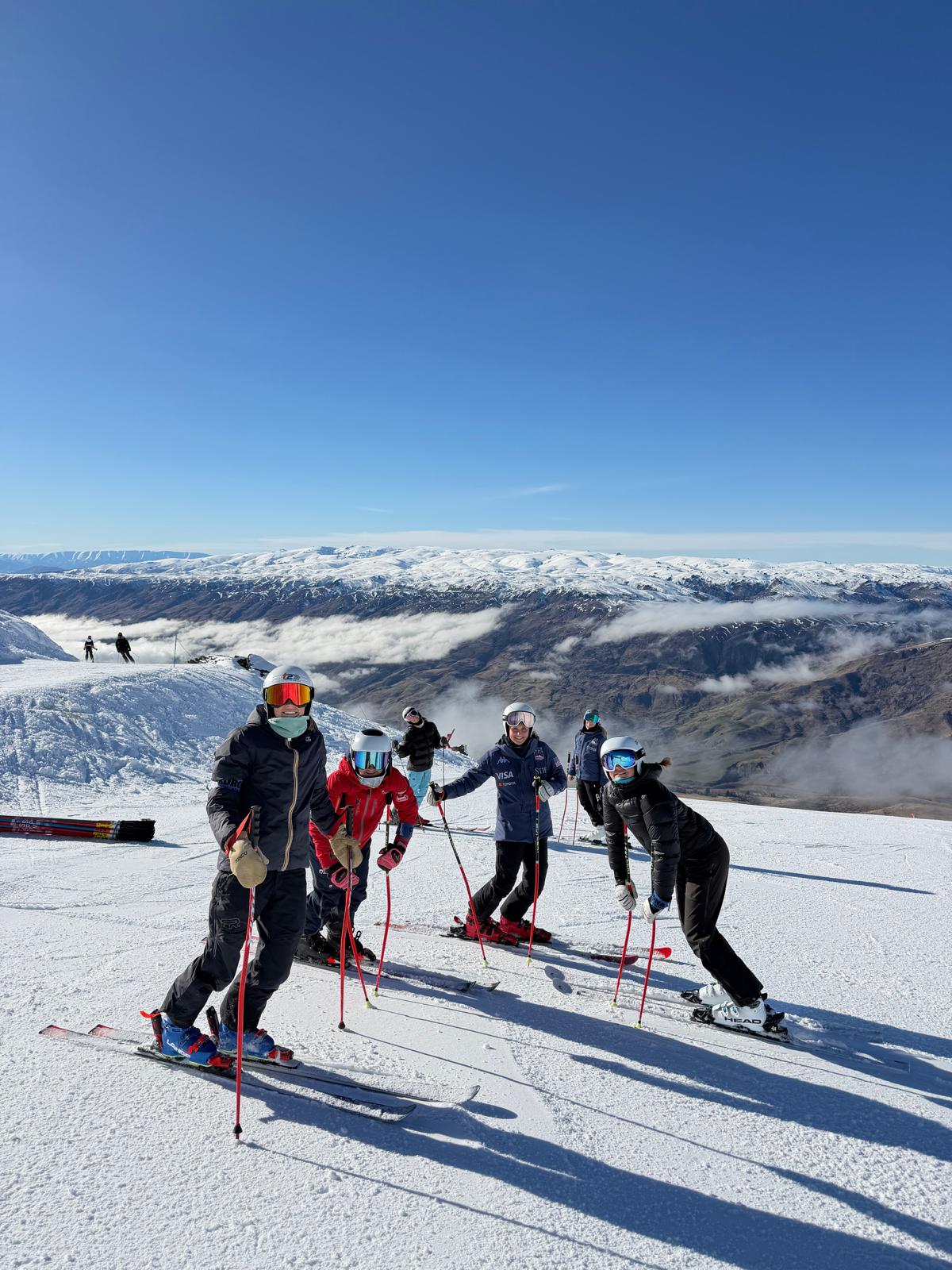
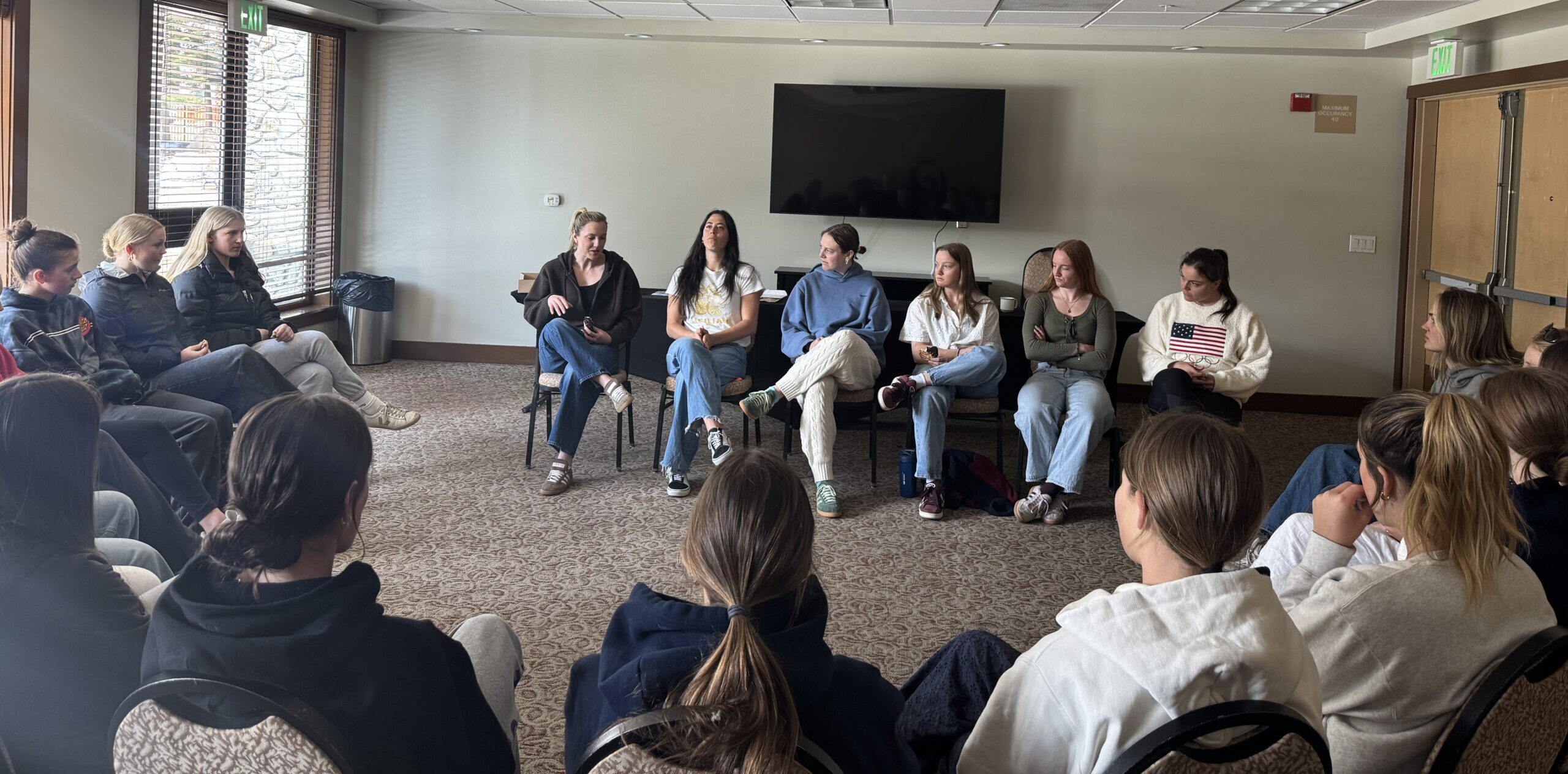
Regional Development Program, Copper Mountain 2026, Photo/ Margo Cohen
Eight athletes who participated in U.S. Ski & Snowboard’s new Regional Development Program moved onto the Stifel U.S. Ski Team this spring.
Five had earned places on the named Regional Development Team. Three had not.
That second number may say as much about the new system as the first.
The Regional Development Program, or RDP, was designed specifically to reach beyond the old national D-Team structure. During its first season, U.S. Ski & Snowboard estimates that roughly 100 athletes received some level of support through projects, regional programming or the NorAm Cup. Alpine Development Director Chip Knight said that was about three times the number of athletes reached under the previous D-Team model.
The ambition is larger than moving eight athletes onto the national team. U.S. Ski & Snowboard wants to rebuild the depth underneath its World Cup program.
The first season produced promising results. It also exposed the inherent difficulty of a system built around flexibility, clubs and project-based programming.
“The big challenge, and we knew this challenge going in, was moving away from a centralized, fully managed D-Team to effectively a project-based, in-and-out type program,” Knight said.
The second year will test whether U.S. Ski & Snowboard can preserve that broader development funnel while providing its leading athletes with greater continuity.

Why did U.S. Ski & Snowboard move away from the traditional D-Team model?
The regional structure grew from a blunt assessment of U.S. development.
In its February 2025 planning document, U.S. Ski & Snowboard identified limited junior depth as a constraint on future World Cup performance. It argued that the existing system reached too few athletes and proposed replacing a narrow “pipeline” with a wider “funnel” that could accommodate different rates of development and multiple entry points. The plan also called for greater regional staffing, multidiscipline development and stronger club collaboration.
Knight said U.S. Ski & Snowboard had tried regional approaches before. In his view, those efforts lacked the staffing and resources necessary to succeed.
This time, the organization placed six development coaches into the regions — a men’s and women’s coach in the East, Rocky/Central and West — while providing national coordination and project funding.
The important distinction is that the RDP is not simply another D-Team with a different name.
The named Regional Development Team, or RDT, represents the funded layer of a much broader program. Athletes earn RDT status through published criteria, while additional athletes can participate in projects and receive coaching support without being formally named.
That difference became significant almost immediately.
Click on images to enlarge
Did the wider funnel actually work?
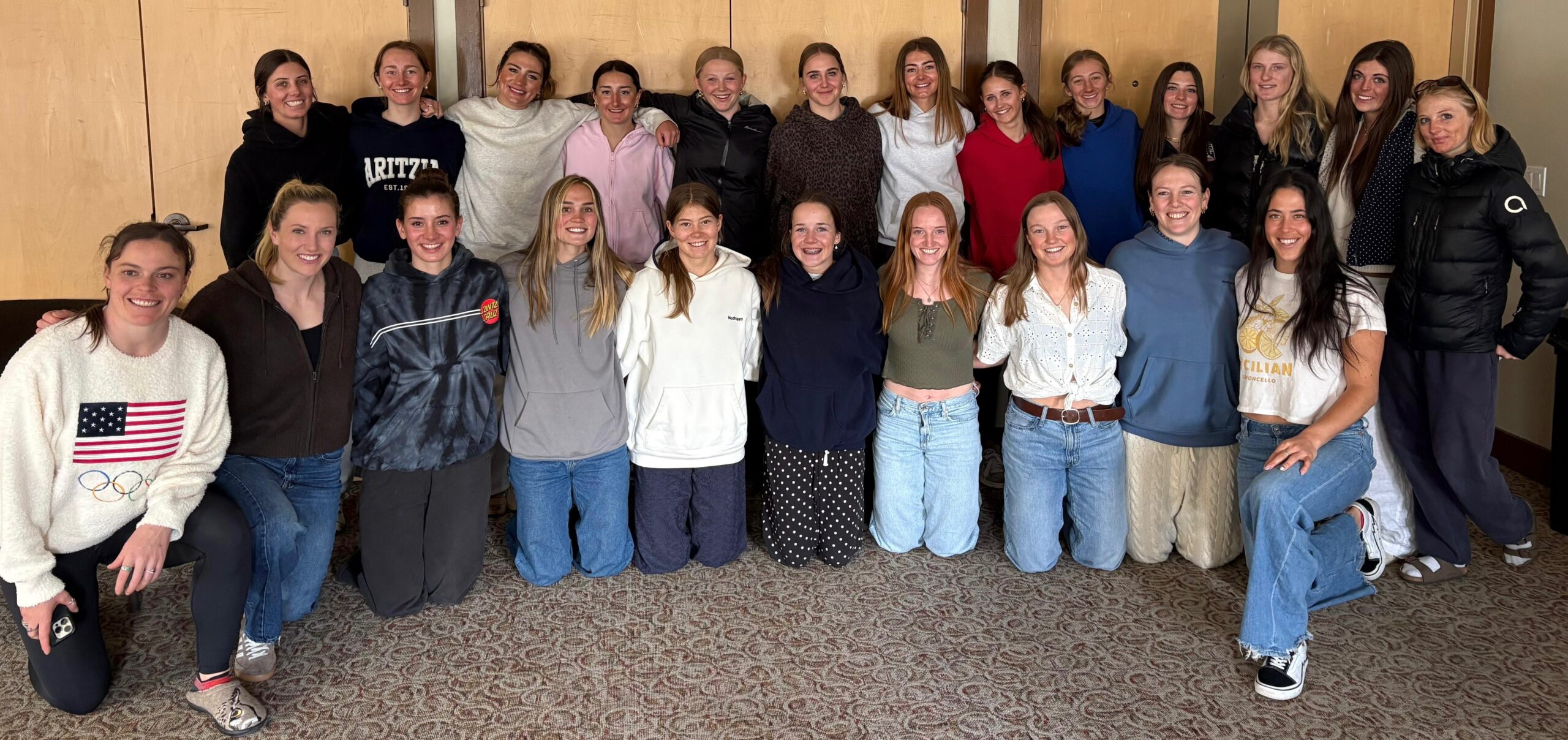
Five members of the 2025-26 named RDT met criteria to move onto the Stifel U.S. Ski Team: Aksel Lindenmeyr, Alex Krupka, Jevin Palmquist, Katie Rowekamp and Beatrice May.
Three athletes who participated as RDP invitees also advanced: Mari Renick, Maximilien Hoder and Mattias Wilson.
Their paths illustrate what the new model was built to accommodate.
Hoder, from Stowe, Vermont, followed an unconventional route. Knight said Hoder concentrated heavily on school before spending two postgraduate years with Apex in Europe. His FIS points improved dramatically, but he arrived at Beaver Creek last December having never raced a NorAm.
He quickly became competitive.
Knight described Hoder as an athlete who had not followed the typical domestic pathway but could enter the RDP because coaches had room to respond to what he was doing.
Wilson presented a different case. The Jackson Hole athlete had shown considerable promise in speed but lacked the technical-event results necessary to satisfy the RDT criteria. Instead, coaches brought him into selected Western and speed projects. He eventually produced the results necessary to reach the national team.
The outcomes support one of the program’s central arguments: Athletes do not all become internationally competitive in the same order, at the same age or through the same disciplines.
What is the difference between the RDP and the named team?
The RDP is the development system. The RDT is its objectively qualified, financially supported group.
That distinction allows coaches to build projects around both the named athletes and others whose performances or developmental needs warrant access.
Brad Saxe, U.S. Ski & Snowboard’s Head Men’s National Development Coach, offered a practical example from the current preparation period.
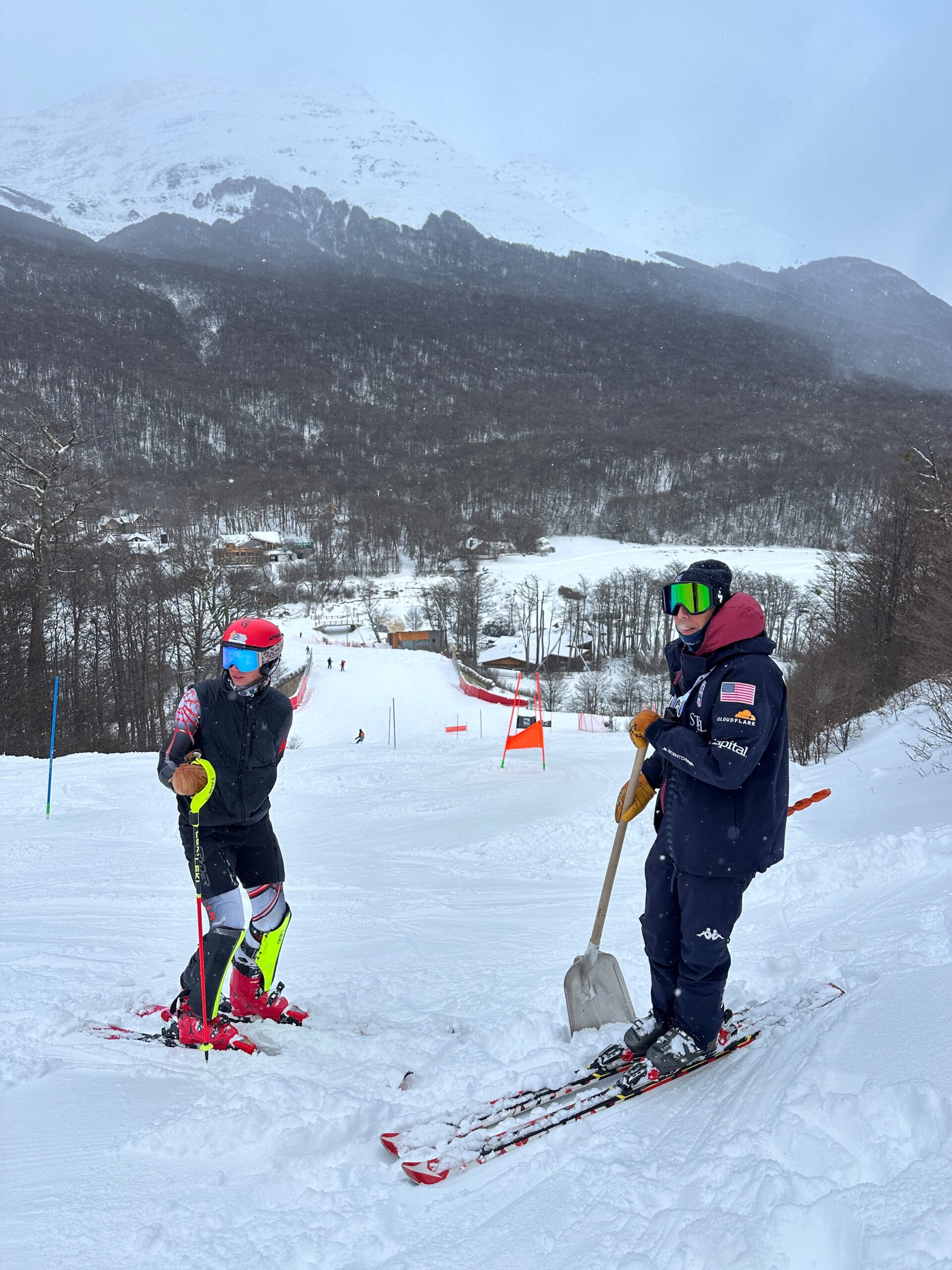
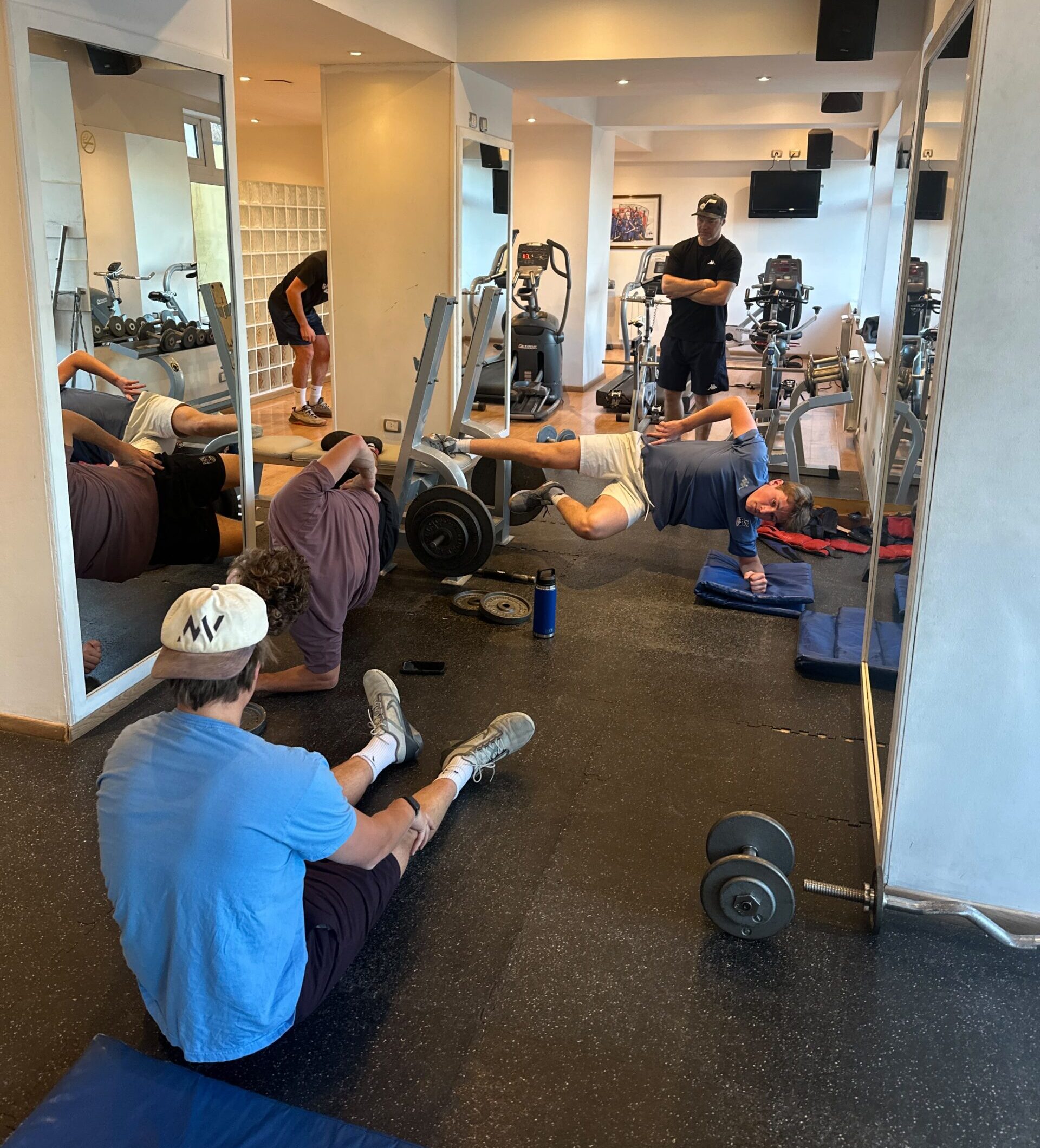
The men’s Mount Hood project included 17 athletes. A more targeted Copper Mountain camp included about 12. Later, 12 men traveled to Ushuaia, Argentina — only five were named RDT athletes. Seven were invitees.
That flexibility also allows athletes to choose the projects that make sense.
A college-bound athlete may have little reason to attend a downhill-focused camp. A younger athlete may need more time with a home program. When those athletes decline a project, coaches can bring in athletes who fit that particular training objective.
Saxe believes that is where the funnel becomes tangible.
Rather than separating a small group from everyone else, the RDP can repeatedly change the training group while maintaining a high-performance center.
Who is on the 2026-27 Regional Development Team?
The 2026-27 RDT includes 17 athletes — eight women and nine men — across the East, Rocky/Central and West regions.
East Women
- Aura Wieser — GMVS (2007)
- Hadley Reed — Harvard University (2008)
- Pernilla Borgia — WMR (2009)
- Vivienne Hermsdorf — GMVS (2010)
- Kira Hiebert — BMA (2010)
East Men
- Harper Sargent — TRA (2006)
- Troy Boissonneault — BMA (2007)
- Tor Borgia — Dartmouth College (2007)
- Caiyu DeMaggio — BW (2008)
- Cameron Blatz — SMS (2009)
Rocky/Central Women
Rocky/Central Men
West Men
- Finnigan Donley — University of Utah (2005)
- Jack Schrady — SBSTA (2006)
The 17-athlete roster represents the funded layer of the broader RDP, not the full reach of the development system. Additional athletes can earn invitations to projects throughout the season based on performance, project needs and available space.
That distinction is central to the new model. Athletes do not have to be named to the RDT to receive meaningful exposure to national-level coaching, training environments or competition support.
What does the RDP give athletes that strong clubs cannot?
Saxe rejects the idea that U.S. Ski & Snowboard possesses a secret technical formula unavailable to club coaches.
“There are no gurus, and there are no secrets,” he said.
Instead, he sees the program’s greatest value in bringing together strong athletes, giving them the opportunity to train together and experience a competitive pace.
The RDP adds professional timing, video, multiple interval times and carefully selected training environments. However, Saxe believes much of the real development occurs among athletes.
“The power is within the group,” Saxe said. “They’re bringing the pace to one another that they may not have at their club program.”
He pointed to something as simple as a chairlift ride. One athlete may be struggling with a section of the course while another is mastering it. Instead of waiting for a coach to offer an explanation, the athletes can share their experiences and what they are doing with each other.
“That’s the benefit they’re getting out of this more so than some new idea about skiing,” Saxe said.
The concept also extends into the NorAm Cup.
Saxe said the staff tried to establish a simple message last winter: If an American athlete is racing a NorAm, U.S. Ski Team coaches on the hill are resources, whether or not that racer was named to the RDT.
Why do the men and women need different development timelines?
The regional system serves both genders, but it does not assume they will progress on the same timetable.
That distinction may be one of its most important features.
On the women’s side, leading athletes can progress rapidly from U16 competition into FIS racing, then to the NorAm level and beyond. Seth McCadam, who leads the women’s national development program, sees U16 Project Gold as particularly valuable because it brings strong young women together earlier.
However, he does not want Project Gold to become the only accepted pathway.
McCadam believes the system must leave room for later maturers and athletes whose careers are interrupted by injury, illness or other circumstances. He argues that previous systems often narrowed the field before athletes had enough time to reveal their potential.
“We need to maintain programming and support for our highest performers as they move through,” McCadam said. “But we also need to keep that wider base.”
On the men’s side, the timeline generally stretches longer.
Knight said the U18 national series was created largely with the men in mind because most U18 men are not yet ready to succeed consistently in NorAms. Physical, social and emotional development continues rapidly through those years.
The objective is not to slow talented men but to give more of them somewhere meaningful to compete until they are ready for the next level.
Is American development asking young women to ski too much?
McCadam raised another issue that extends beyond the RDP.
He believes many young women need substantially more uninterrupted strength and conditioning.
After watching the first season, one of his clearest conclusions was that the athletes needed to become stronger and fitter. He questioned whether an increasingly crowded offseason training calendar is giving young racers enough time to make those gains.
McCadam said four-week conditioning windows between ski camps may produce some improvement, particularly in younger athletes, but he believes longer uninterrupted blocks are necessary to build lasting strength.
His concern is practical. Ski racers must be physically capable of executing the movements their coaches demand at high speed and under substantial load.
McCadam also believes insufficient physical preparation may contribute to the injury problem he sees among developing women.
The RDP women completed conditioning blocks at the Center of Excellence in Park City this summer, including a July camp with 13 athletes. Many trained while Stifel U.S. Ski Team athletes were working nearby.
For McCadam, while the national-team exposure was valuable, the physical work mattered more.
The question is whether the broader U.S. development system can protect enough conditioning time while clubs and athletes continue seeking valuable offseason snow.
Where did the first year expose a weakness?
Knight, Saxe and McCadam all arrived at essentially the same issue.
Who is managing the athlete?
The RDP was intentionally designed as a partnership with clubs. That flexibility is a strength, but it can also cause uncertainty.
Saxe described situations where a club believed U.S. Ski & Snowboard was managing an athlete while the RDP believed the home program remained responsible.
“There’s a gap,” Saxe said. “How do we fill this gap?”
The first year made that question unavoidable. Because athletes moved in and out of projects, the RDP could not always build the same continuous relationship that existed under a fully managed national D-Team.
Saxe said the new methodology remains adjustable and that coaches are continually “turning the dials” on project size, purpose and athlete management.
McCadam experienced the same problem from another angle.
Some invited women performed well enough to remain involved in RDP programming for much of the season. After long stretches on the road, an athlete might return home needing rest and training. Her club, meanwhile, might have a regional FIS series on its calendar.
Without close coordination, she could simply go racing again.
McCadam said better alignment on recovery, training and peaking is one of the second year’s priorities.
What changes in the second year?
The most significant adjustment is continuity.
Named athletes can now commit to a much more complete RDP schedule and receive greater management from the regional staff.
“We reached three times the number of athletes from the previous D-Team model,” Knight said. “So you’re talking about 100 athletes in our programming through the whole year last year.”
However, he acknowledged that constant movement in and out could weaken the connection athletes need.
“The big change we’ve tried to address this year is to provide consistent support to the named athletes,” Knight said.
Planning also began earlier.
Saxe said the program launched so late in spring 2025 that many clubs had already finalized their preparation schedules. For 2026, the RDP had its summer framework in front of clubs by November, giving both sides time to build compatible plans.
That does not mean every named athlete will follow the complete RDP schedule.
Some are still in high school. Others have strong club programs, college plans or specialized needs. The system intentionally leaves room for those circumstances.
The challenge is making flexibility deliberate rather than accidental.
What does the program actually cost?
The financial model also differs significantly from the former national development-team approach.
U.S. Ski & Snowboard funds the regional coaches and their project travel separately. Athlete payments cover their own project costs rather than financing the coaching staff.
Named RDT athletes then receive a 50% subsidy on eligible ground costs.
Knight said a named athlete can subscribe to most of the annual RDP offering for approximately $12,500, excluding airfare and baggage. The program provides roughly 50 to 55 preparation-period snow days and, in Knight’s estimate, represents about 75% to 80% of a complete annual program. Additional club training or extra camps can add to the total.
Saxe independently described a similar model, estimating about 55 to 57 preparation days and emphasizing that athletes do not pay the regional coaches’ salary, travel, lodging or lift expenses.
That distinction matters because the original February 2025 proposal projected substantially higher gross program costs before the planned U.S. Ski & Snowboard subsidy.
Invitees can receive the same training environment, but they do not receive the named-athlete 50% subsidy.
Can the system keep athletes in the game longer?
McCadam believes that may ultimately be the more important measure.
American skiing has always produced exceptional athletes. His concern is what happens to everyone behind them.
When a rare athlete rises rapidly, younger racers can begin to believe that is what a successful pathway must look like.
“That’s not a system,” McCadam said.
For him, a stronger system would keep a broader group performing longer. That includes athletes who eventually move into collegiate skiing as well as those who reach the Stifel U.S. Ski Team.
He believes the RDP could strengthen college skiing by delivering better-prepared American athletes into NCAA programs while simultaneously keeping another route open toward international racing.
“The system is strong when people continue to perform,” McCadam said.
That philosophy matters particularly after injury. An athlete who loses a season at 17 should not necessarily feel that the national pathway has closed while healthy peers have moved ahead.
The wider funnel is designed to keep that door open longer.
How will U.S. Ski & Snowboard know if it works?
Eight national-team advancements make for an encouraging headline.
Knight is not ready to call the larger experiment proven.
The development staff is watching movement into the world’s top 500 and then into the top 300 as meaningful performance markers. Knight also wants stronger regional depth underneath those athletes, better speed opportunities and a development structure that consistently feeds the NorAm level.
The current RDT contains 17 athletes, down from 23 last season, yet the named roster is only one measurement in a model intentionally designed to reach beyond it.
Perhaps more important, Knight believes the organization must resist another wholesale change before the system has time to mature.
He repeatedly hears the same message from people around American skiing: Give it five years.
That may be the hardest test.
Coaches leave. Leadership changes. Strong birth years produce optimism, while weaker cohorts cause doubt. Previous American development initiatives have often dwindled before anyone could determine whether the underlying philosophy worked.
Knight identified coaching quality and staff continuity as the greatest threats to long-term success.
McCadam made essentially the same argument for the women’s side. He has watched promising development structures dissolve after leadership or philosophical changes.
This time, he wants patience.
The first season offered reasons for it. The RDP reached far more athletes than the old D-Team structure. Named athletes advanced. Invitees advanced. The NorAm system produced World Cup opportunities, and American juniors delivered strong international performances.
Now comes the more difficult part: turning a promising first year into a durable system.
About the Author: Peter Lange